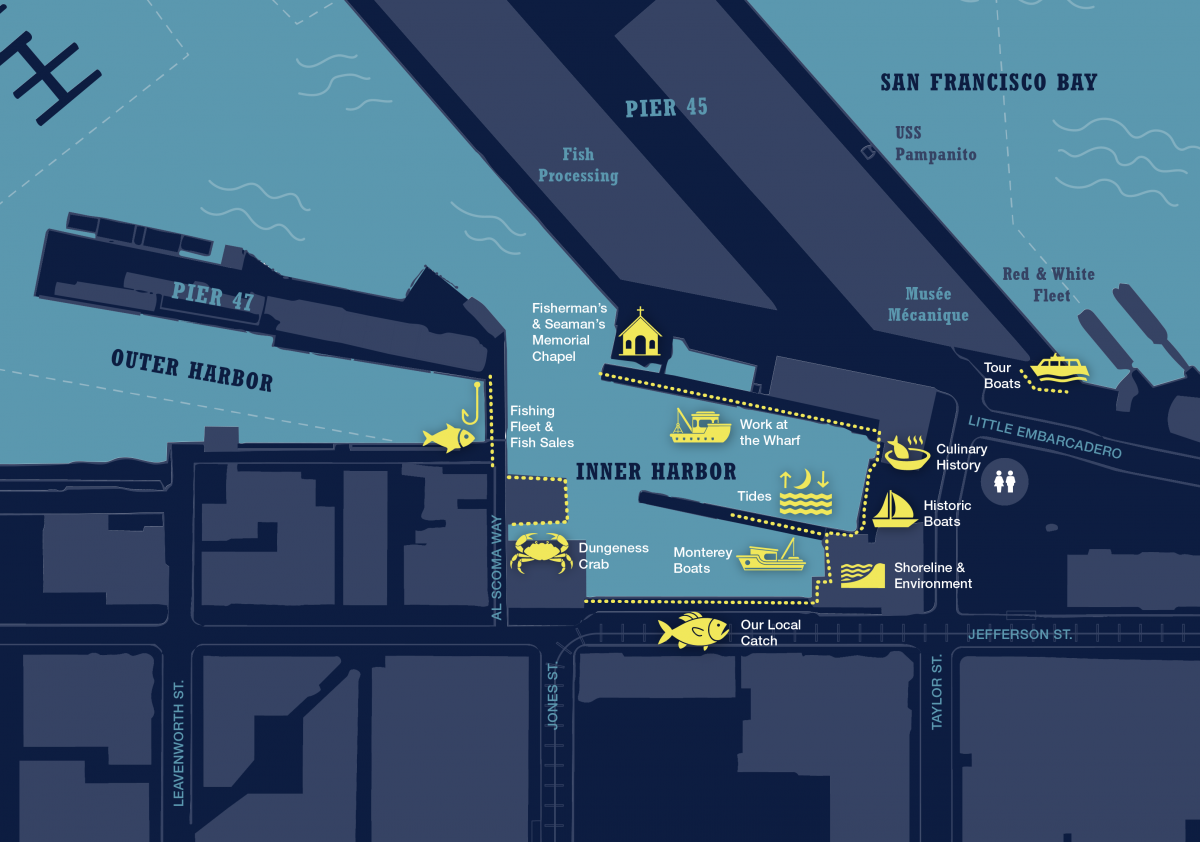
The Harbor Walk is a walking tour of Fisherman's Wharf. Use the translation menu to choose a language. Scroll to find the number on the sign you are viewing in the Harbor.
A Walking Tour of Fisherman’s Wharf
The Harbor Walk is a tour through the heart of Fisherman’s Wharf. Follow the signs to learn more about the people, boats, fish, and history of the Wharf. To access the content in different languages, scan the QR codes in the bottom corner of each sign.
You can find the Harbor Walk where there are yellow dots in the map.
Land and Water Acknowledgement
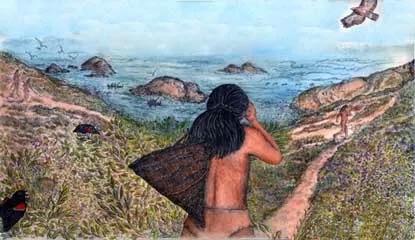
Native Peoples have called the San Francisco Bay region home for over 10,000 years. About 2,000 Ramaytush Ohlone people inhabited the San Francisco Peninsula before 1769, when Spanish colonizers first arrived. Despite the devastating impacts of colonization, the Ramaytush Ohlone community continues today. The Port of San Francisco acknowledges that this waterfront sits on the unceded ancestral homeland of the Ramaytush Ohlone. As the Indigenous stewards of this land, the Ramaytush Ohlone have never ceded, lost, or forgotten their responsibilities as caretakers of this place. The Port affirms their sovereign rights as First Peoples.
People of all ages and backgrounds fish
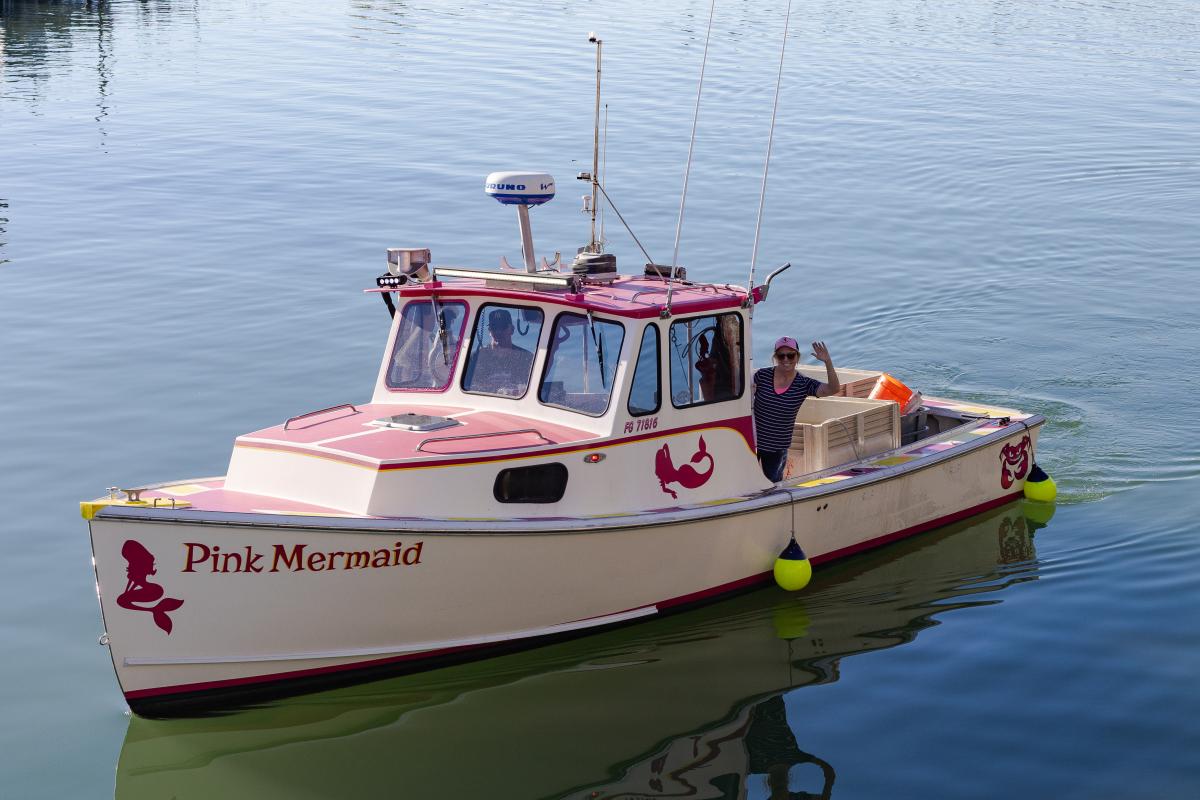
The historic name “Fisherman’s Wharf” may seem to suggest only men fish here. But people from many different backgrounds have always been a part of this place. In fact, women have been fishing here for decades. Many people now use the word “fisher” to include everyone. The term Fisherman’s Wharf reflects a historical naming convention rather than a description of who works here today.
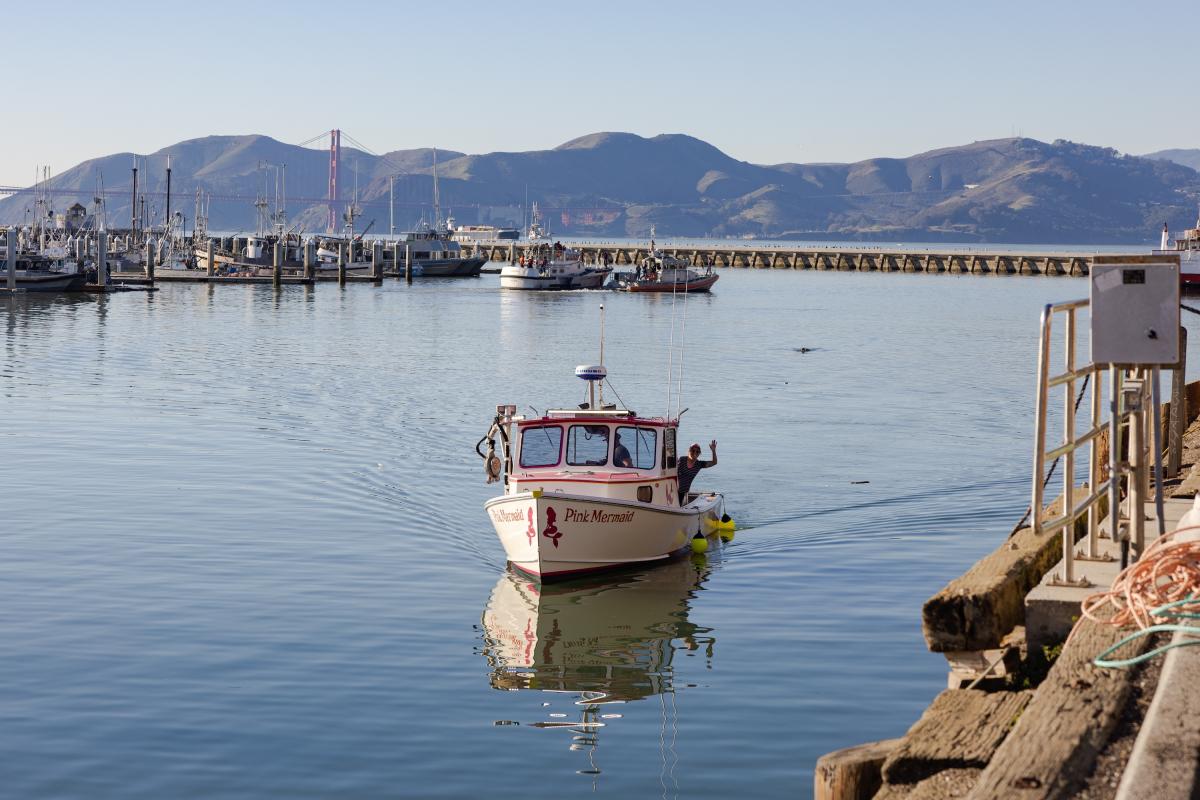
Photo: Captain Holly Fruehling waves from aboard the “Pink Mermaid.” Men and women make up the crew of this commercial crabbing boat, which is based out of Fisherman’s Wharf.
Welcome to the Wharf!
Fisherman’s Wharf began as a tight-knit community of Italian immigrants. It has always been a place that celebrates cultural diversity. This legacy continues today – visitors from all over the world come to Fisherman’s Wharf to eat, play, and enjoy the scenery.
The community at the Wharf strives to make sure there is something here for everyone and that people of all backgrounds feel welcomed.
Image: Lovely Martha Sportfishing
The Boats of Fisherman’s Wharf
People have fished in San Francisco Bay for as long as they’ve lived here. The boats at the Wharf display the fishing industry’s rich cultural history.
Our shared love of seafood brings the community to the Wharf.
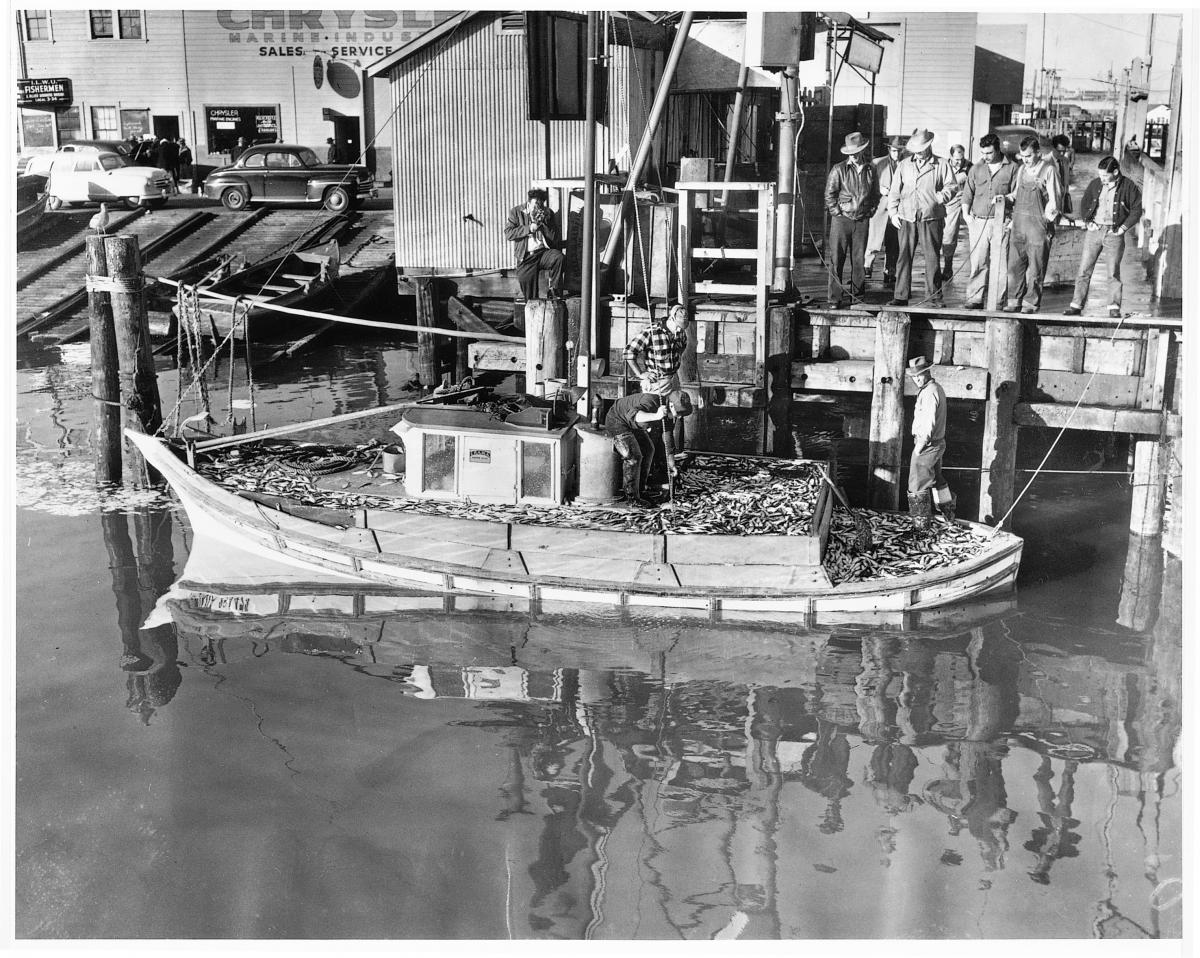
This large photo shows the Monterey fishing boat “Virginia” loaded with six tons of herring. The photograph was taken across the harbor from where you are standing in the winter of 1953.
Boats Made of Native Plants
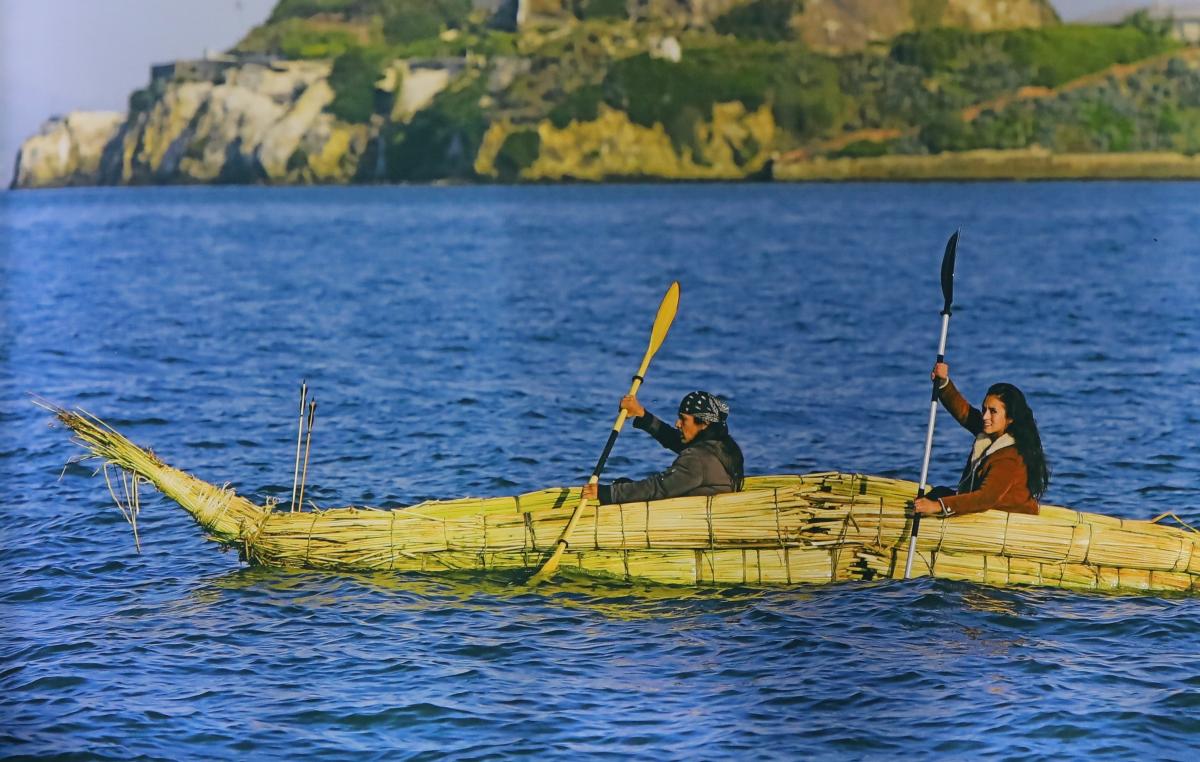
For thousands of years, the Ohlone, Yelamu, and Coastal Miwok peoples traveled San Francisco Bay in canoes made from tule reeds. Tule reeds are strong and hollow coastal plants that the Ohlone used to build boats, homes, baskets, and fishing nets. Today, the Ramaytush Ohlone and other California tribes continue to make tule boats using time-honored methods.
Tule boats are the original watercraft that the Ohlone used to navigate around Alcatraz Island and the bay waterways.
Image: NPS
Flat-Bottom Boats to Fish Shrimp
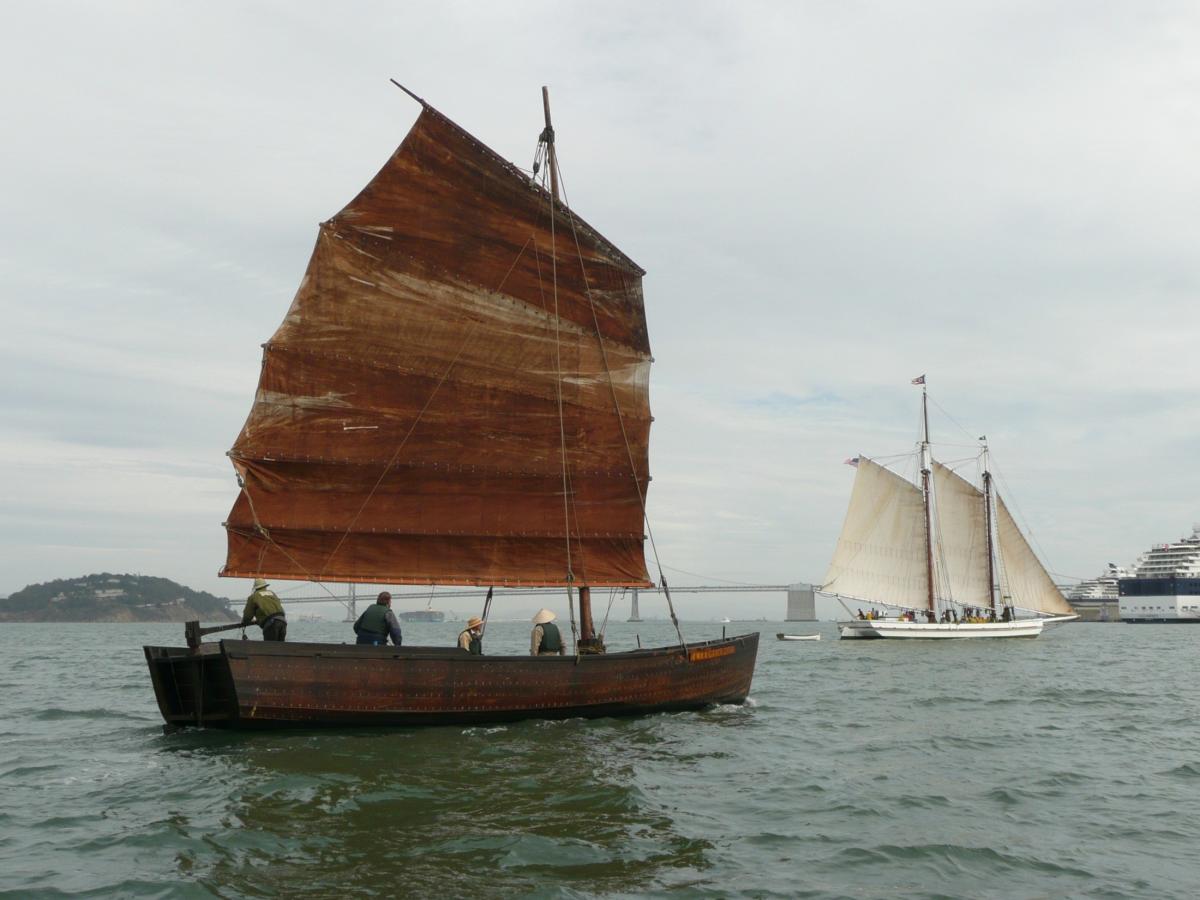
In the late 1800s, the Bay Area had a thriving shrimp fishing industry led by Chinese immigrants from Guangdong Province. Shrimp fishermen used boats called “junks.” The term junk came from the Javanese word “djong,” which was a large trading ship in Southeast Asia. These flat-bottom junks could easily navigate the mudflats and shallow waters where shrimp lived.
Grace Quan, is a replica of a historic Chinese junk. It sails between Hyde Street Pier and China Camp in the North Bay.
Image: John Muir
Boats for Fishing in the Bay
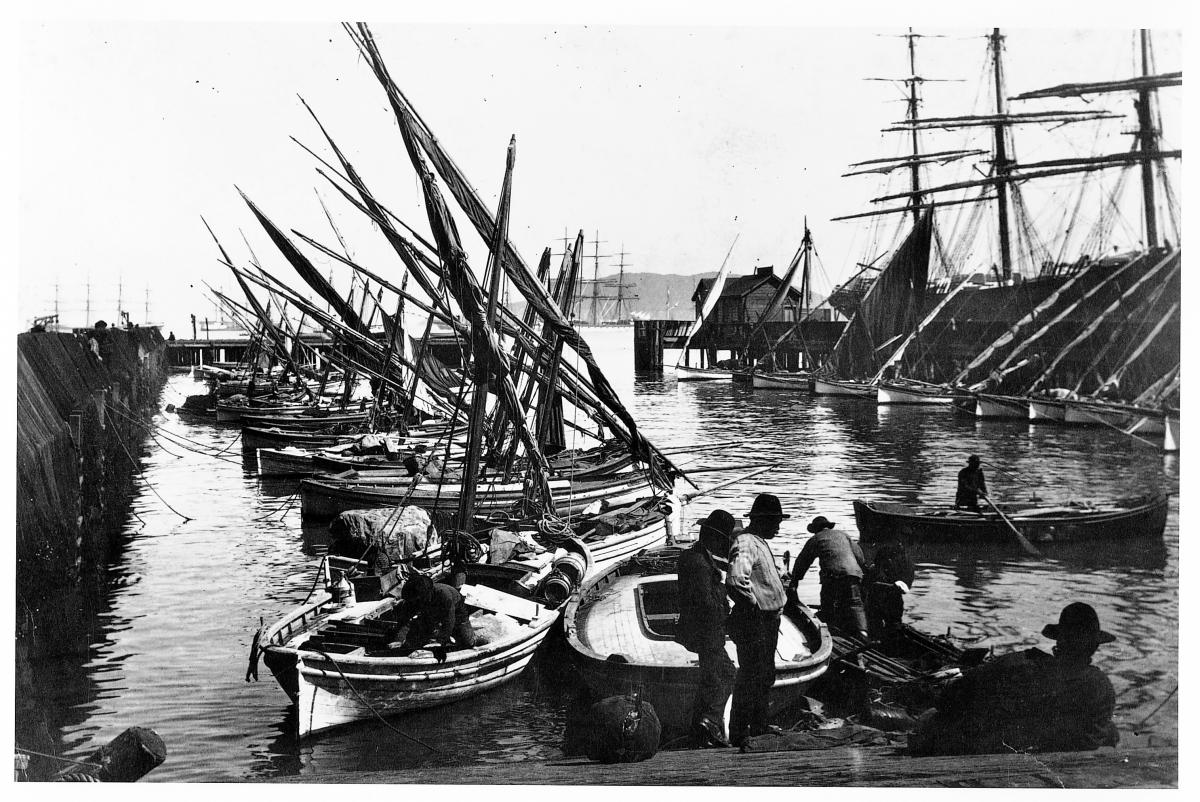
Immigrants brought their fishing traditions and technology with them to San Francisco. Italian immigrants from the coastal region of Genoa built small, seaworthy sailboats called “feluccas.” Built between 1850 and 1900, feluccas were rigged with triangular sails called lateens. One or two people could fit on the boat, sleeping in tight quarters below deck if needed. Felucca fishermen used long lines and nets to catch many types of fish.
The First Powered Fishing Boats
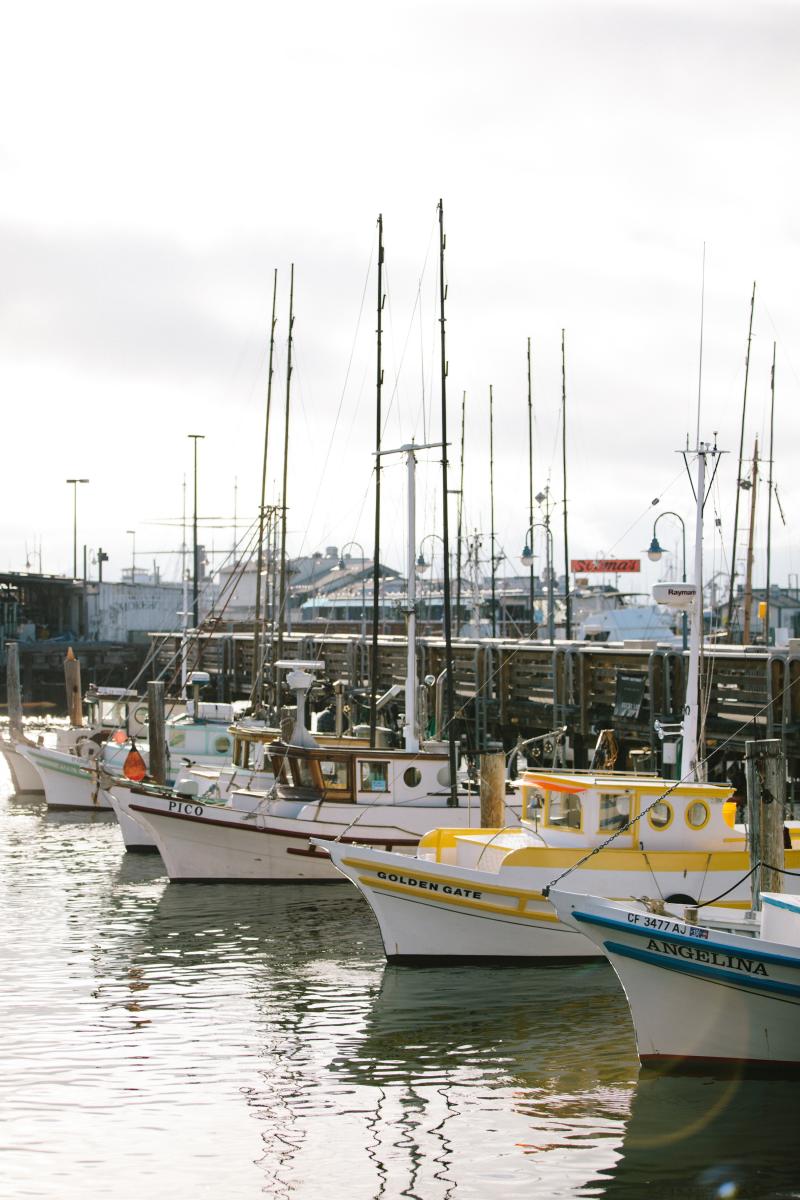
In the early 1900s, Giuseppe Camillone, a fisherman from Tuscany, added a one-cylinder Hicks gasoline engine to a felucca. This was the first generation of powered fishing boats. His boat also had a clipper bow that made it stable in ocean waves. Camillone’s clipper soon became the popular type of boat at Fisherman’s Wharf. A few remain and are used for fishing crab and salmon.
The boat shown in the Plaza
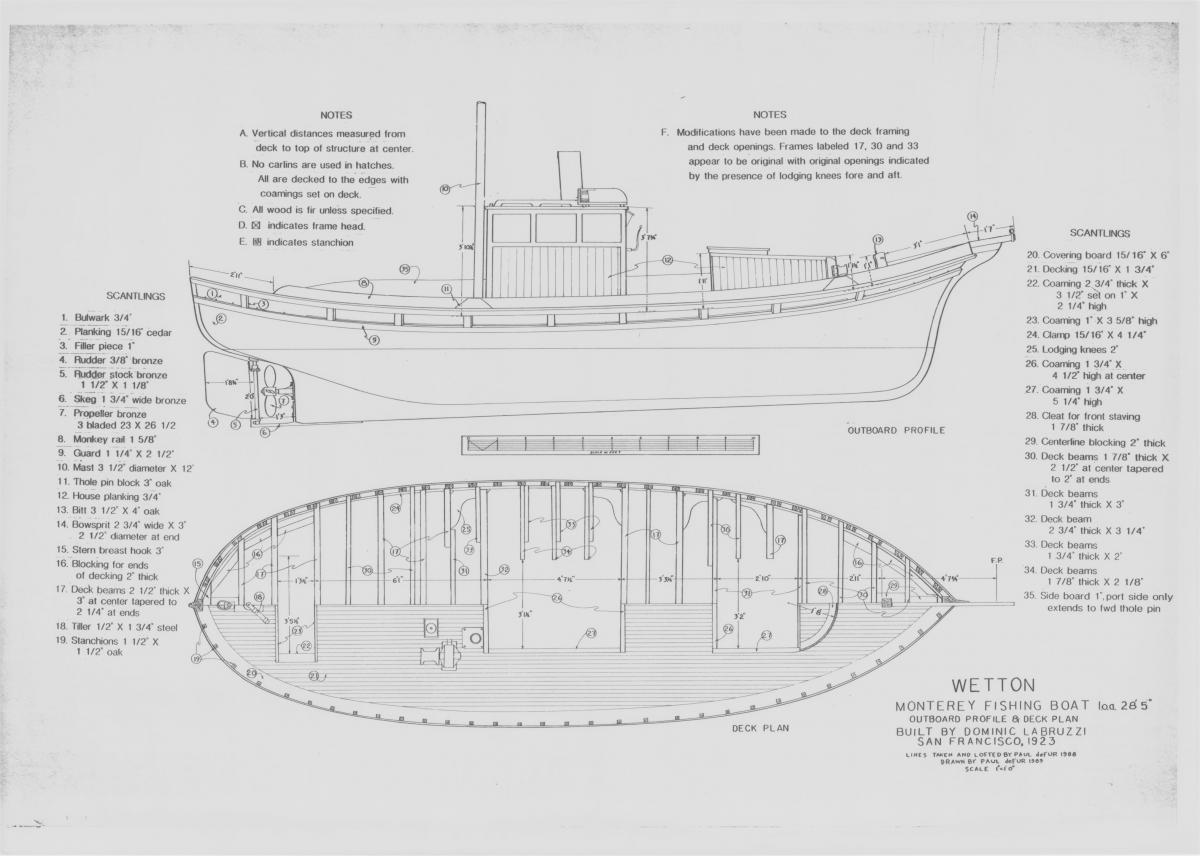
Fishermen admired the double-ended Monterey boats for their stability and ability to stay at sea for several days. The big image of a boat in this plaza is a plan drawing for a Monterey clipper. Many of these were built about 100 years ago in the sheds and alleys of Fisherman’s Wharf. Shipbuilders did not use drawings – each boat was unique.
Image: San Francisco Maritime National Historical Park
Selling off-the-boat evolved into restaurants
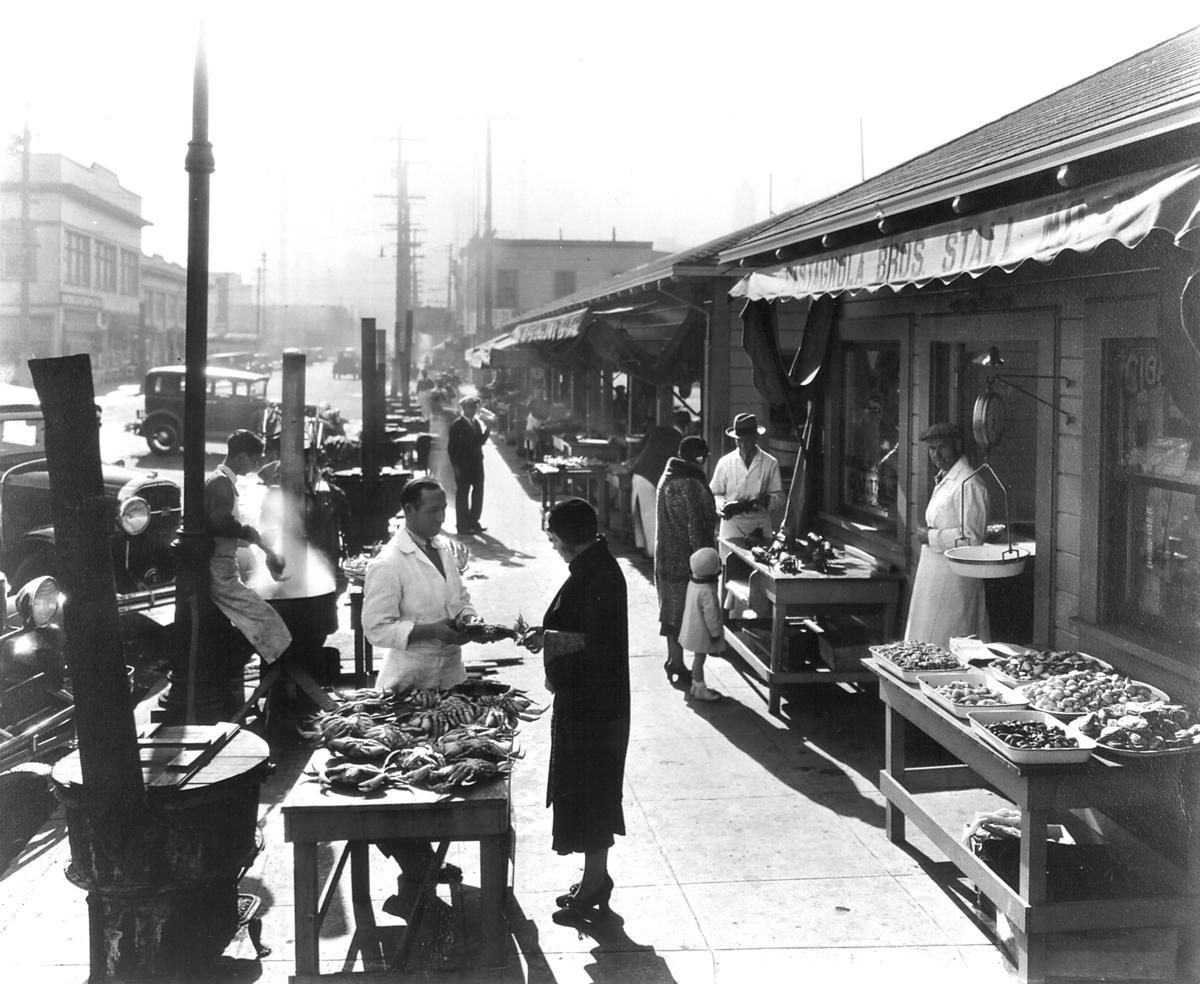
If you worked on a fishing boat during the early days of Fisherman’s Wharf, you might have been paid with fish and crab instead of money. Then you could sell your share of the day’s catch to people on the street. Fish sales from boats evolved into shrimp cocktail served from boats, which led to the fish and crab stands along Jefferson and Taylor Streets.
A San Francisco Tradition
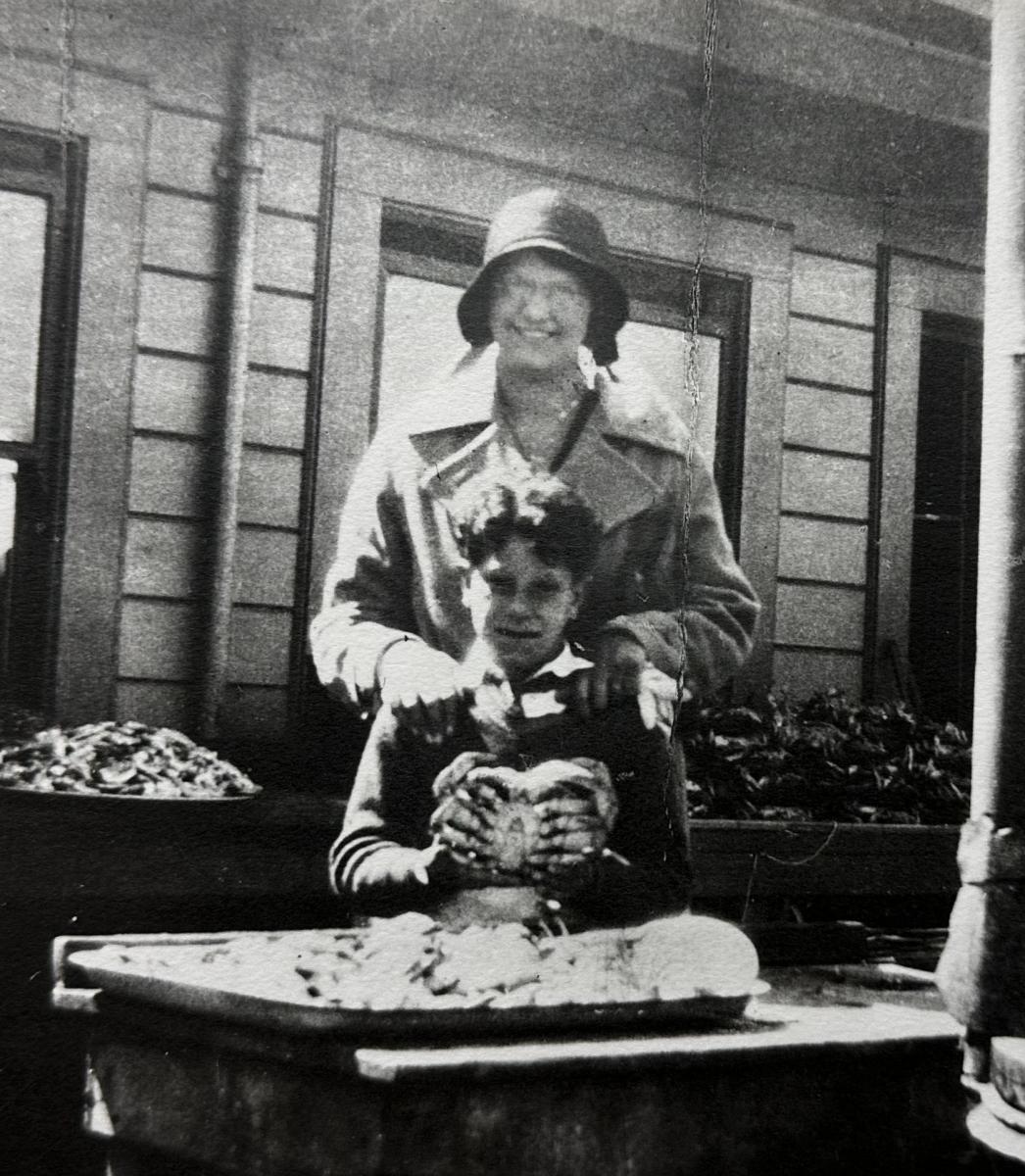
The best way to enjoy Dungeness crab starts with dropping a freshly caught crab into a pot of boiling water. After twenty minutes, its shell changes from brown to red. That means it’s ready. Try it with melted butter and fresh-baked sourdough bread. Eating fresh crab is a San Francisco experience that has changed little over the past 100 years.
Image: Alioto’s Restaurant
Alioto’s #8 Crab Stand and Restaurant
From 1925 to 2020, this plaza was home to the San Francisco dining institution Alioto’s #8.
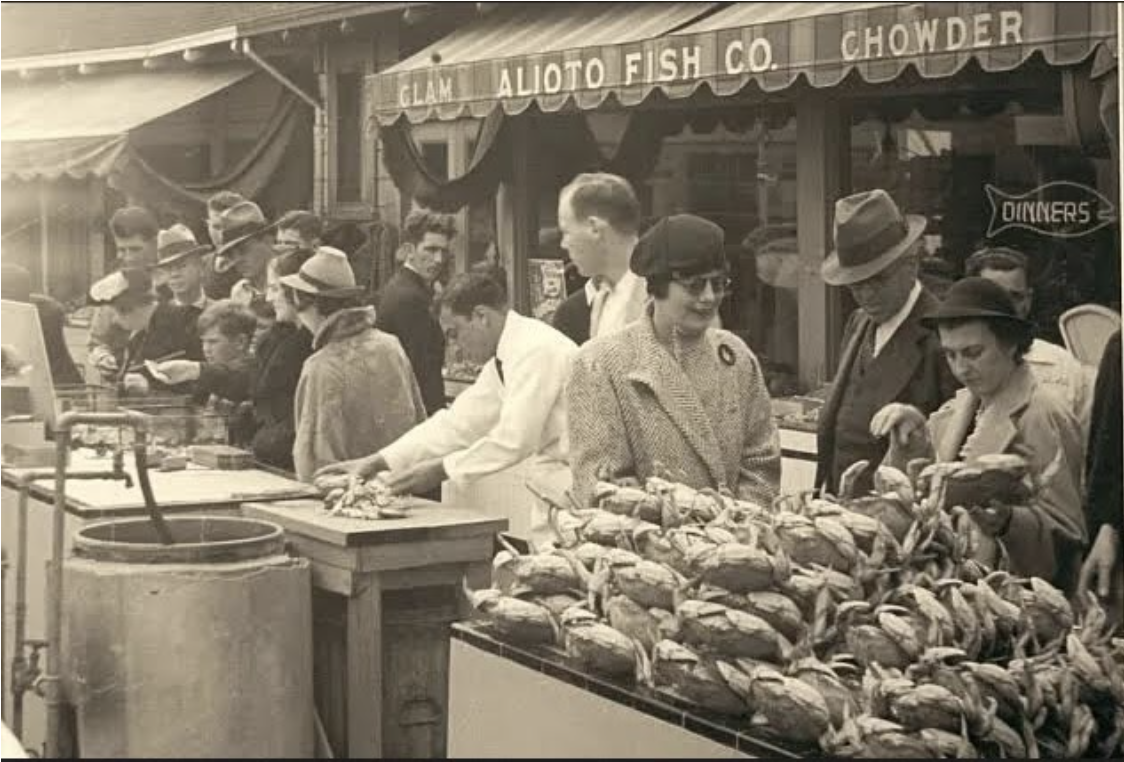
Alioto’s was founded in 1925 by a Sicilian immigrant named Nunzio Alioto, Sr. At the time, the Wharf was a collection of lumber yards, train tracks, canneries, and wholesale fisheries. Nunzio sold fresh fish and other lunchtime provisions out of stall #8 on Taylor Street to Italian laborers.
Business grew as Nunzio catered to hungry shoppers at the Wharf. In 1932, he constructed the first building on Fisherman’s Wharf—combining the fish stand with a seafood bar. Popular items were crab and shrimp cocktails and steamed crab.
Image: Alioto’s Restaurant
Defining the Restaurant Scene
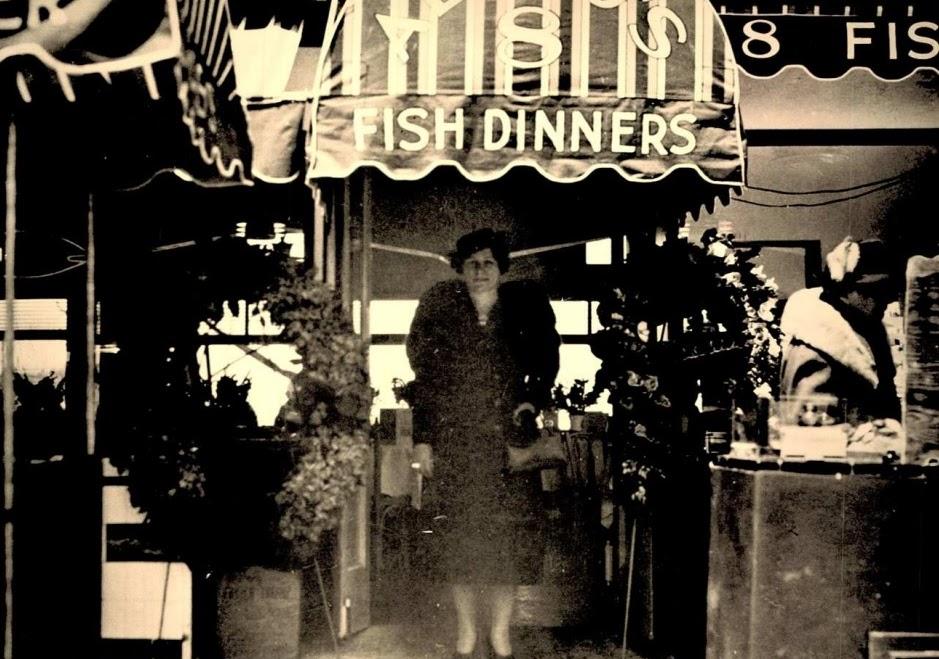
There would not have been an Alioto’s #8 without the vision, courage, and hard work of Rose Alioto. Widowed young with three children, she transformed a family operation of a few crab pots into one of the Wharf’s defining restaurants. Across four generations, her influence shaped a culinary identity for San Francisco. She stood apart as one of the only female business owners on the Wharf at the time, leading in the kitchen and in business, and she is widely credited with the recipe we know as cioppino.
Image: Alioto’s Restaurant
Family Restaurants at the Wharf
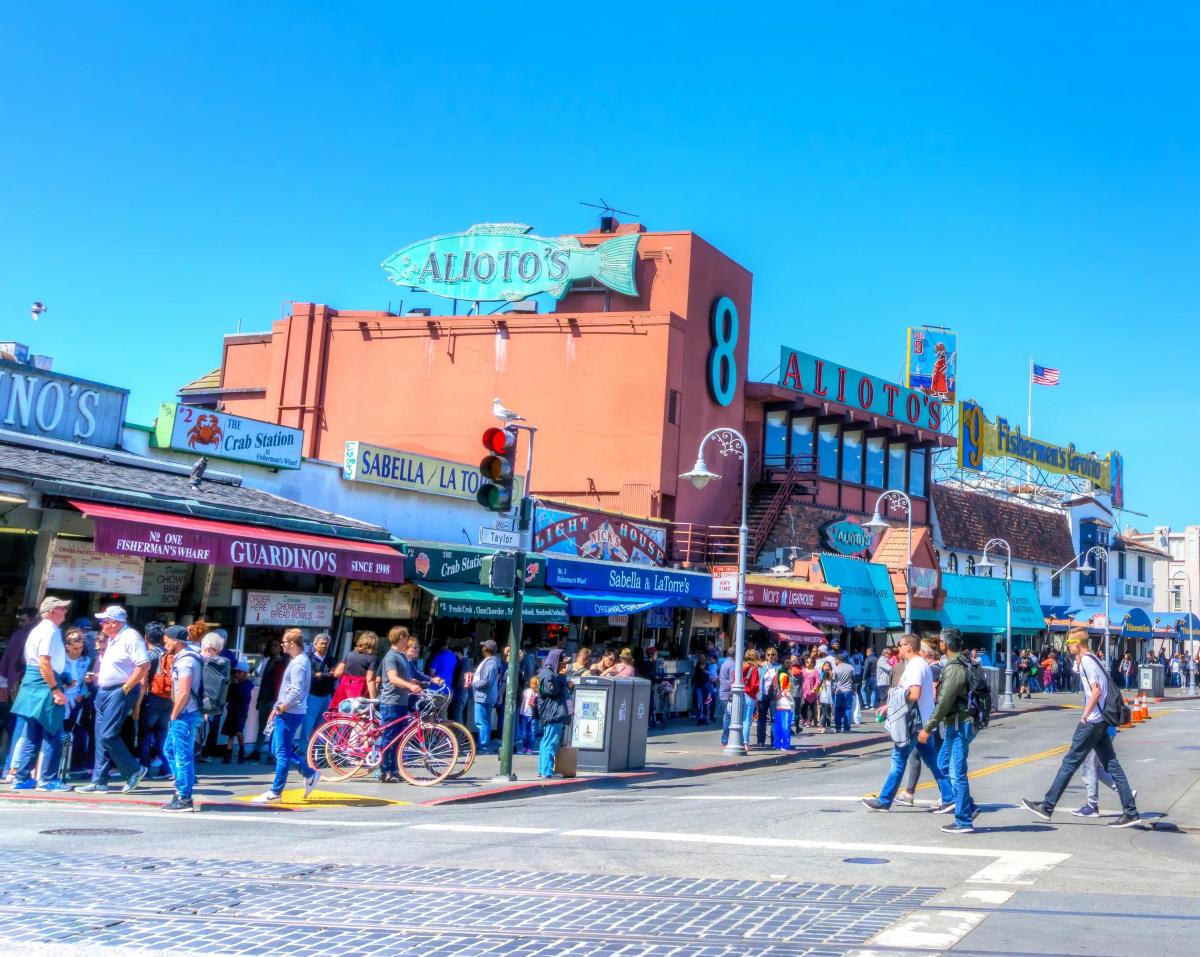
The Alioto, Cresci, Guardino, Paladini, Sabella, Tarantino, and other families built and ran Fisherman’s Wharf restaurants for decades, passing their businesses down through generations. You can still find many of those names at the Wharf today.
Image: Alioto’s Restaurant
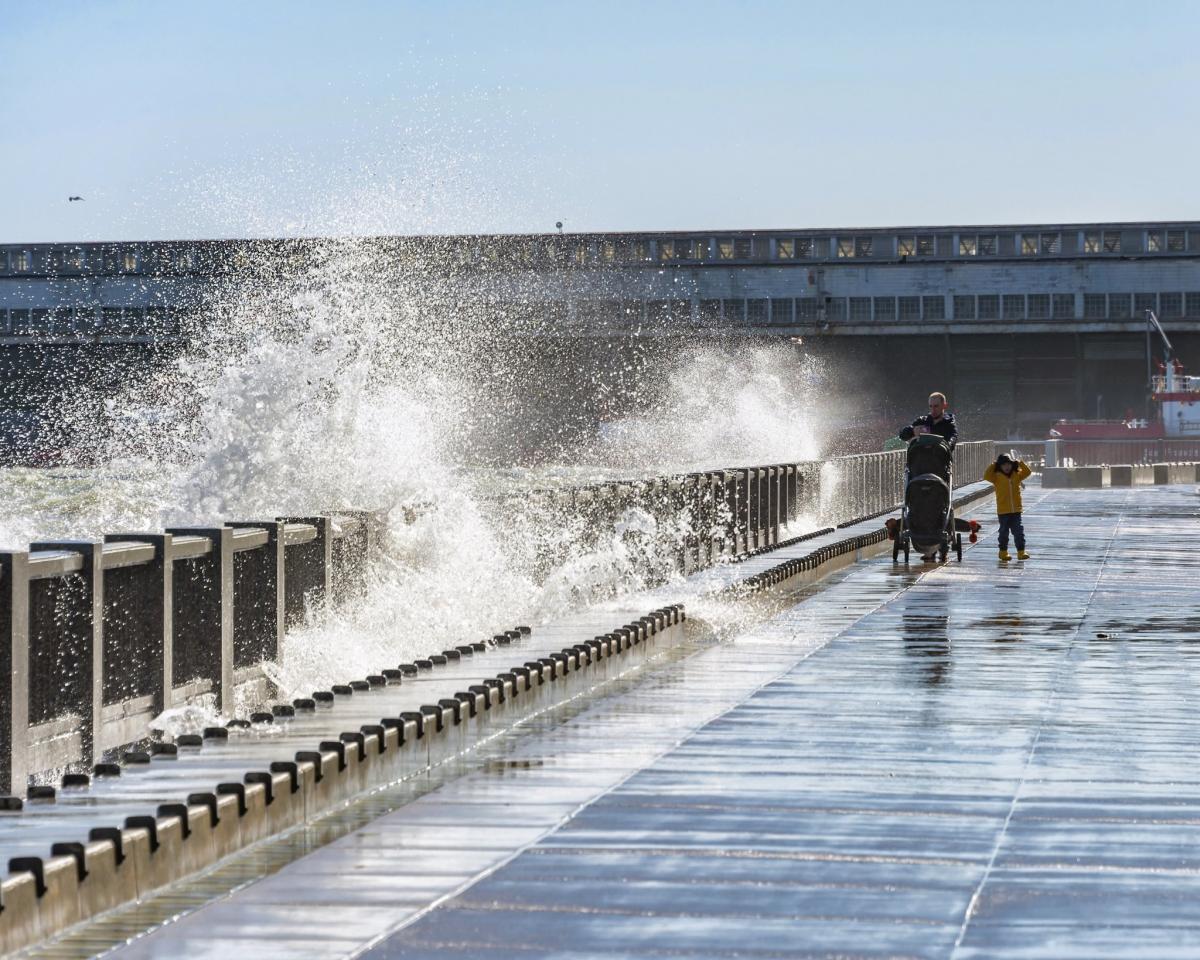
Sea Level Rise in San Francisco
As global temperatures rise, ice in the glaciers and polar ice caps melt and add water to the oceans. This causes sea levels to rise.Sea level rise threatens coastal communities. The City of San Francisco is developing ways to defend our waterfront against sea level rise.
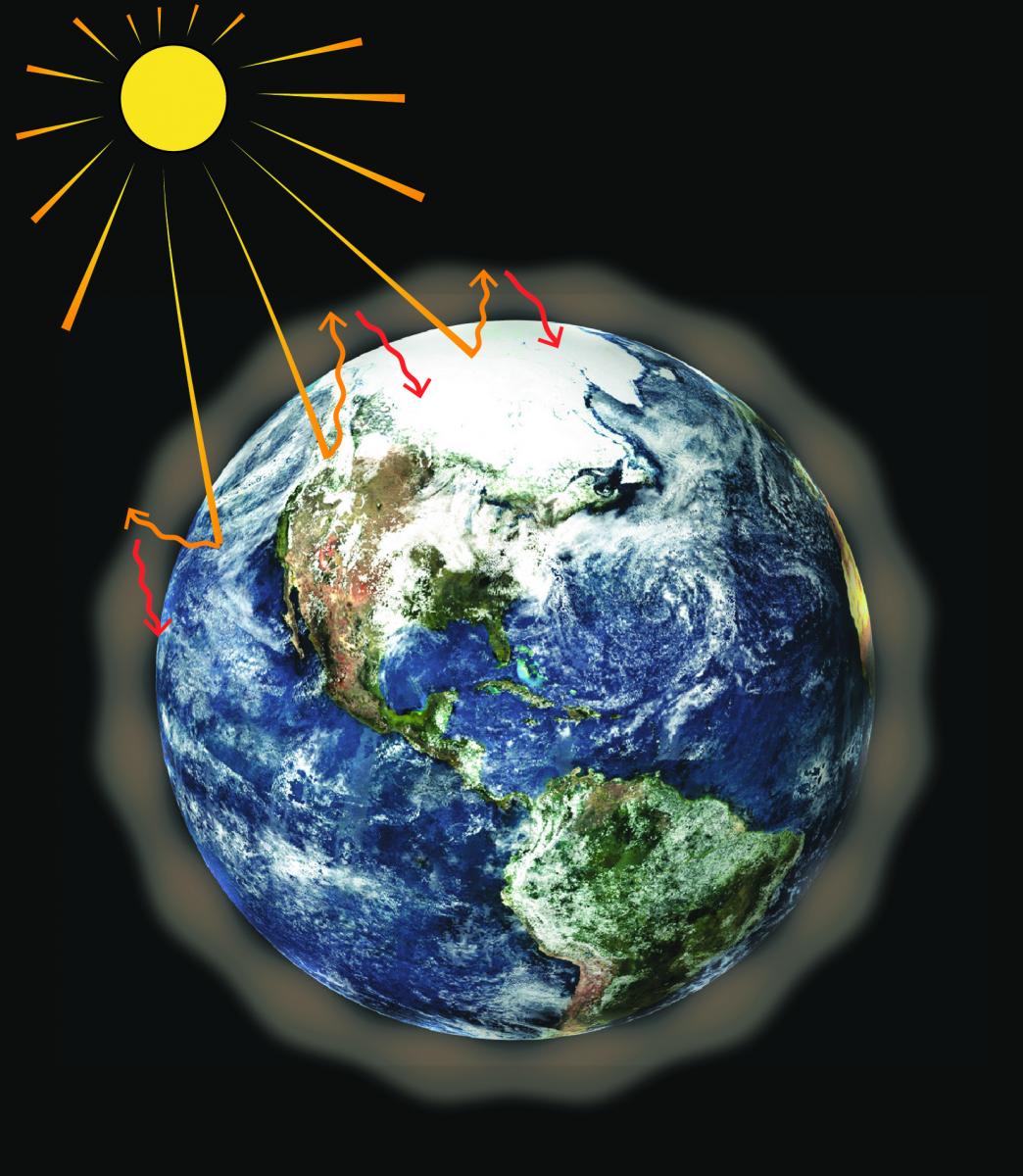
The Greenhouse Effect
Our planet is warming because certain gases in the atmosphere trap heat. Scientists call this the greenhouse effect. Human activities, such as burning fossil fuels, have increased these gases, leading to global warming and rising sea levels. The Port’s Waterfront Resilience Team is working on seawall solutions that will protect utilities, ensure public transit remains accessible, and preserve historic buildings and public spaces.
The Waterfront Resilience Program
Today, the Port faces big challenges along its 7-1/2 miles of waterfront. The seawall, over 100 years old, needs repair. Rising sea levels add to the risk. The Port and City are working together to protect the waterfront and nearby neighborhoods from earthquakes and flooding.
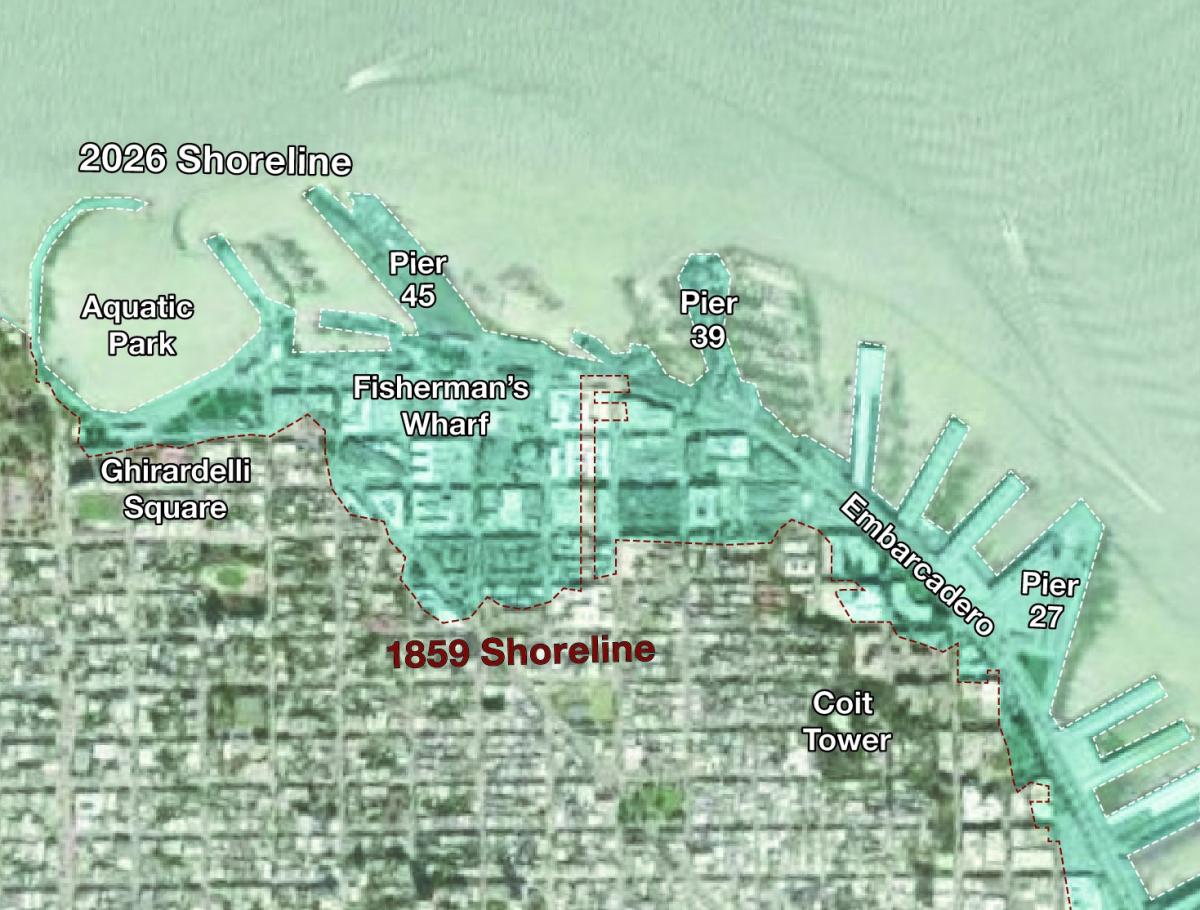
History of the Shoreline
In the early 1800s, San Francisco’s waterfront was a combination of salt marshes, beaches, and mudflats. Where you are standing would be four blocks north of the historic shoreline. During the Gold Rush, these wetlands were filled to create new real estate.
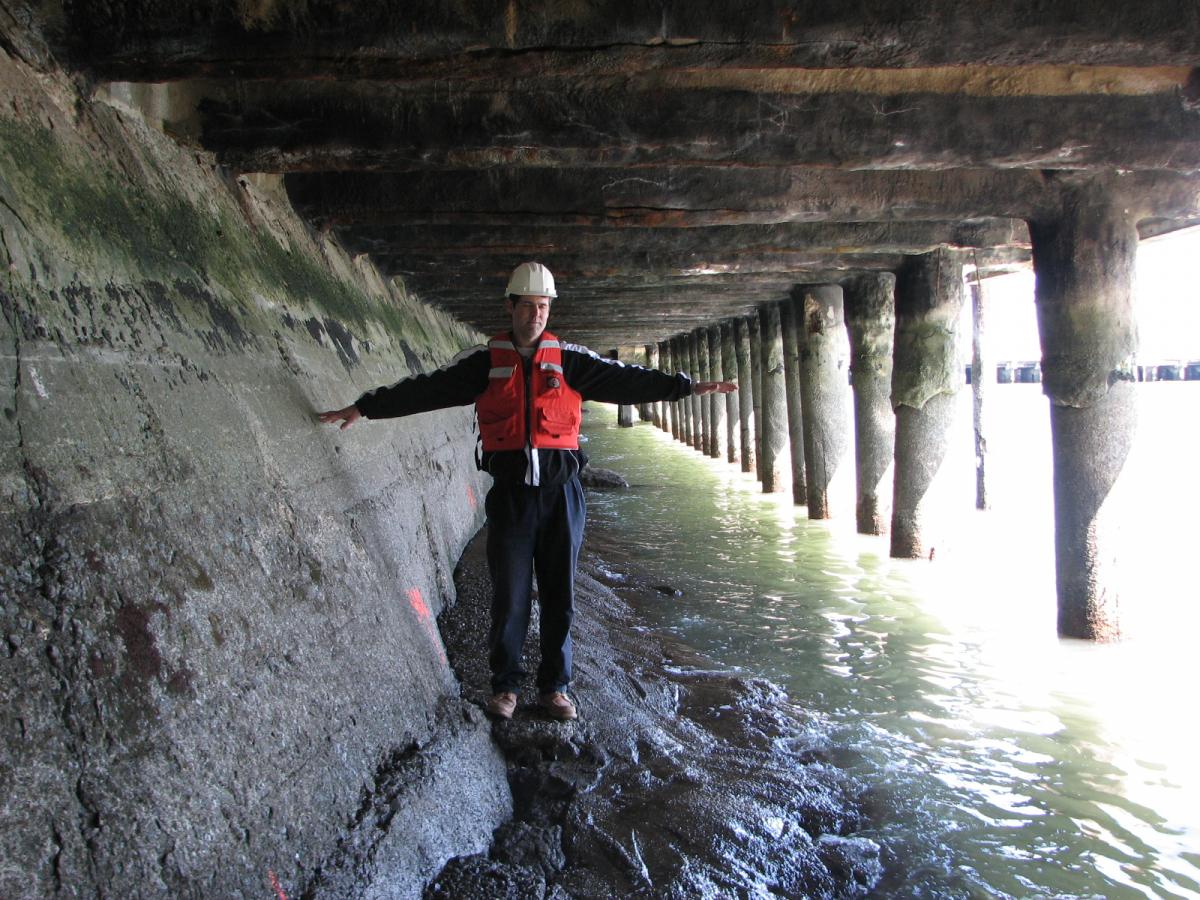
Holding Back the Bay
Between 1878 and 1916, the Port of San Francisco built a three-mile seawall to give the waterfront a solid edge. Building the Port’s seawall, wharves, and piers was tough and messy. Twelve Chief Harbor Engineers oversaw this project. The seawall runs along the Embarcadero from Fisherman’s Wharf to Oracle Park.
Image: S.F. Maritime Natl. Hist. Park
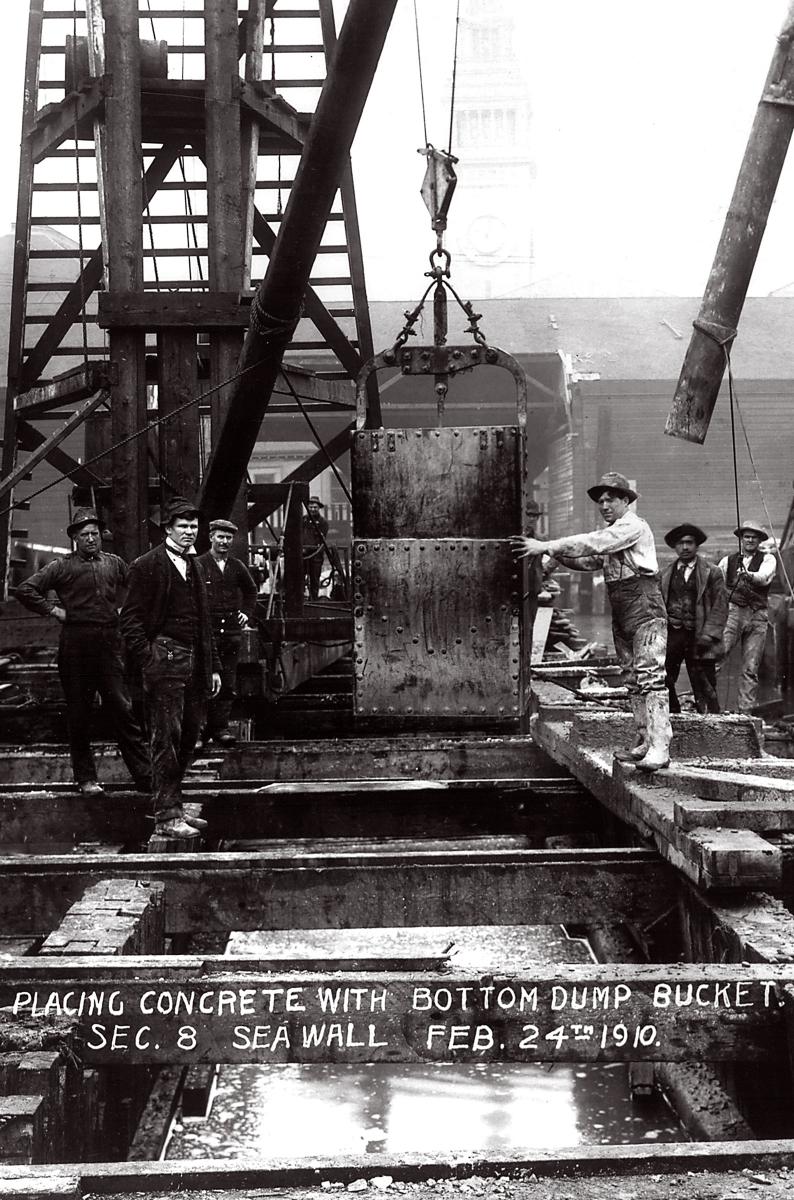
Four Generations Aboard the Golden Gate
“My grandfather, Antonino Alioto, immigrated from Porticello, Sicily, to San Francisco in 1900. He had our Monterey Clipper, the Godel Gate, built in 1928. It’s still in the same slip in Fisherman’s Wharf. I was fortunate to fish alongside both my grandfather, Antonino, and my father, Joe. Today, my son, Antonino, fishes alongside me, proudly carrying on our family’s fishing legacy.” – Captain Sal Alioto
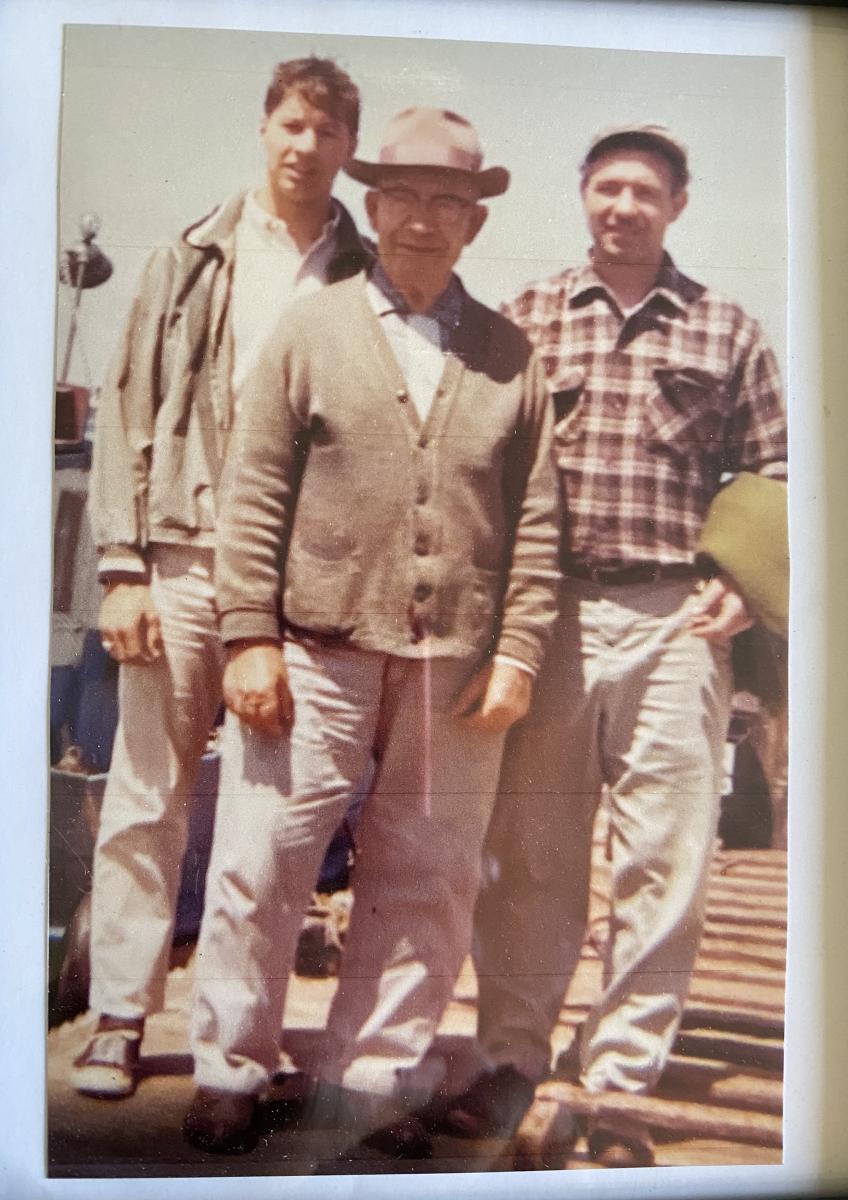
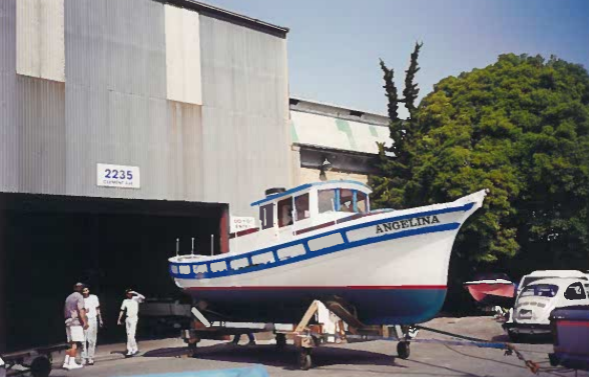
Bringing an old boat back to life
“The Angelina has sunk at the dock, run up on the rocks, had four engines, three cabins, and two decks. The boat was built here in 1924 by Castagnola. When we bought her, the deck was so worn that if you stepped hard, you would go right through. My father, friend George, and I spent five years restoring her. She is named after my grandmother’s sister, Angelina Ragusa.” - Mark Johnson
Image: Mary Donovan
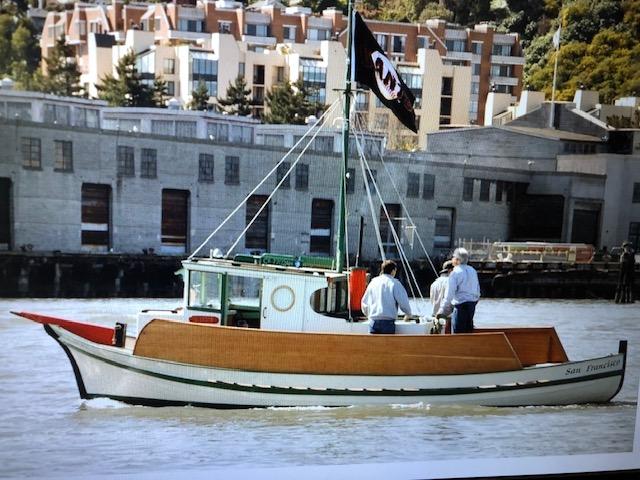
A Classic Clipper
The Salvador was built in 1922, when Monterey clippers ruled the coast. Shaped like a Mediterranean felucca and driven by a one‑cylinder Hicks engine, these boats let fishers push farther into open sea than wind alone. The Salvador’s cedar planks and wooden side boards, carved from a single 28‑foot Douglas fir tree, make it a standout example of its time.
Image: Robert Durkin
Going With the Flow
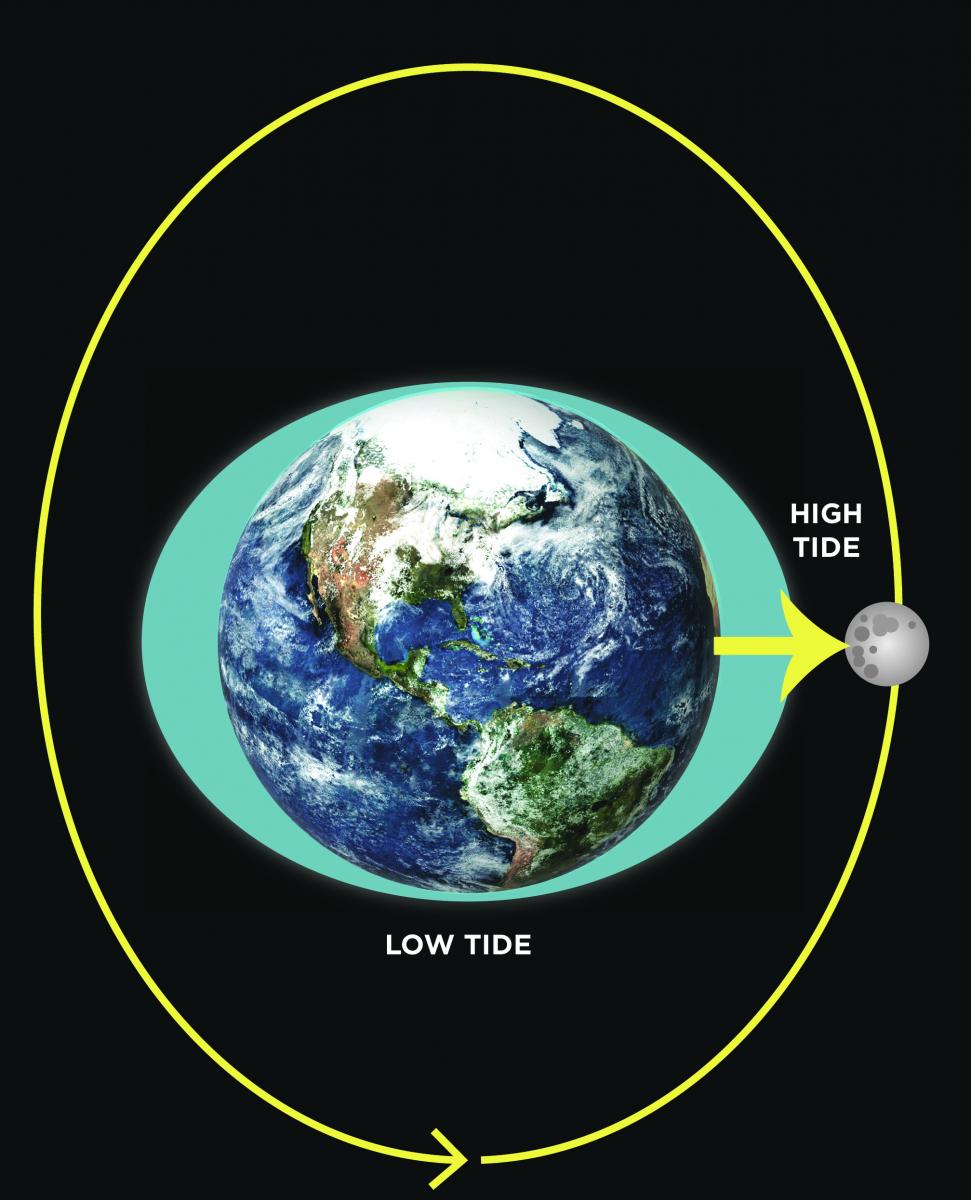
Twice a day, the moon’s gravity causes water to surge in and out of San Francisco Bay. The tide will rise or fall as much as 8 feet in 6 hours. The vast size of the Bay estuary - some 1,600 square miles - and the narrow Golden Gate create powerful tidal currents. Imagine trying to swim across the Golden Gate against 25 million tons of water flowing up to 7 miles per hour!
Living With the Tide
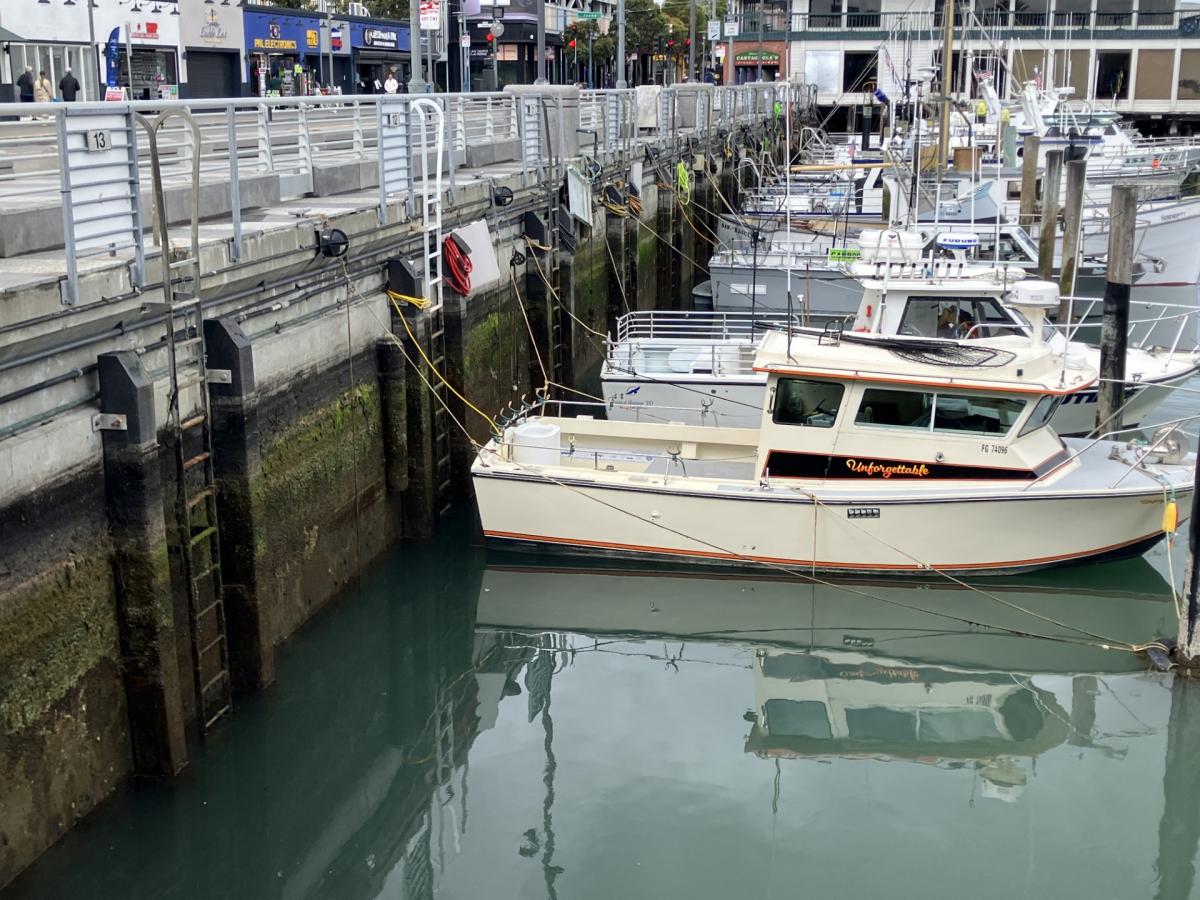
Is it high tide now? Low tide? Look at the pier pilings above the waterline. Are they wet? If so, it’s not high tide. During low tide - about every 12 hours - you can see algae, mussels, barnacles, and small crabs that are usually underwater. They cling to the pilings to secure a stable home in nutrient-rich tidal zones.
How Boats Get Into the Harbor
When the tide is flowing strong, it can be hard to get your boat into a slip, and even harder when the wind is blowing. If the tide is going out, it will pull you away from the dock. When the tide comes in heavy, it’s the opposite. It will push you into the dock, making it hard to get away.
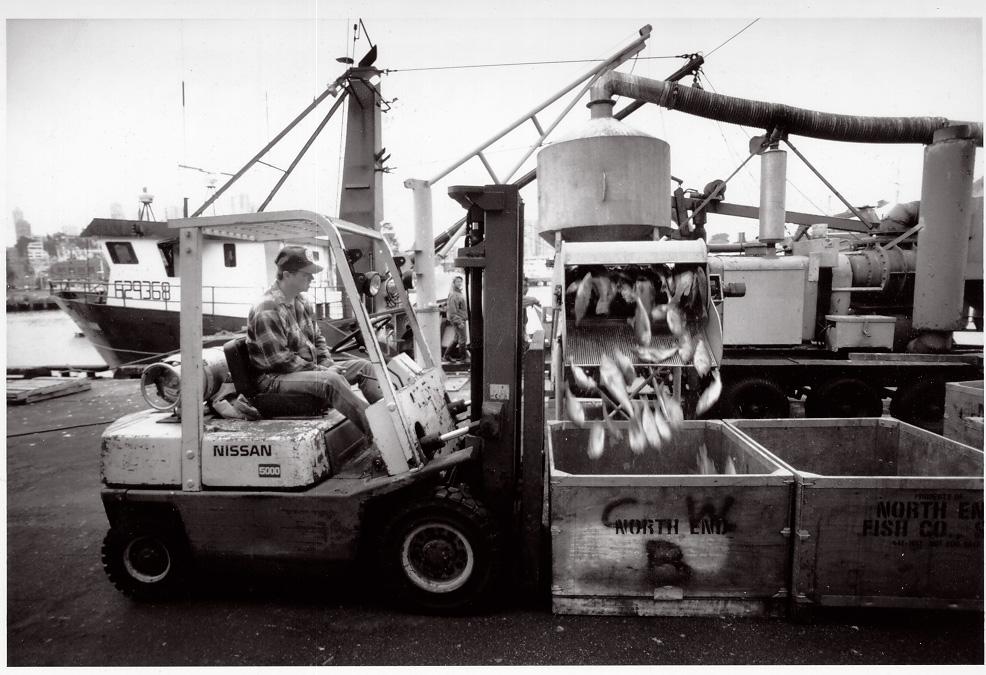
When fish arrive at the dock
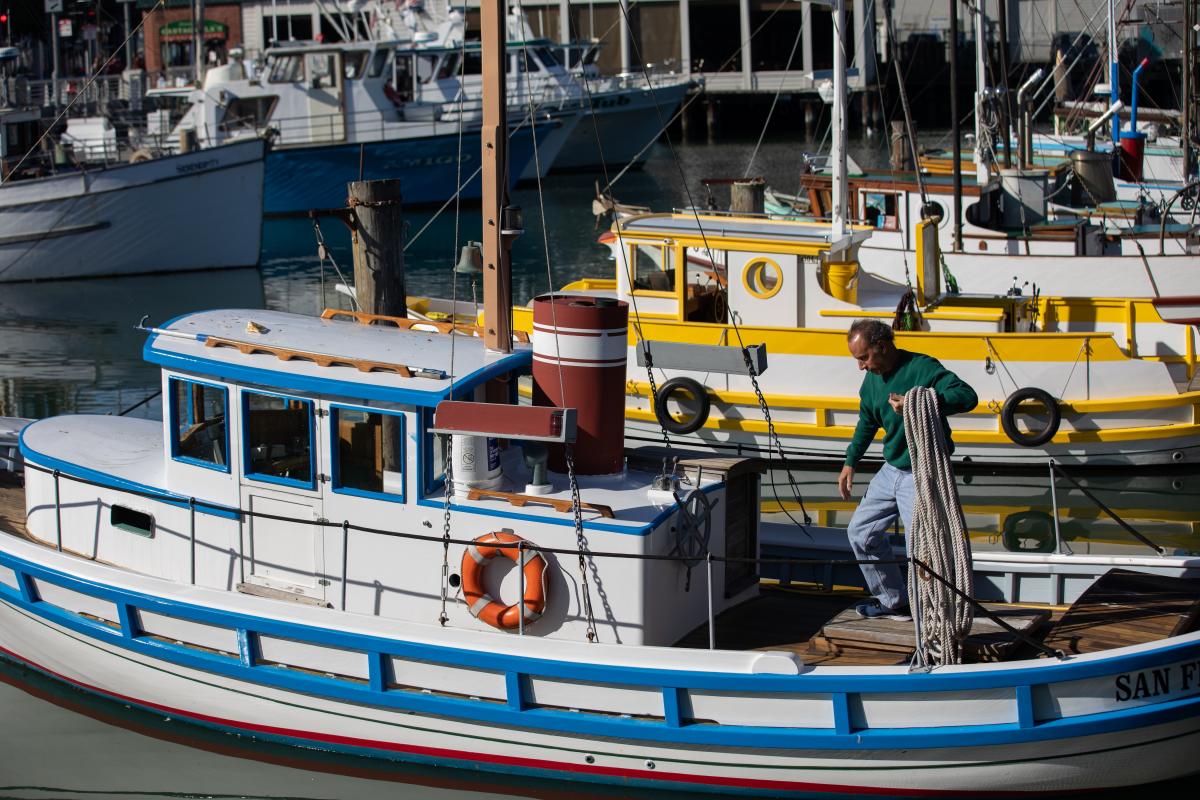
Fisherman’s Wharf is one of the largest fish-handling ports on the West Coast. More than a dozen handling and processing companies operate in the Pier 45 sheds. Boats and trucks load and unload fish that are then sent to restaurants all over California. Work at the Wharf starts early. It’s a busy place at four in the morning.
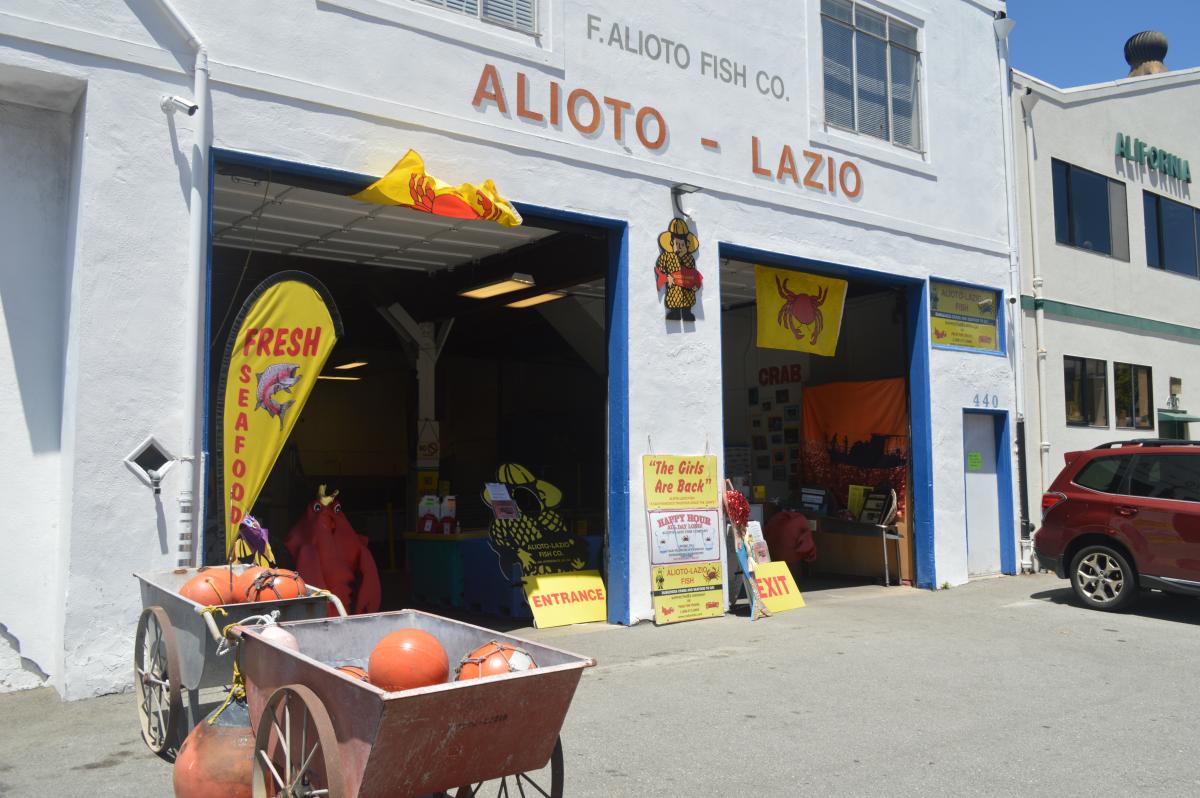
The Alioto-Lazio Fish Company
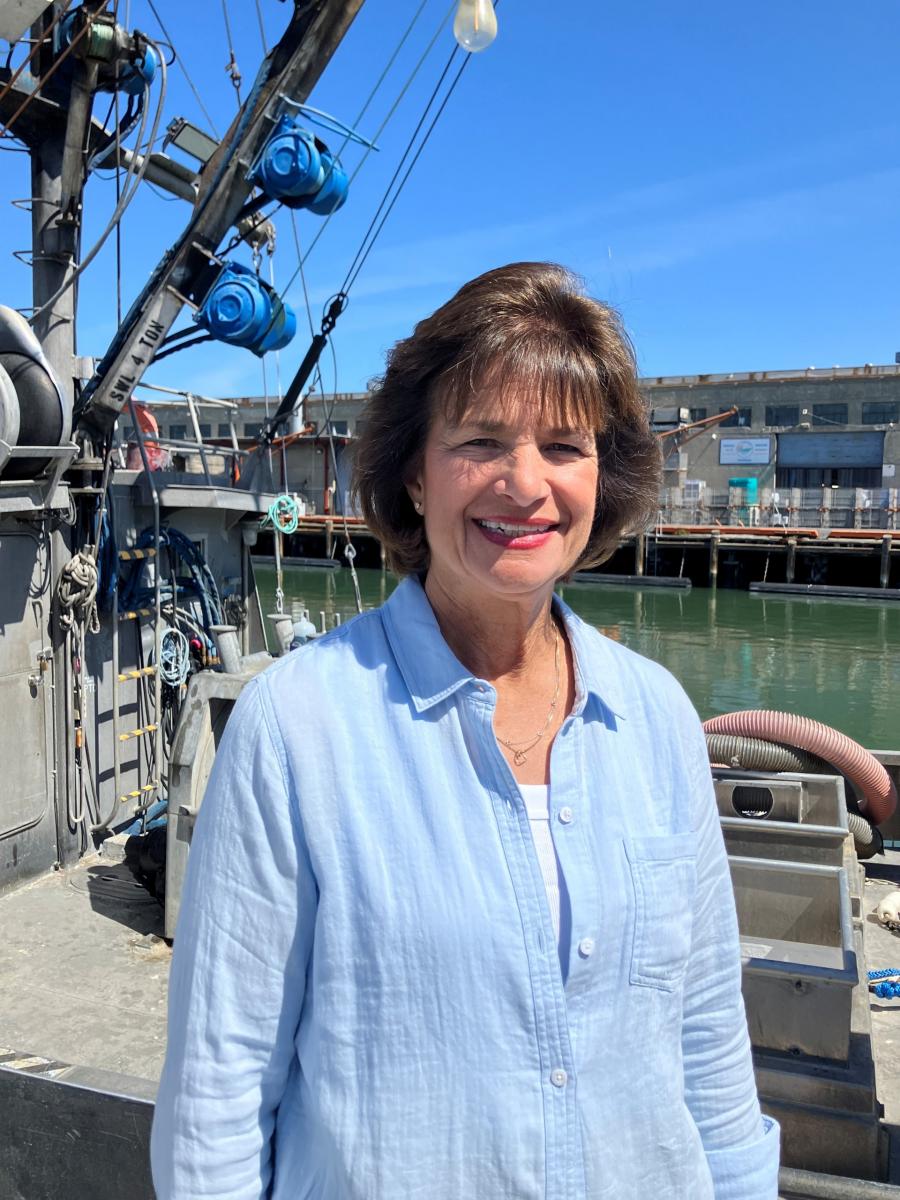
For over 85 years, visitors and locals have come to Fisherman’s Wharf to buy fresh seafood from the Alioto-Lazio Fish Company. In 1998, Tom Lazio passed the business on to his daughter and granddaughters.
Fishing businesses at the Wharf are run mostly by men. “The Girls” have shown that with hard work, they too can succeed and deliver a quality San Francisco product.
Manager of the Boats
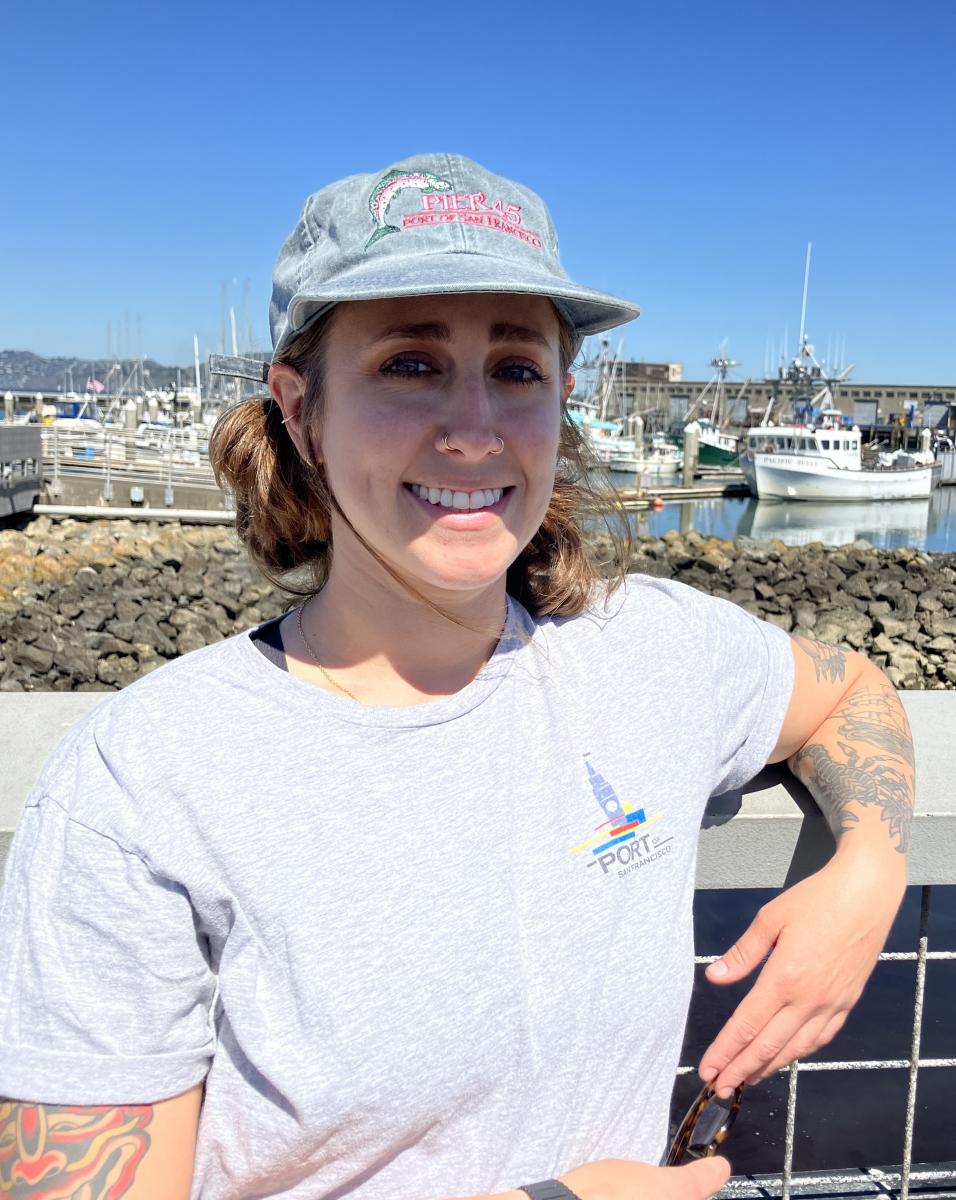
“A wharfinger is a manager of a wharf. We work with fishers, the public, and wildlife, making sure everyone can enjoy the waterfront. Every day is different – one day it’s quiet and the next there are three boats sinking! It’s rewarding to work with such a tight-knit community, and I love seeing other women working on the waterfront. There’s room for everyone in the maritime industry.” – Becca Gross, Wharfinger
Who is working on their boat today?
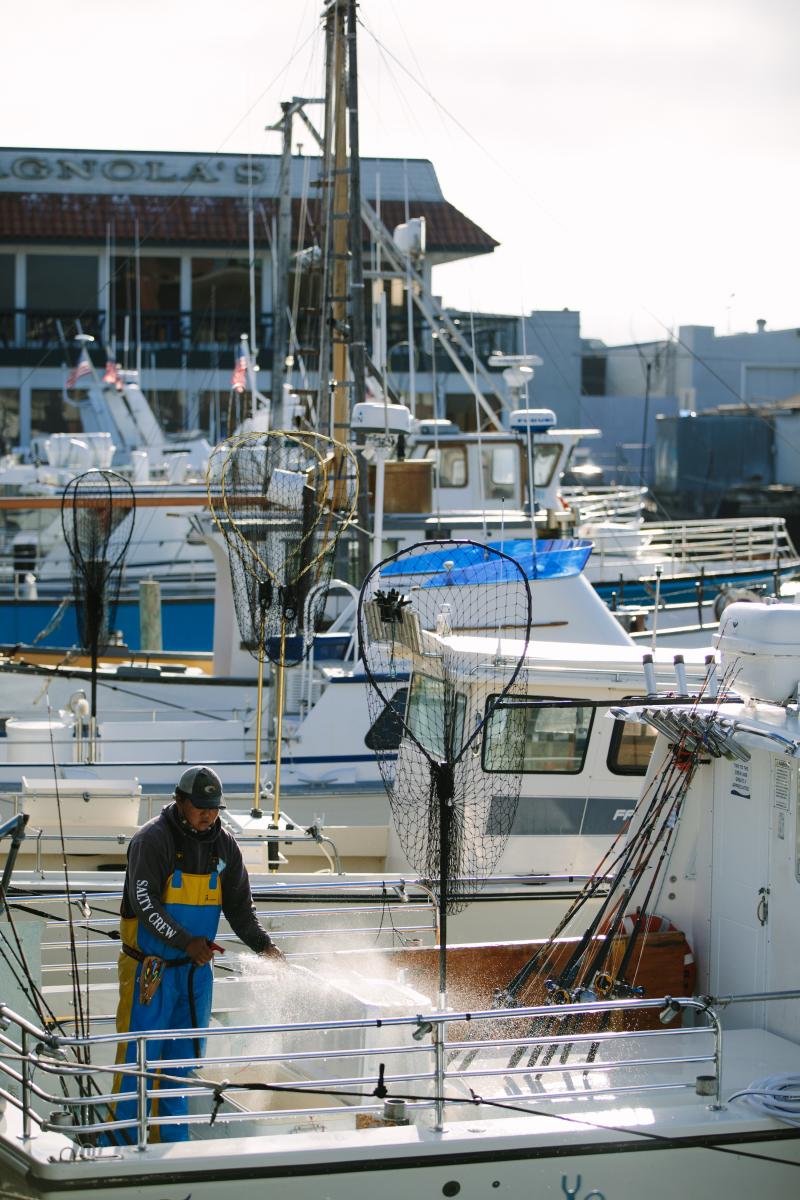
It’s a busy time when a boat arrives at the dock. Jobs could be mending a net, fixing a 100-pound crab pot, doing laundry, and outfitting for the next trip.
Fishermen do minor boat repairs in the harbor. Sanding, scraping, and major work are not permitted because these activities could pollute the water.
How vessels get their names
Naming a boat is a challenge and an important task.
A boat’s name helps people identify a vessel and may express the owner’s personality. Some boats are named based on tradition. Many Italian fishermen name their boats after family members. Other fishers name their boat with a pun or humorous phrase. To get a sense of the current fleet, check out the boat names!
A Working Fishing Port
Fisherman’s Wharf has “location!” It is close to the Golden Gate, giving it quick access to rich ocean fisheries. It is also a sheltered harbor with easy land access. The Wharf ’s many fish processors are great buyers for fishers returning from the ocean. It has the most processors of any location along the northern California coast.
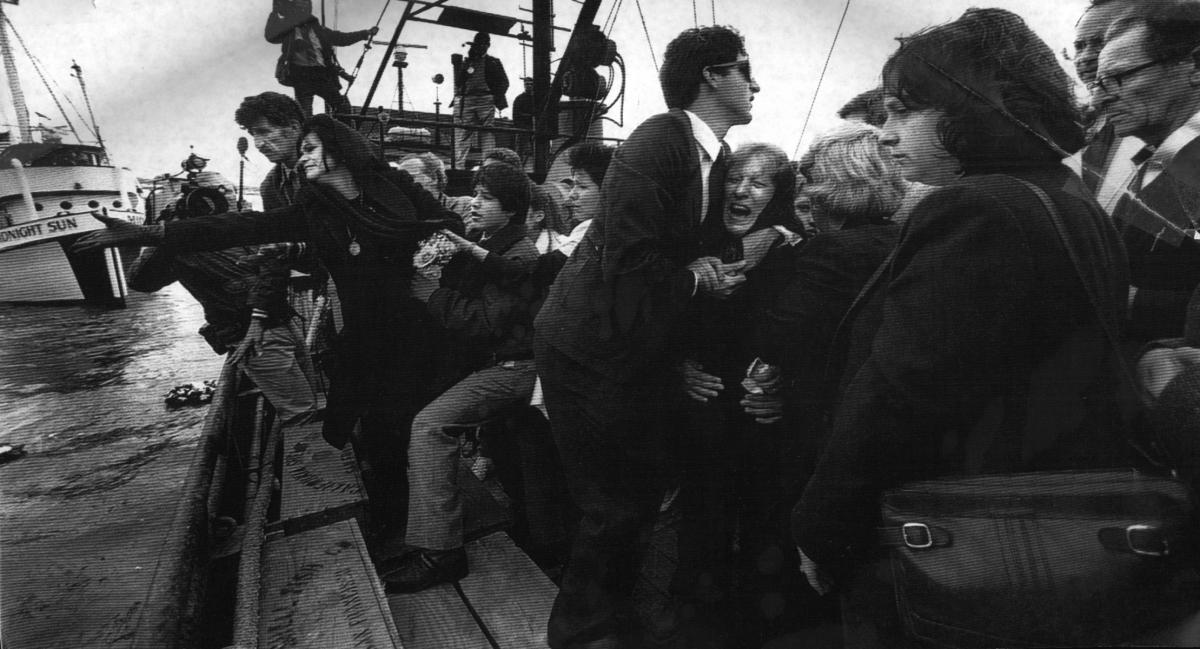
Honoring Those Lost at Sea
Grieving family members and fellow fishermen prepare to drop flowers onto the waves in memory of a fishing boat and its crew lost at sea. Ceremonies play an important role in the healing process for those lost pursuing their livelihood.
A group of people throws flowers into the water from a boat deck. A woman is crying in the foreground, being held back by a young man.
Image: Vince Maggiora, the San Francisco Chronicle, and the Favalora family
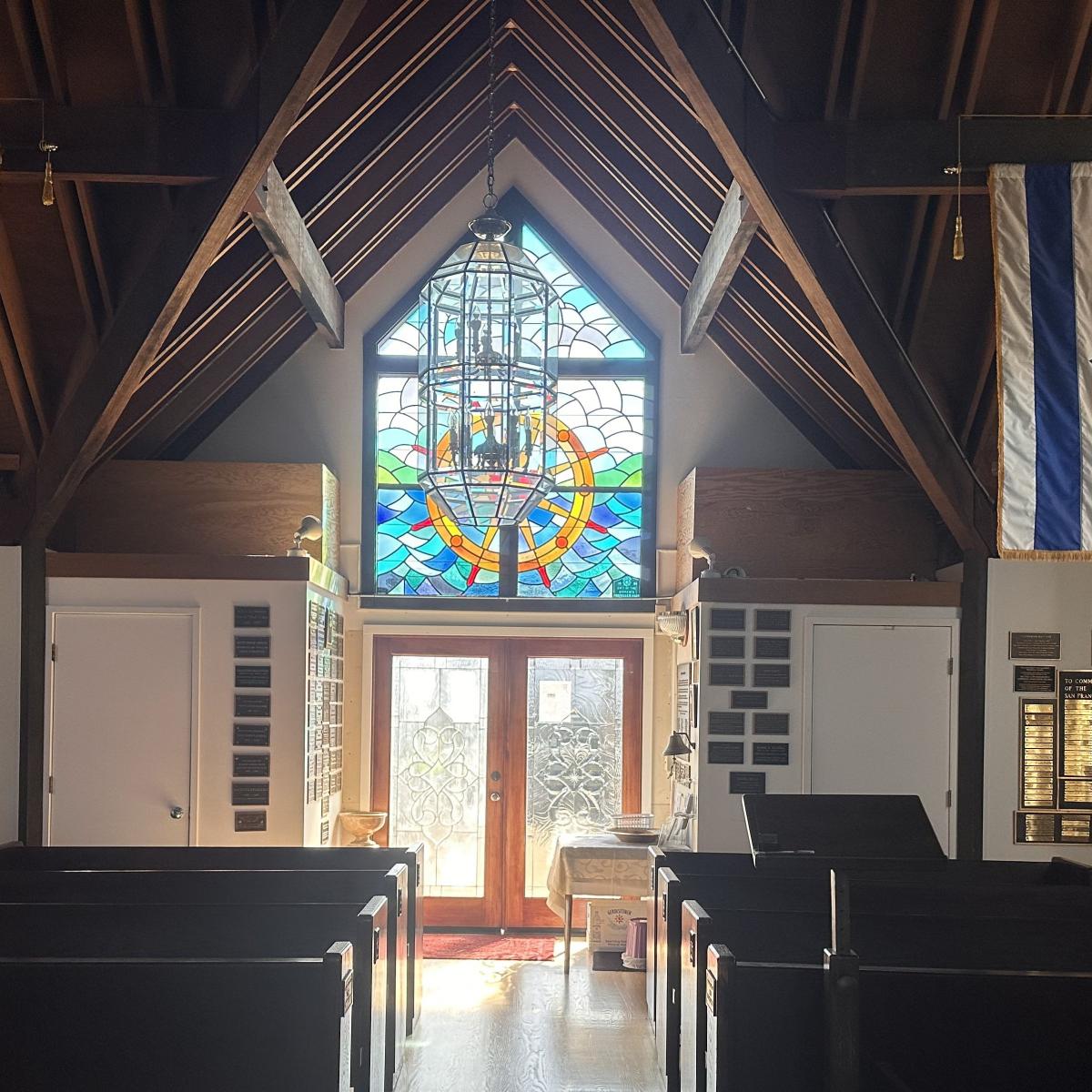
Fishermen’s & Seamen’s Memorial Chapel
The local fleet built the Fishermen’s and Seamen’s Memorial Chapel in 1979 as a memorial to those lost at sea. Inside, the Chapel walls bear the names of those men and women. A Catholic Mass is said in Latin every Sunday. Other religious services are also regularly held at the Chapel.
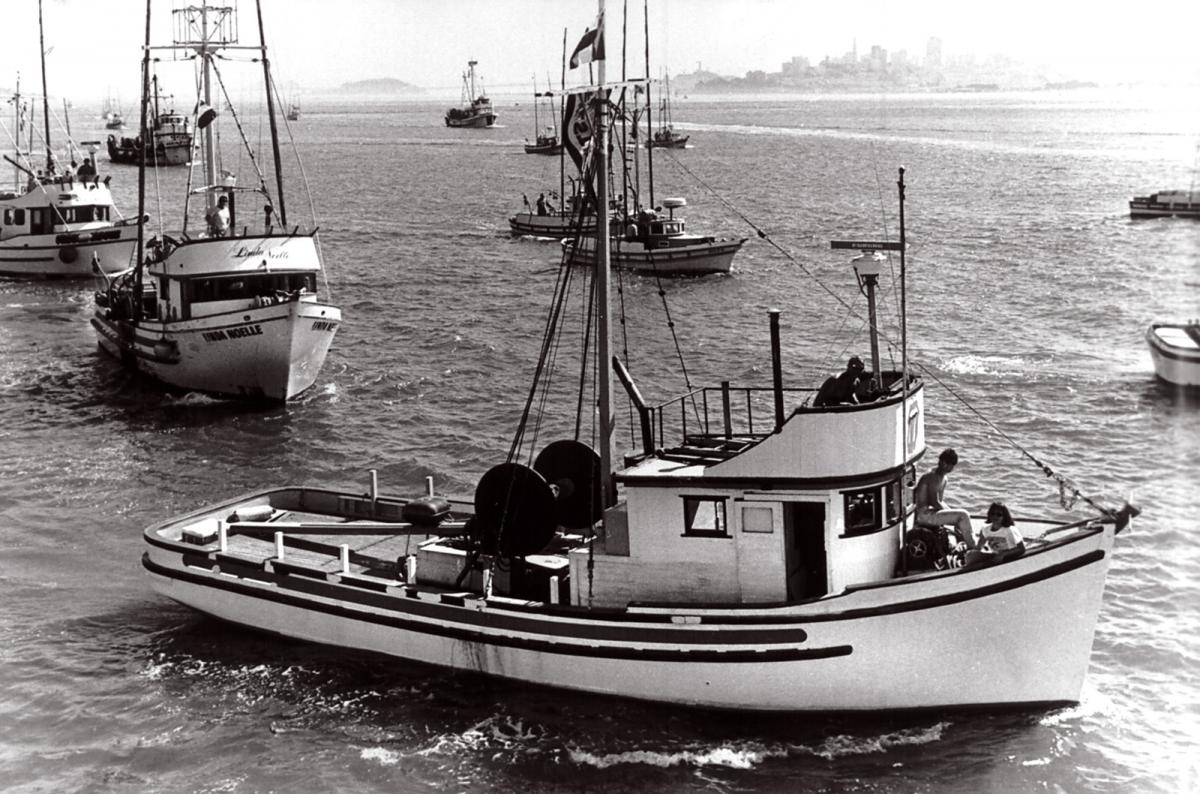
Blessing of the Fleet
The Madonna del Lume is a Sicilian fishing tradition that dates back to the 1700s. The story goes that a fishing fleet got lost at sea. They were guided back to port by the Madonna del Lume (“Mother of Light”). The town celebrated their safe return with a mass and a parade. This celebration continues today. A memorial mass is held on the first Saturday of October, followed by a boat procession during which a priest offers blessings to each boat in the fleet.
Working Together and Thinking Forward
Commercial fishers, environmental advocates, and government agencies work together to protect ocean life and support people who make a living by fishing. The California Department of Fish and Wildlife sets rules for when fishing season can open based on things like weather, whale migration, and ocean health. Fishermen also help protect marine life by using safer gear and making decisions based on good data.
Image: Matt Juanes, Commercial Fisherman
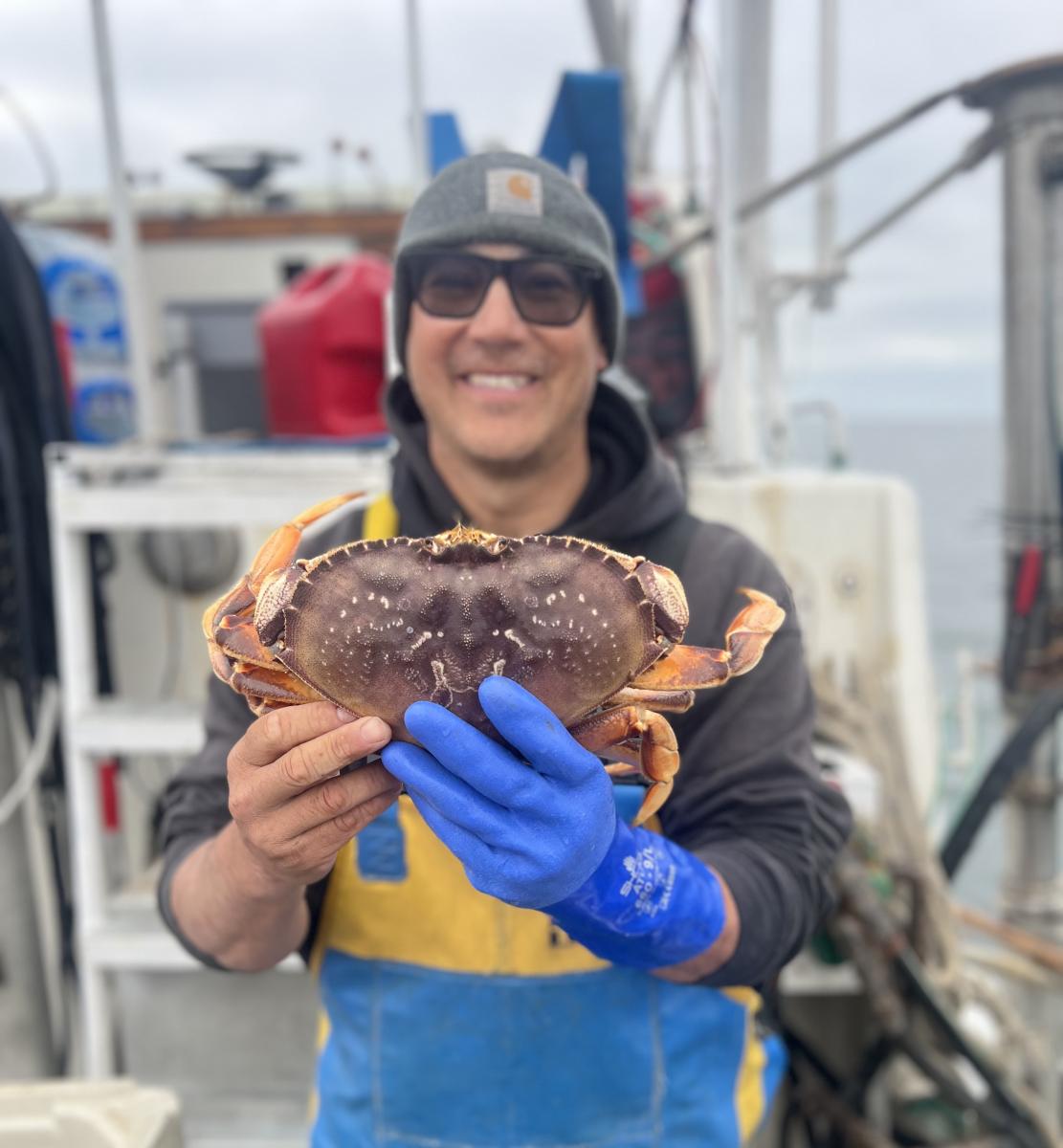
“If we act as good stewards of our fishery resources, then they will provide for us, our children, and their children’s children.” - Pietro Parravano, Fisherman
Our oceans have fragile ecosystems. Ocean fisheries can be harmed when people build on coastal wetlands, pollute rivers, or change the paths where fish travel to spawn. We can help protect the oceans by living in ways that work with the environment.
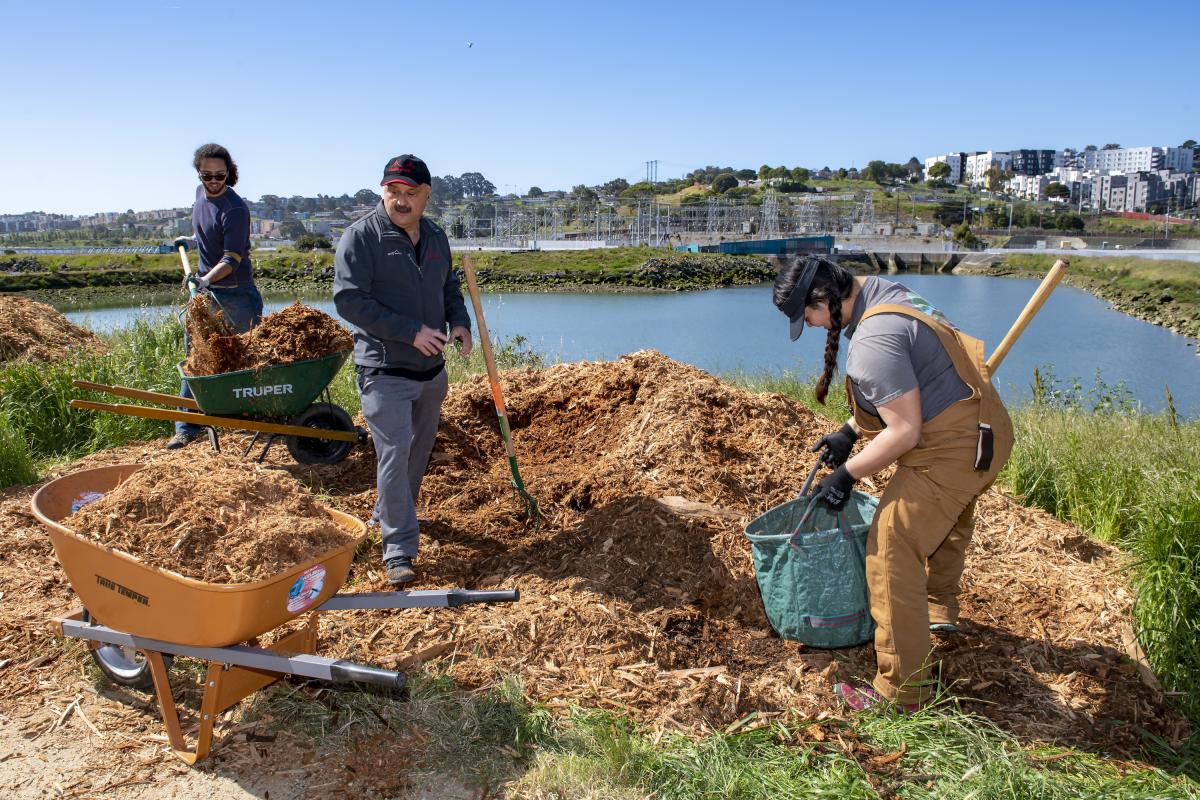
Success of the 1972 Clean Water Act
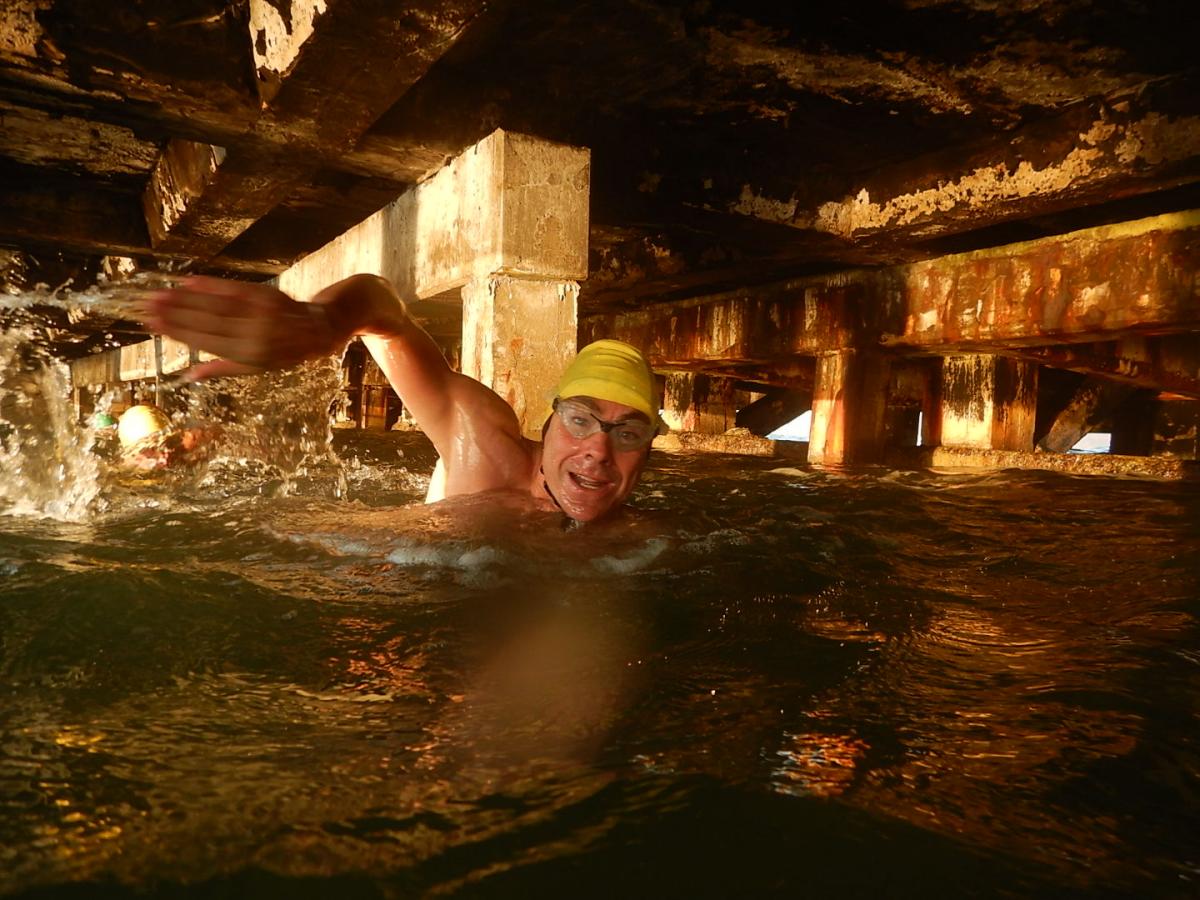
Before the early 1970s, San Francisco Bay was a dumping ground for sewage, trash, and pollutants. The water became so dirty that it was unsafe to swim, and fish often died. The 1972 Clean Water Act set rules to reduce pollution and helped cities build treatment plants. Today, plastic pollution and climate change persist, but the Bay is cleaner and safer for wildlife, fishing, and swimming.
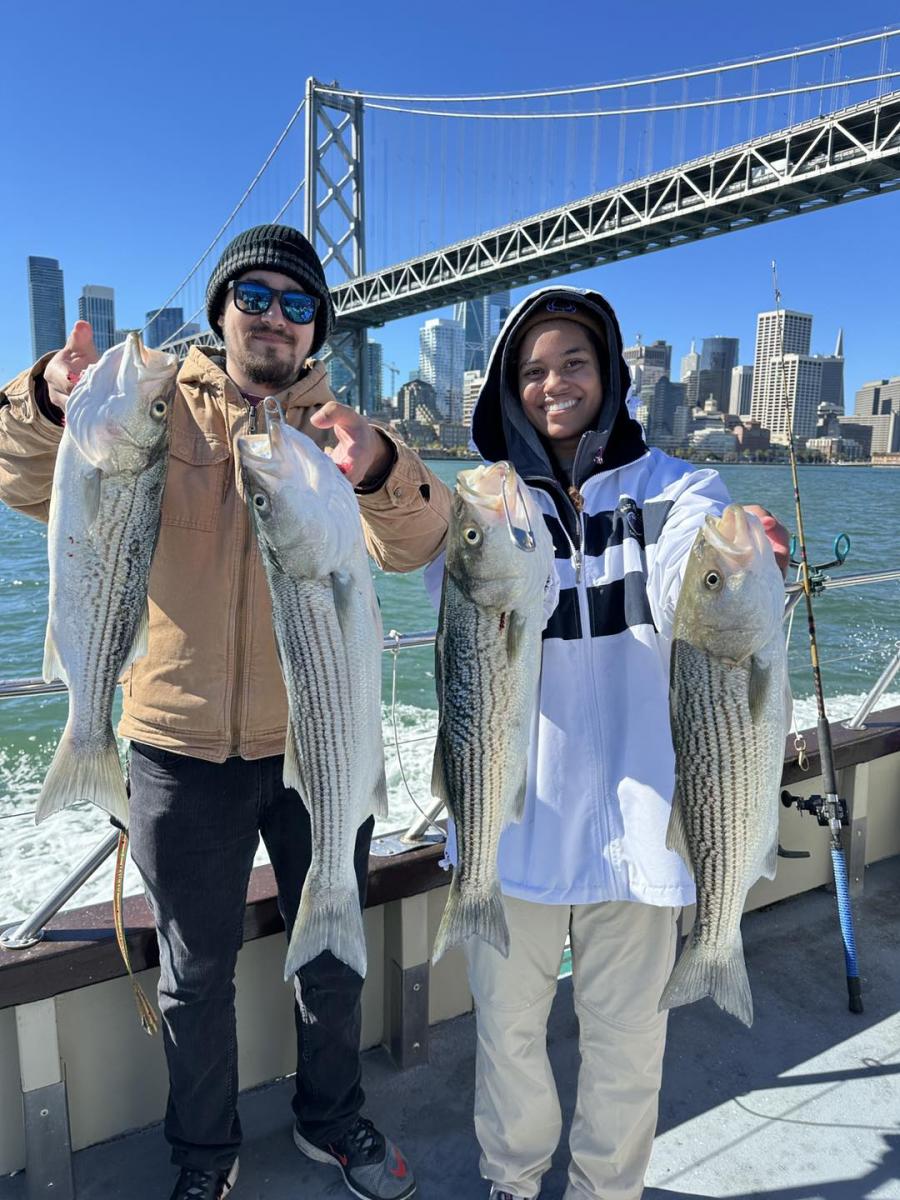
Fishing is fun!
Knowledgeable skippers and great fish make Fisherman’s Wharf a top spot for anglers. The Wharf ’s sportfishing boats offer trips inside and outside the Golden Gate. Full- and half-day trips run all year.
Outside the Golden Gate, salmon, lingcod, halibut, and albacore are abundant in season. Inside the bay, anglers can find halibut, salmon, and striped bass.
Image: Lovely Martha Sportfishing
Our Local Catch
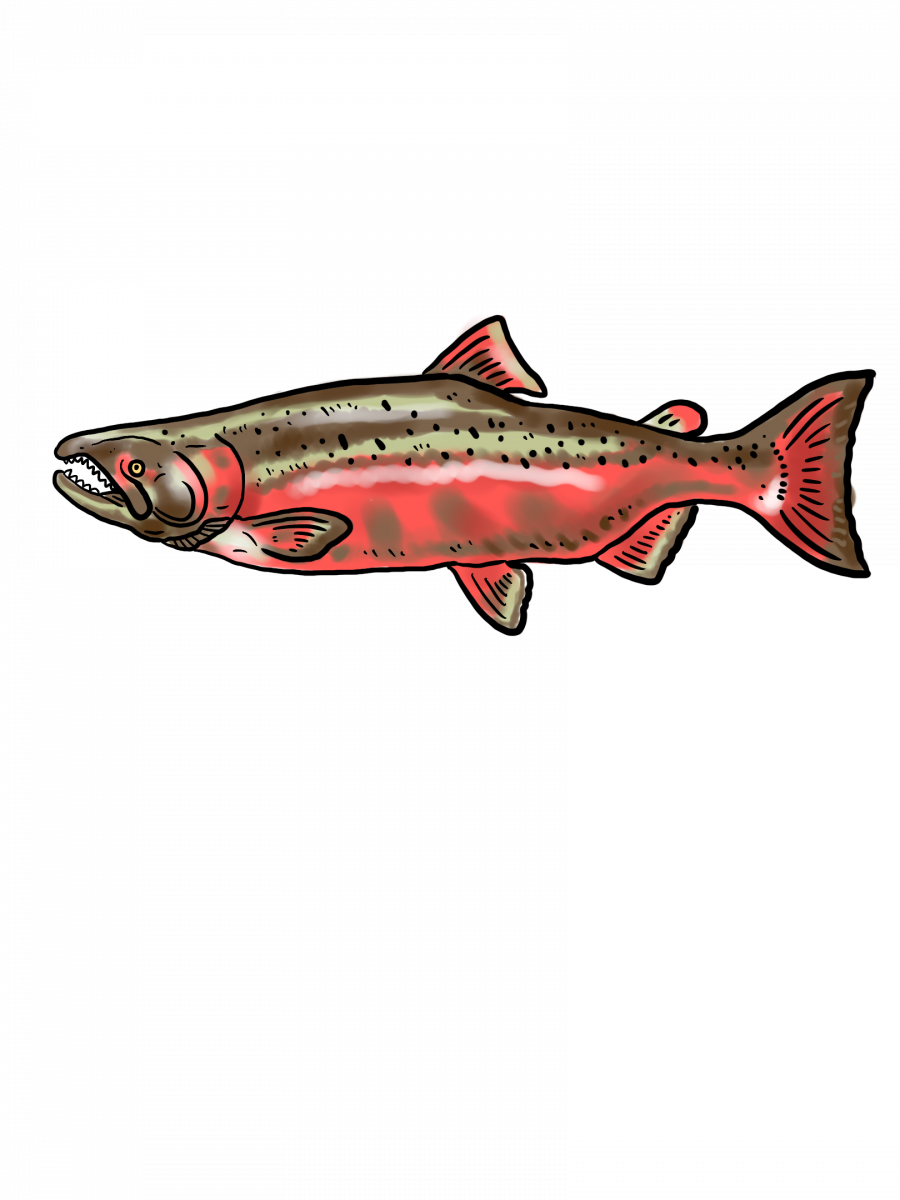
Chinook salmon are also called King salmon. They live in the ocean from Alaska down to Central California. They start their lives in freshwater rivers, then they swim to the ocean to grow. When it’s time to lay eggs, they swim back up the rivers where they spawn and then die. Salmon season usually runs from May to September. Most weigh between 5 and 25 pounds but can grow to over 100 pounds!
Fun Fact! Chinook Salmon is an important animal in many Native American cultures along the West Coast.
Our Local Catch
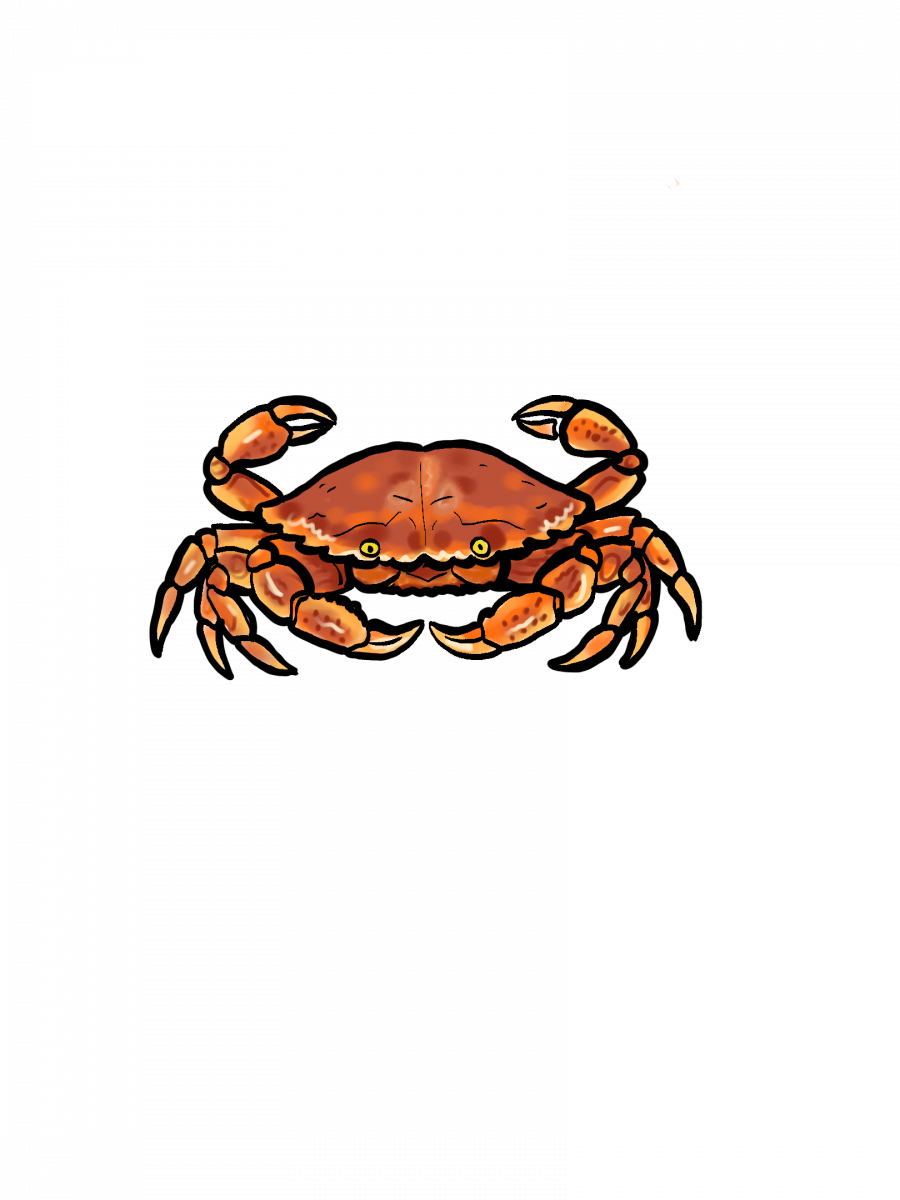
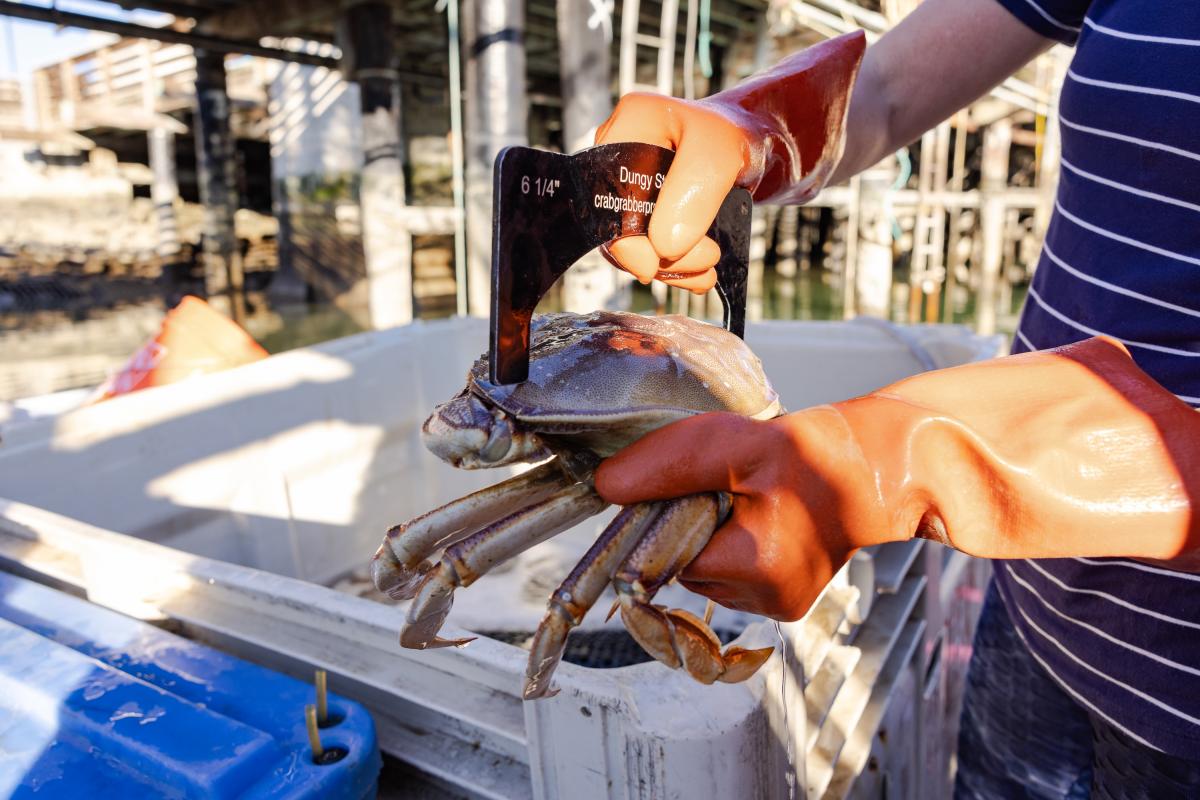
Dungeness crabs are found from Alaska to central California. They are caught by crabbers who put traps on the sea floor as deep as 300 feet from November to June. When the traps are pulled up, only male crabs that are at least 6 inches across can be kept. Smaller crabs and female crabs must be put back to keep the population healthy.
Fun Fact! Crabs can’t stretch their shells, so they shed and grow new ones—like getting a new coat as they grow.
Our Local Catch
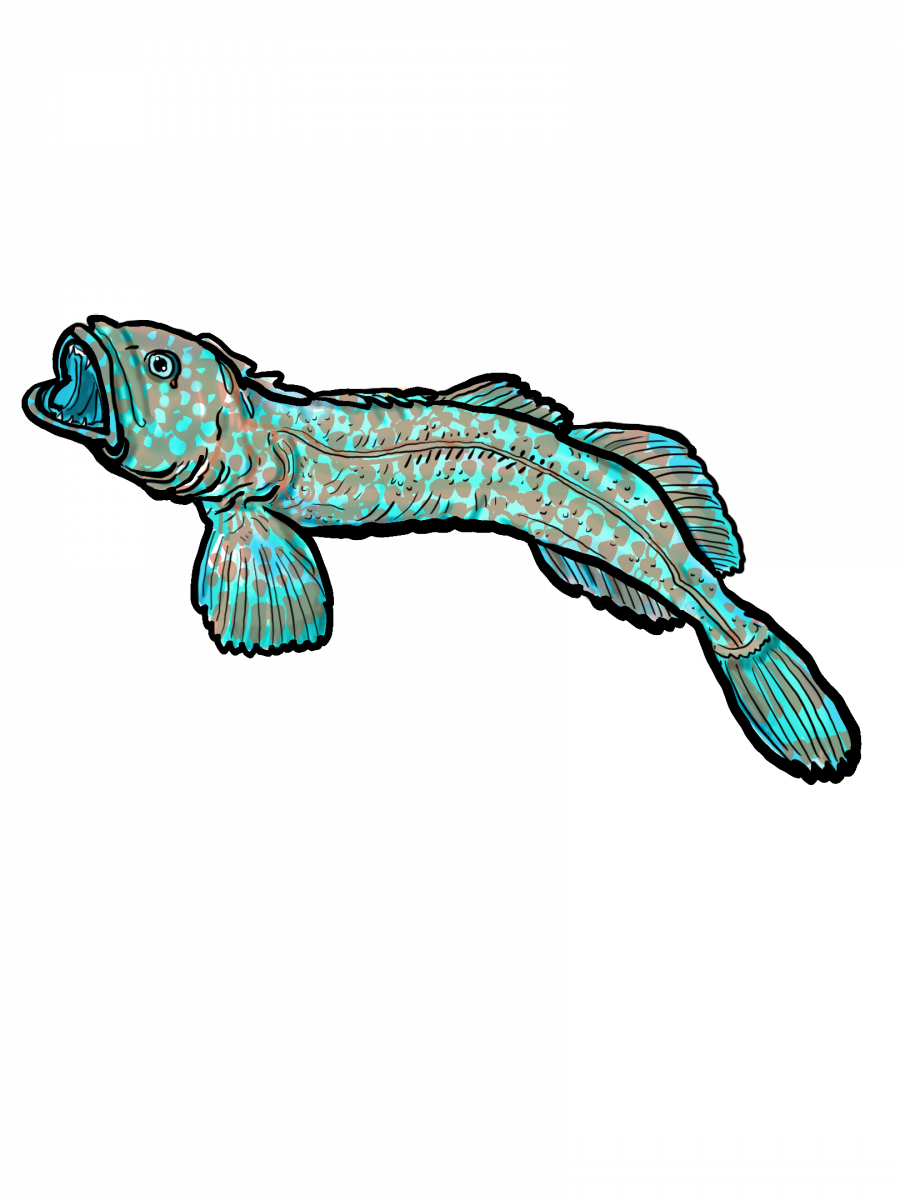
Lingcod live from Alaska to Baja California. They prefer rocky areas near shore or in waters up to 1,400 feet deep. The catching season avoids nesting months. Fishermen use trawlers and hook-and-line boats for their catch. Lingcod are also popular among sport fishers. They can grow up to 5 feet long and weigh 70 pounds.
Fun Fact! Lingcod are known for their striking blue-green color and large, sharp teeth
Our Local Catch
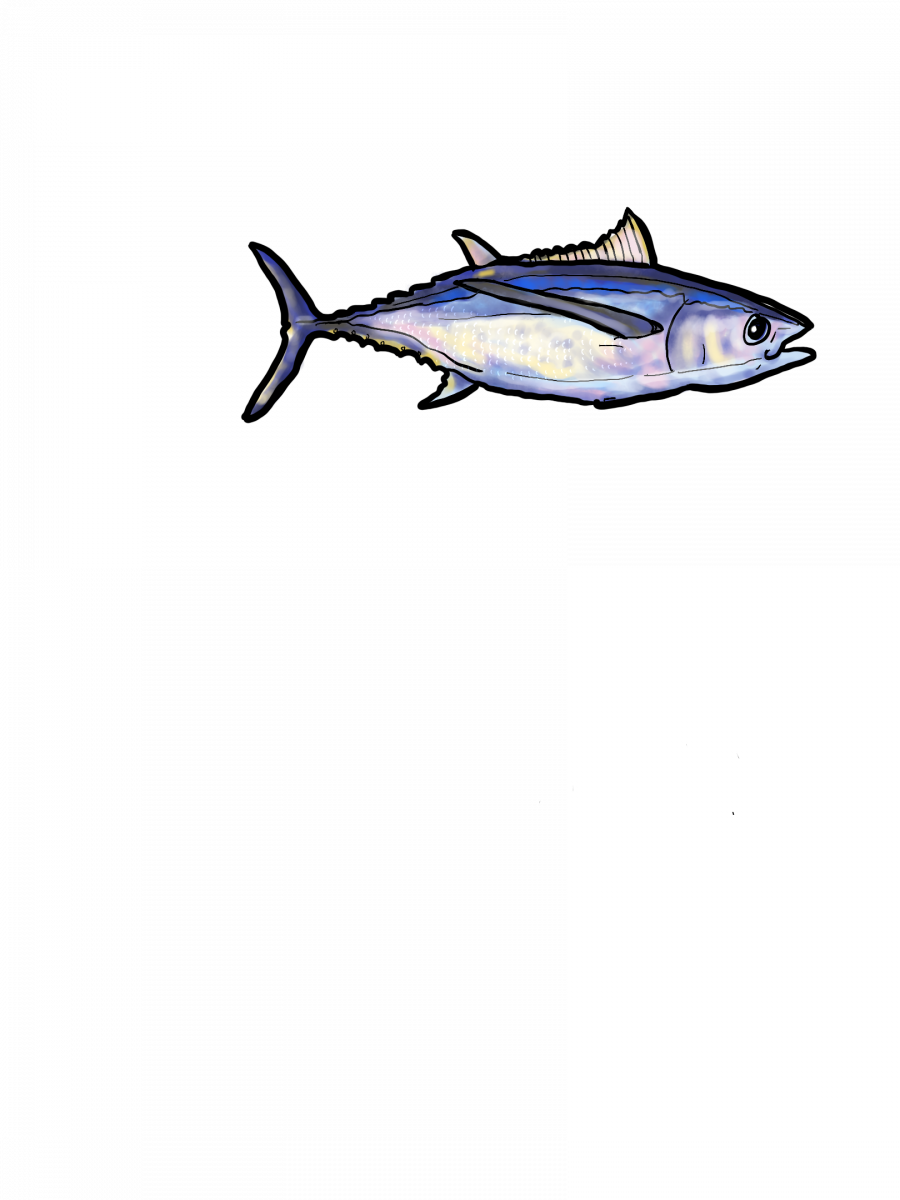
Albacore tuna are strong, fast fish that live in cool oceans all around the world. Fishermen catch them by pulling colorful lures along the top of the water. They often stay out at sea for many weeks and freeze the tuna they catch. These tuna weigh about as much as a small dog—between 10 and 25 pounds—but some grow much bigger!
Fun Fact! Some Albacore tuna can reach 75 pounds.
Our Local Catch
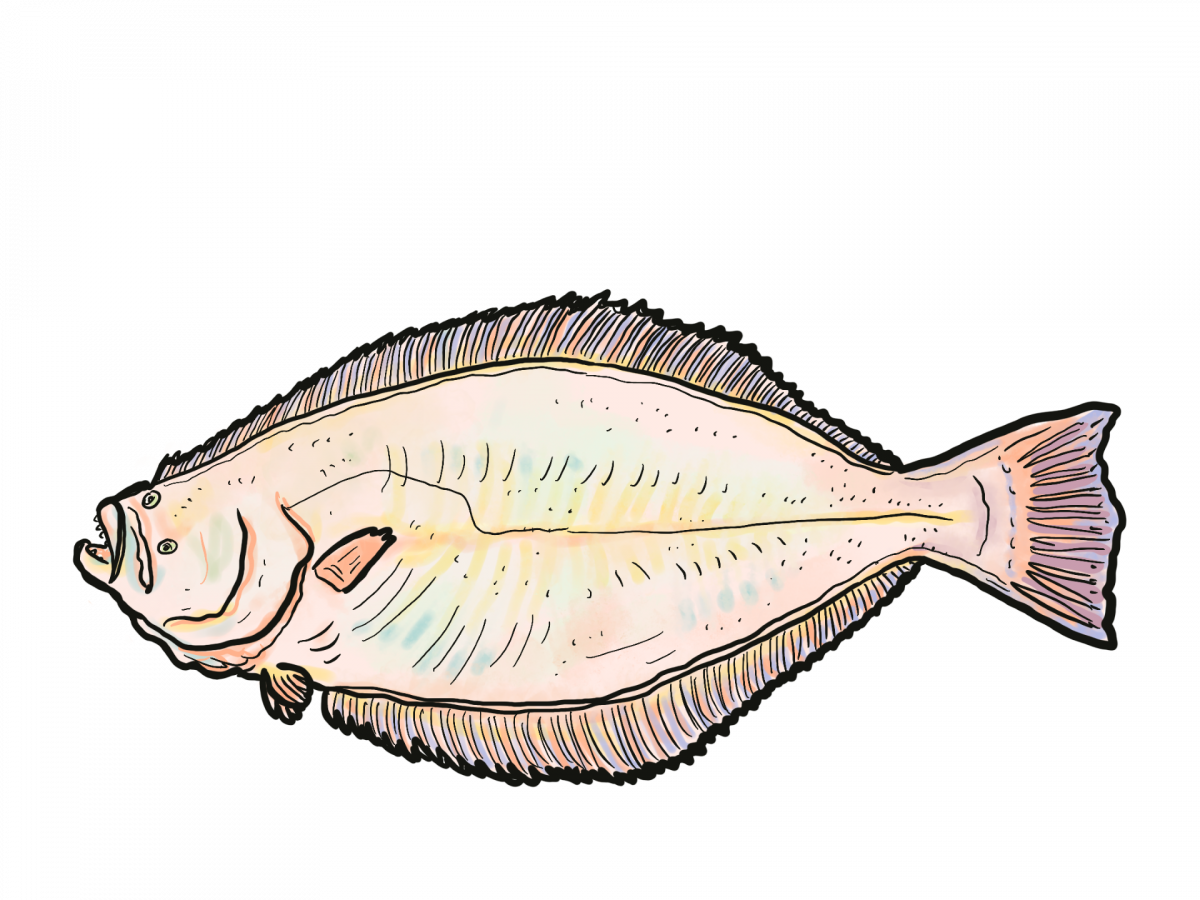
California halibut live along the West Coast from Washington to southern Baja California. They prefer sandy areas and quiet bays. Most are caught with large nets. Some are caught with fishing lines. Halibut are flat and wide fish. Most grow to about 2 feet long, but some can reach 5 feet and weigh up to 72 pounds!
Fun Fact! To hide, halibut lie flat on the ocean floor and look up. Both of their eyes are on one side.
Our Local Catch
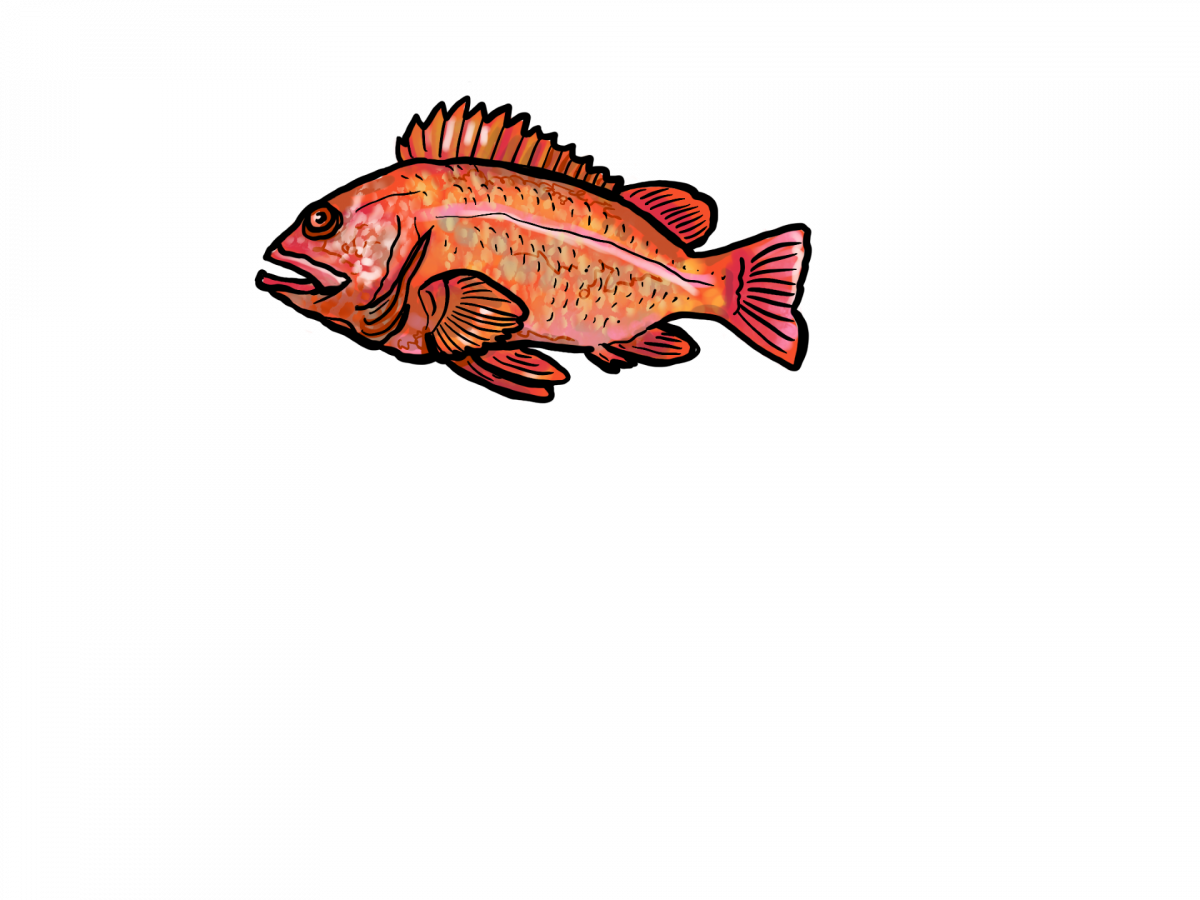
Rock cod, red snapper, and snapper are all known as rockfish. Fishermen catch over 40 species of rockfish. They use nets, traps, long lines, and vertical hook-and-line gear. Recreational fishermen also like to catch rockfish.
Fun Fact! Rockfish often have bulging eyes, slim bodies, and big mouths.
Our Local Catch
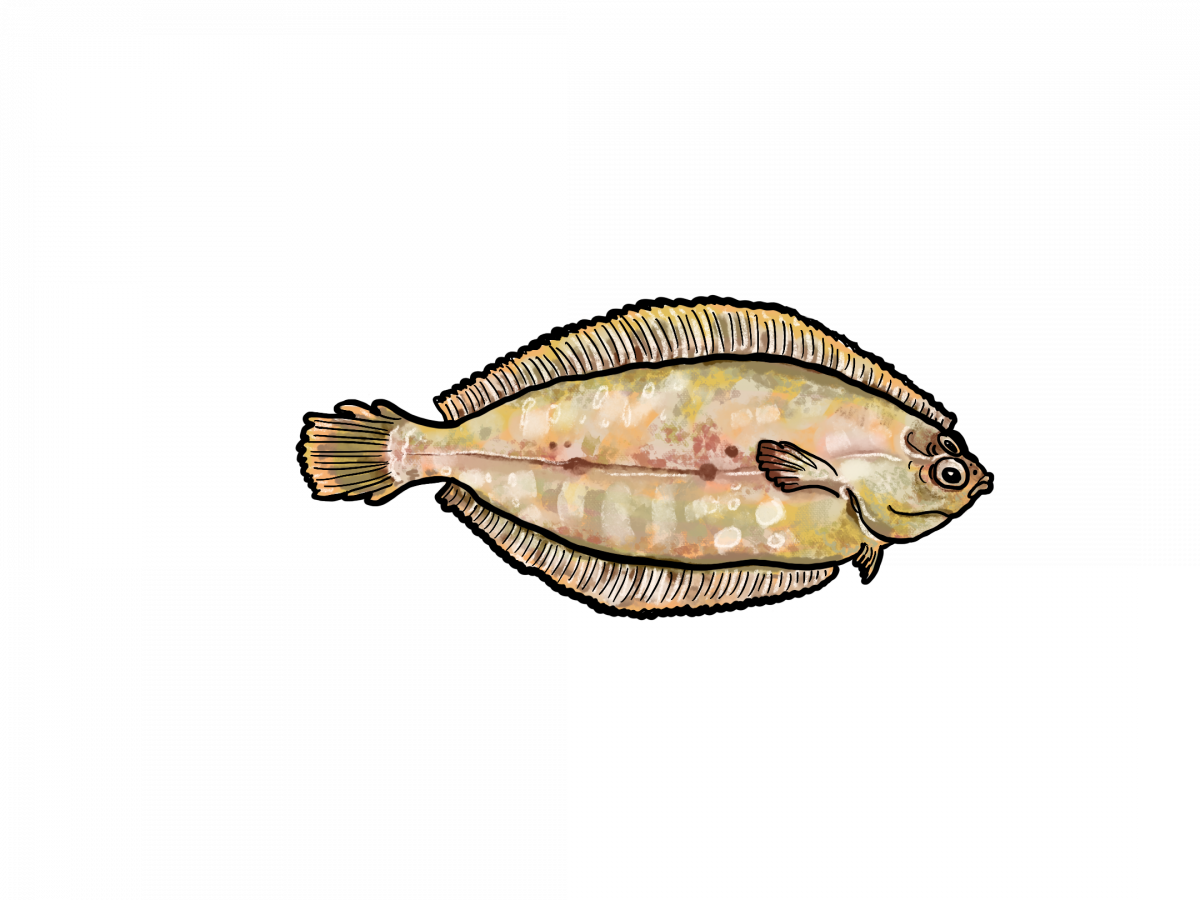
Sole, including Dover, English, rex, and petrale, are a mainstay of the trawl fleet. These flatfish live in sand and mud on the ocean bottom as deep as 3,000 feet. Most sole average about 2 feet in length.
Fun Fact! Sole are experts in disguise. Their sandy or muddy colors blend in with the seafloor. This camouflage helps them avoid predators.
Our Local Catch
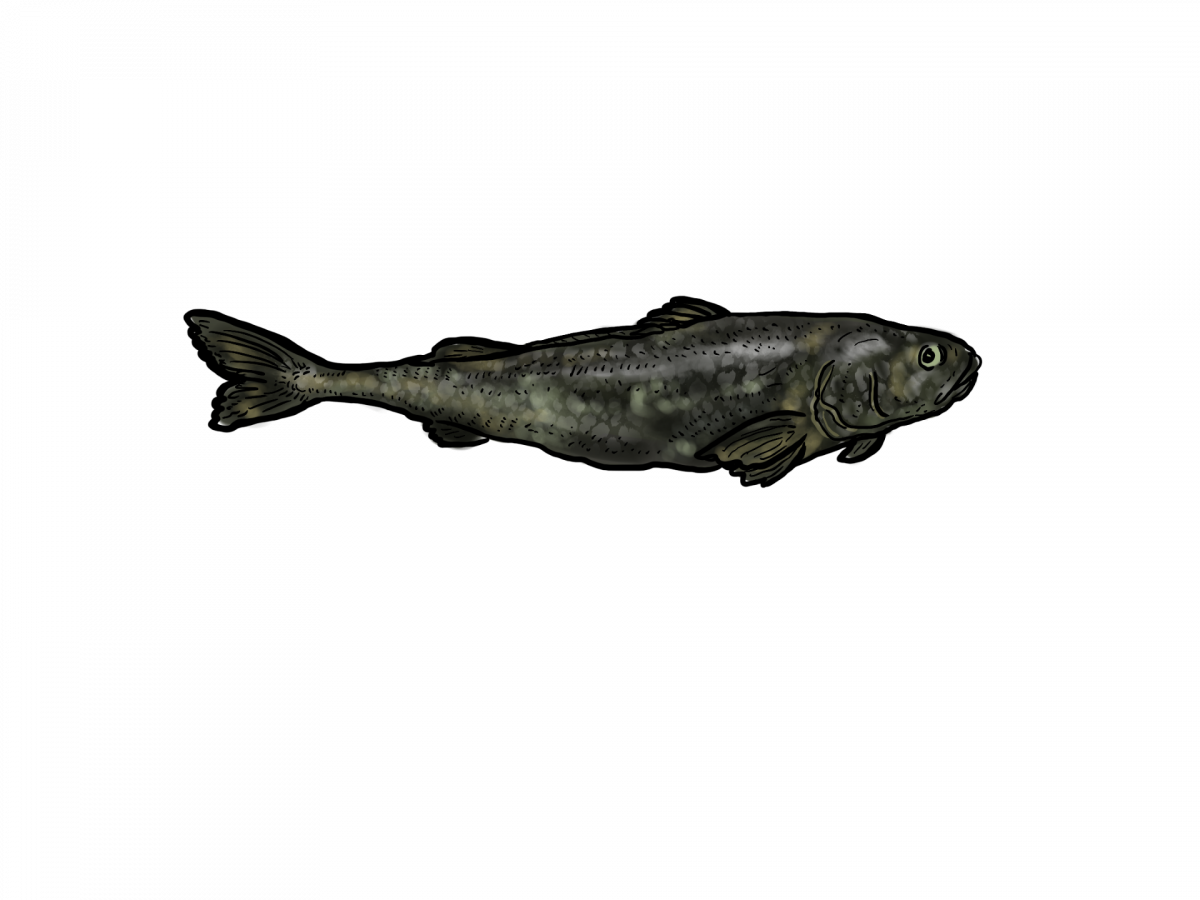
Sablefish range from the Bering Sea to Baja California. They live on muddy bottoms in water as deep as 3,000 feet. Also called black cod, these fish can grow to 30 inches long and 25 pounds. To catch them, fishermen use trawlers and long-liner boats. They also use fish traps.
Fun Fact: Sablefish are known for their rich, buttery flavor and high oil content.
Our Local Catch
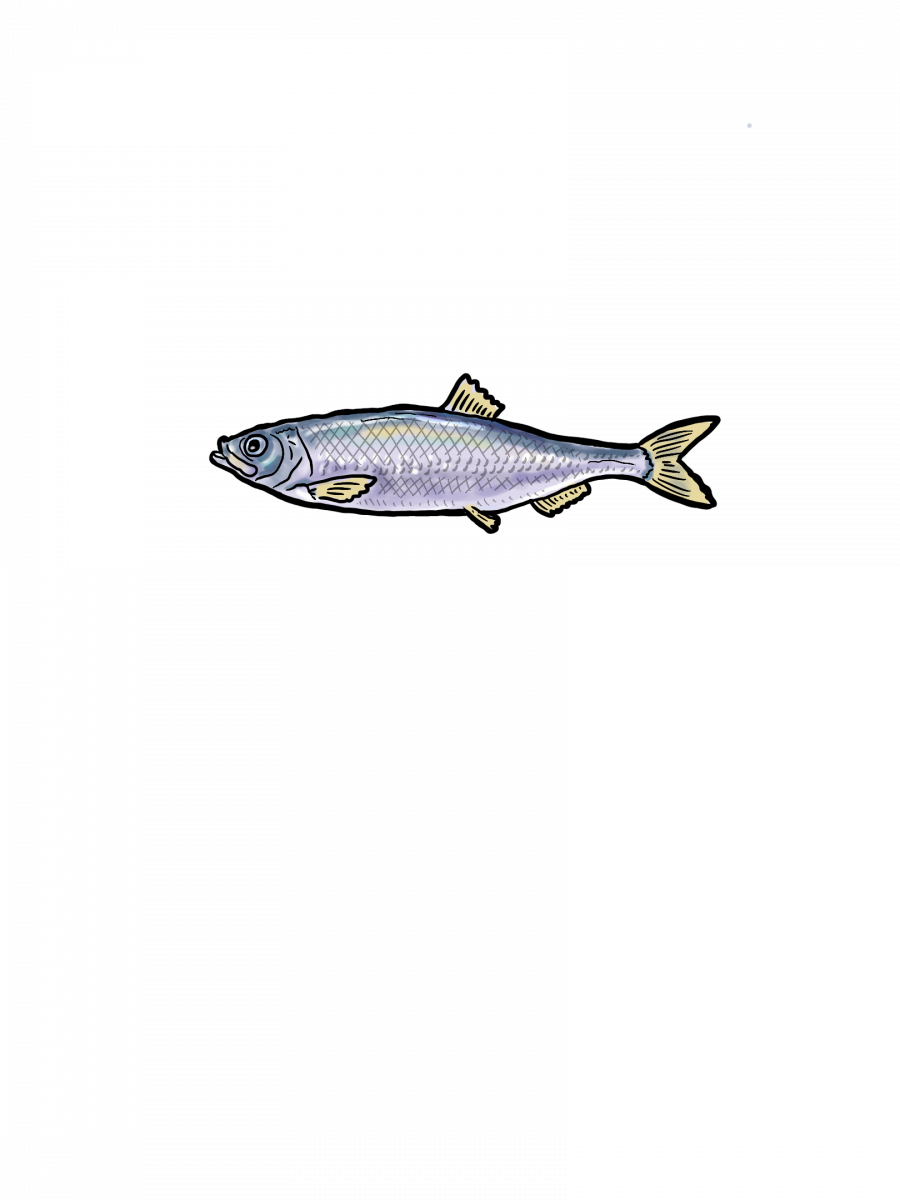
Pacific herring swim in large schools in open waters. They are found from Alaska to Baja California. To spawn, they go into sheltered harbors and bays. During spawning season, gill-netters catch herring in San Francisco Bay. Herring are valued for the females’ precious roe, or eggs.
Fun fact: In the winter, you can sometimes see a school of baby herring here in the harbor, with hundreds or even thousands of fish!
Dungeness Crab is a Local Favorite
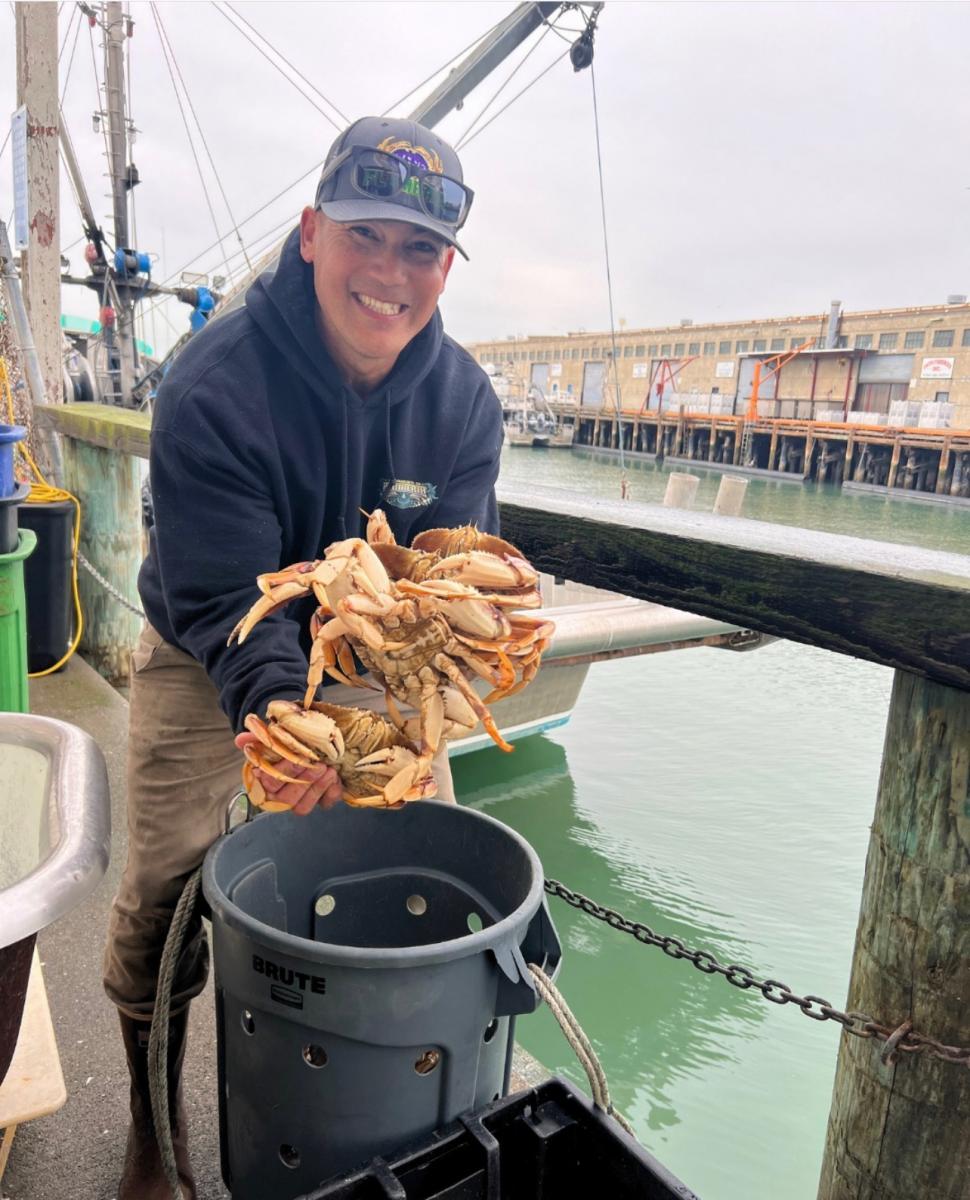
Fisherman’s Wharf is known for Dungeness crab. Fishermen caught them in the 1840s, and they still catch them today. Crab season starts in mid-November and lasts until the end of June.
Image: Matt Juanes, Commercial Fisherman
How to Catch a Crab
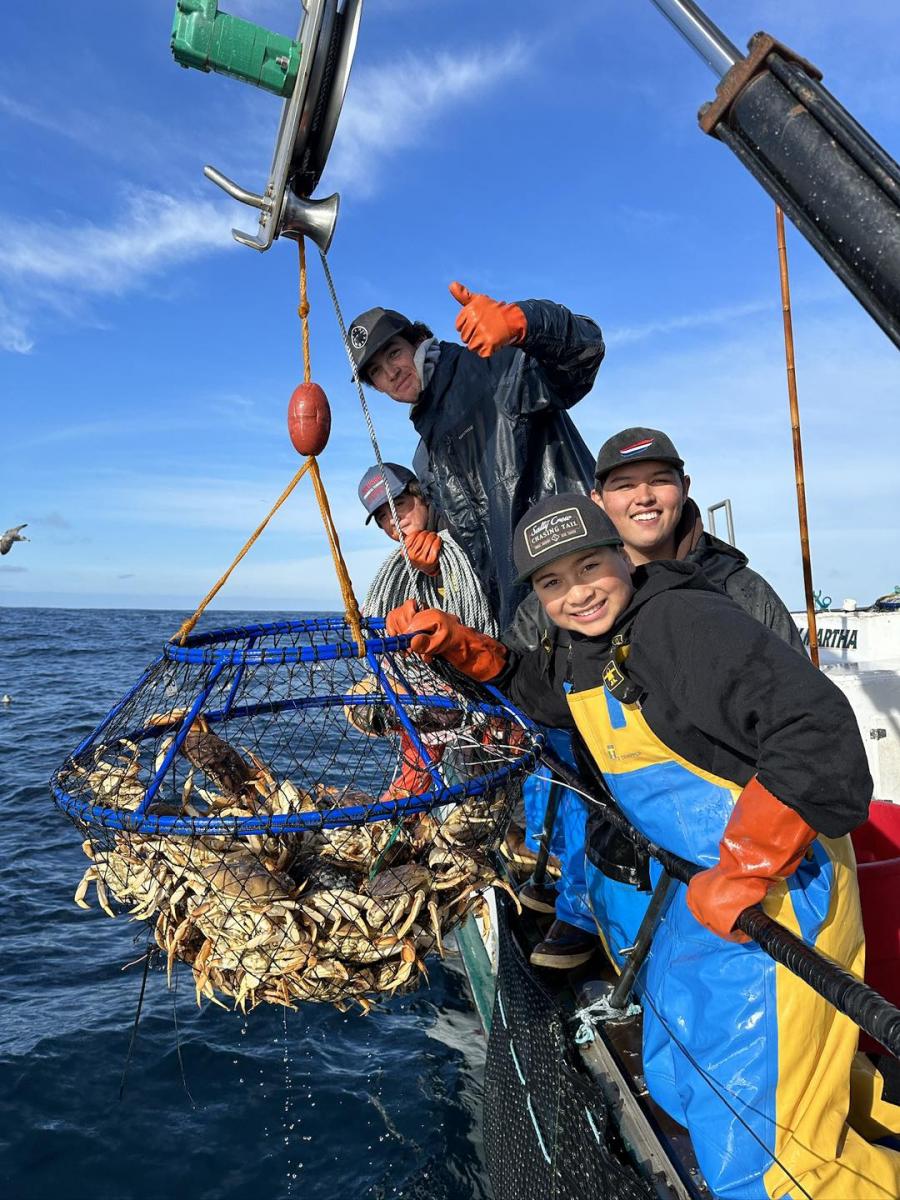
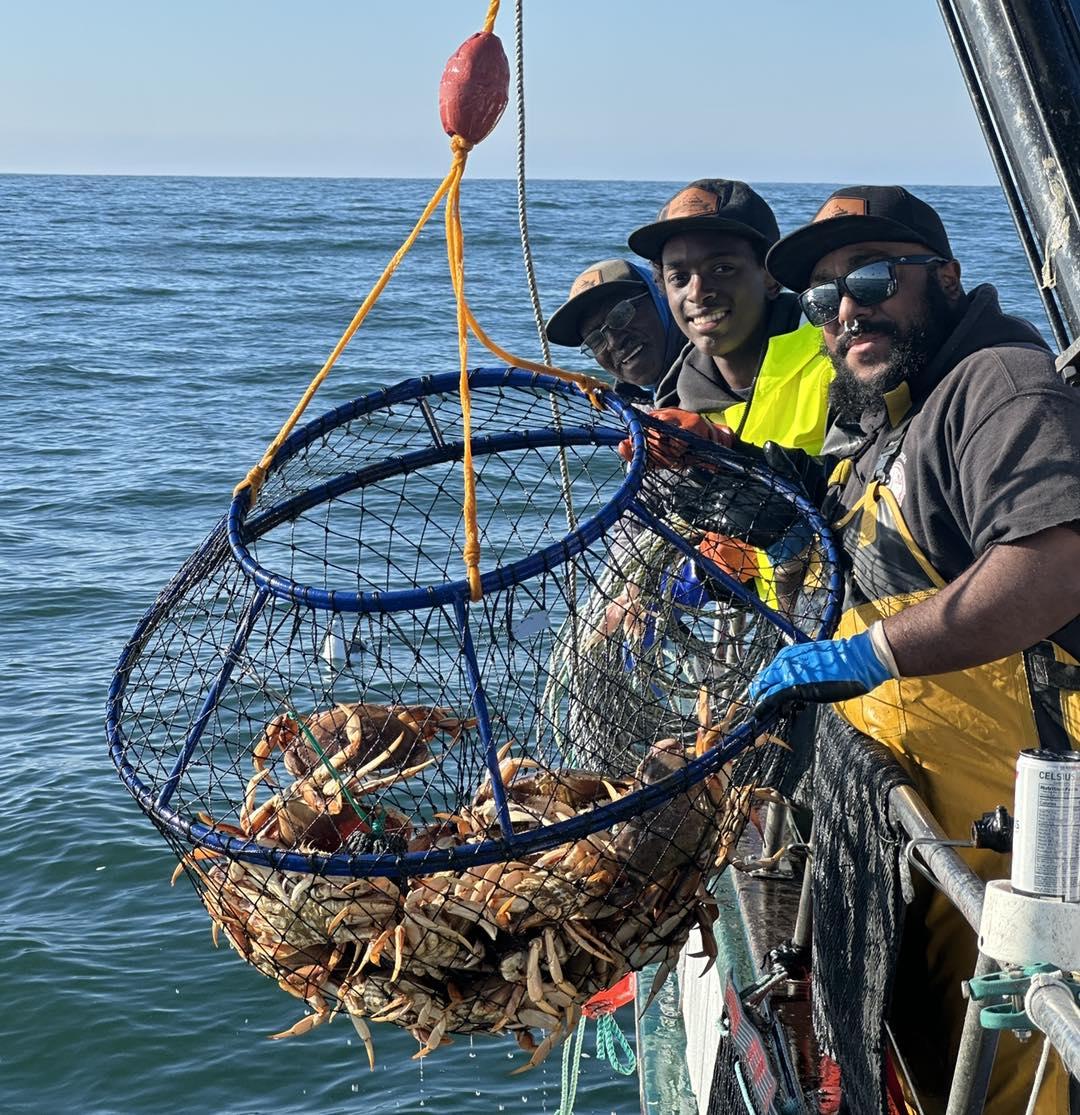
Crab pots are traps for catching Dungeness crabs on the ocean floor. Fishermen load their pots with weights and bait and check them daily or every few days. Openings let smaller crabs escape. A full crab pot can weigh over 100 pounds!
Image: Lovely Martha Sportfishing
How and Where Crabs Grow
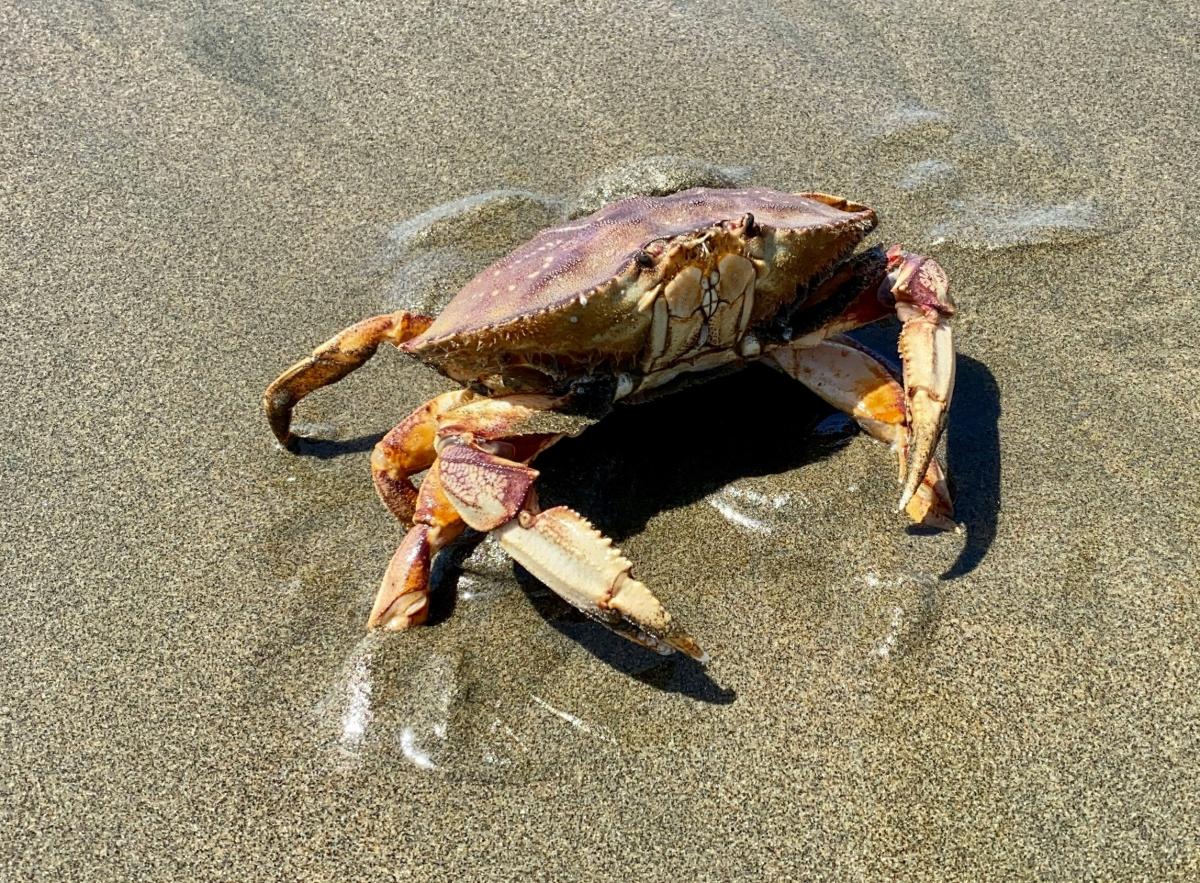
Dungeness crabs begin life as plankton and use San Francisco Bay as a nursery. When they are grown, Dungeness crab live on sandy and muddy seafloors.
They feed on fish and shellfish and grow by shedding their hard shells and growing new ones. California passed a law in 1897 to protect crab fishing. It requires all female crabs to be released.
A Fisherman’s Perspective
“I fished crab here for 50 years. To be good at it, you have to put your heart and soul into it. You’ve got to stay on top of the weather because you’re out there 10 to 12 hours a day. We go out and string our pots in long lines, 200 to 300 pots. Then we check the pots and get the crabs. We’re careful about the crabs, and the pots have an escape panel with cotton that rots away if the pots get lost. We’ve got to watch the crabs today so there’s some for tomorrow.” - Frank D’Amato, Fisherman
Fishing Moves to the Wharf
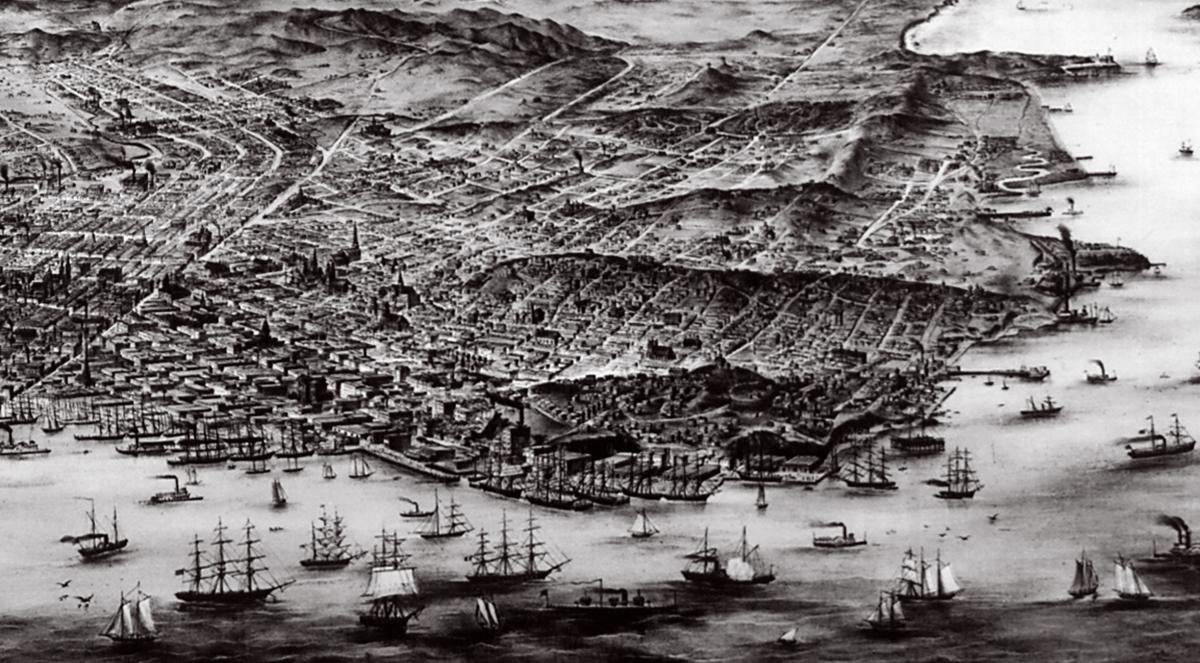
San Francisco’s fishing fleet didn’t always dock at Fisherman’s Wharf. It was a few blocks south near Green Street. People called the area Italy Harbor, named after the Italian fishermen and their iconic felucca boats. Around 1900, the City built a new seawall and cargo piers, forcing the fleet to move. They settled at today’s Wharf, a sheltered harbor close to the Golden Gate.
Moving Boats In and Out
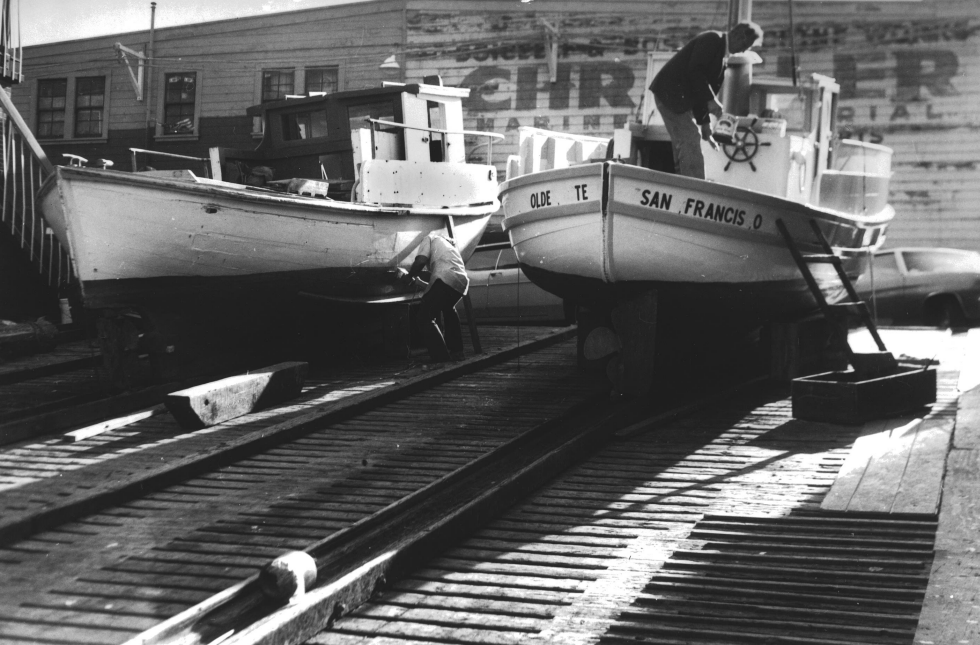
Until 1960, Fisherman’s Wharf had wooden ramps along its waterside streets. People called these ramps “Ways.” Boat owners used the Ways to pull their boats in and out of the water. When a boat was out, owners could brush, scrape, repair, and paint hulls.
Combining Chores with a Social Event
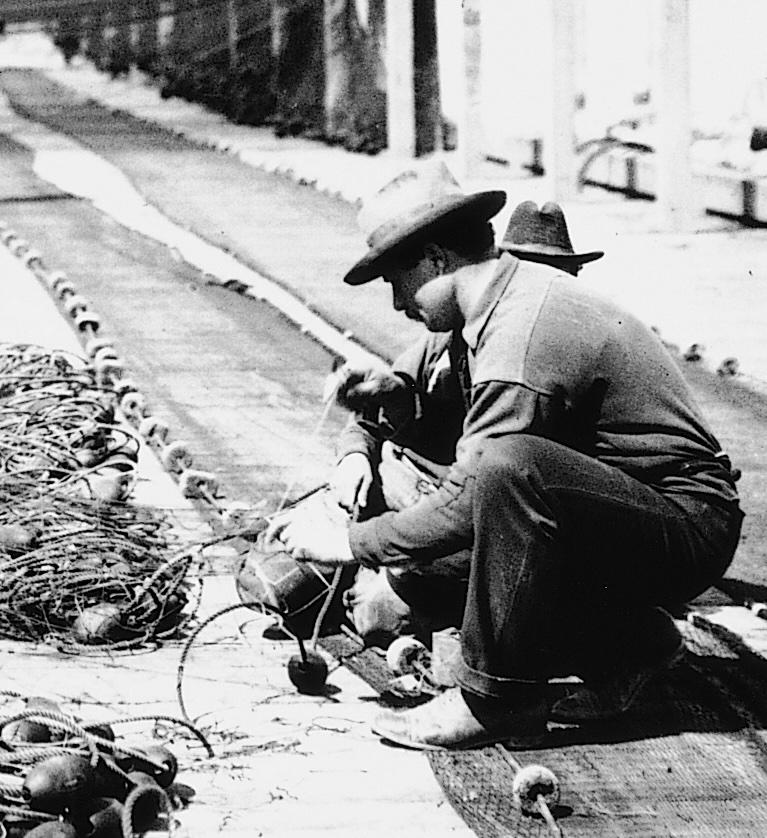
On weekends, Italian families and friends came together at the wharves. They repaired nets, worked on boats, sang songs, and enjoyed food and drink. “It was our big social occasion. On Sundays, we wore our suits, our Sunday best.” Fisherman’s Wharf became a picnic ground for Italian fishing families.
- Adapted from The Italians of San Francisco: Their Adjustment and Acculturation, 1935
Baseball Legend Grows Up at the Wharf
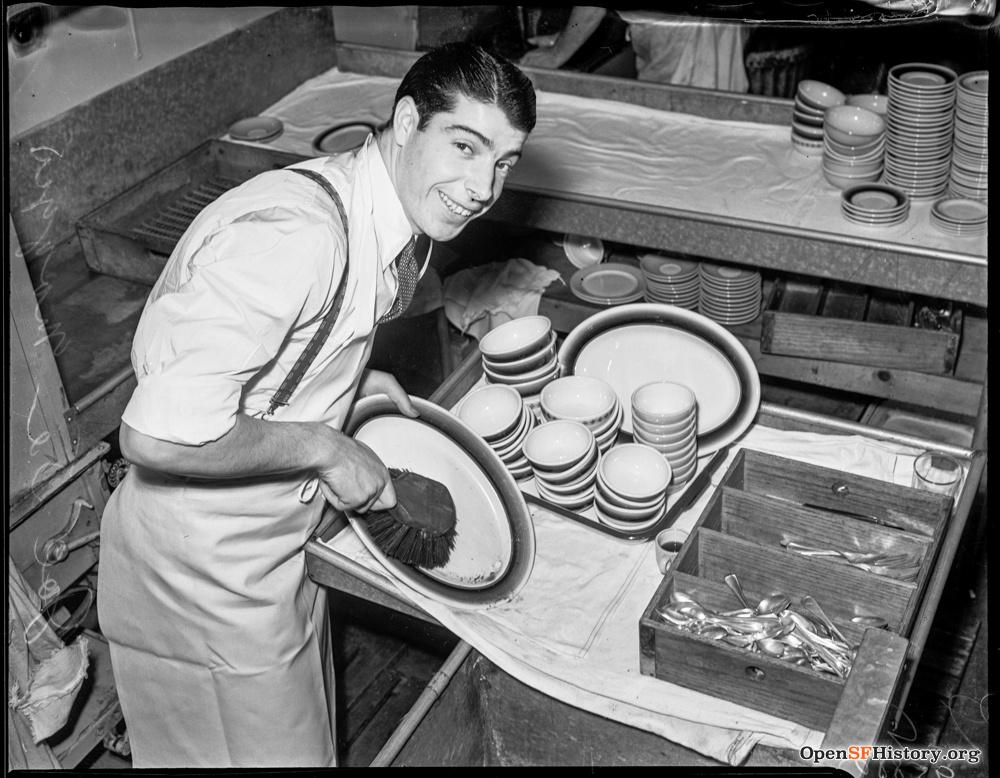
My earliest recollection (here) was the smell of fish at Fisherman’s Wharf, where I was brought up. Our main support was a fishing boat, with which my father went crabbing. If you didn’t help in the fishing, you had to help cleaning the boat. Baseball didn’t have much appeal to me as a kid, but it was far better than helping Pop when he was fishing or helping clean the boat.” - From Lucky to be a Yankee, 1957
Image: Open SF History
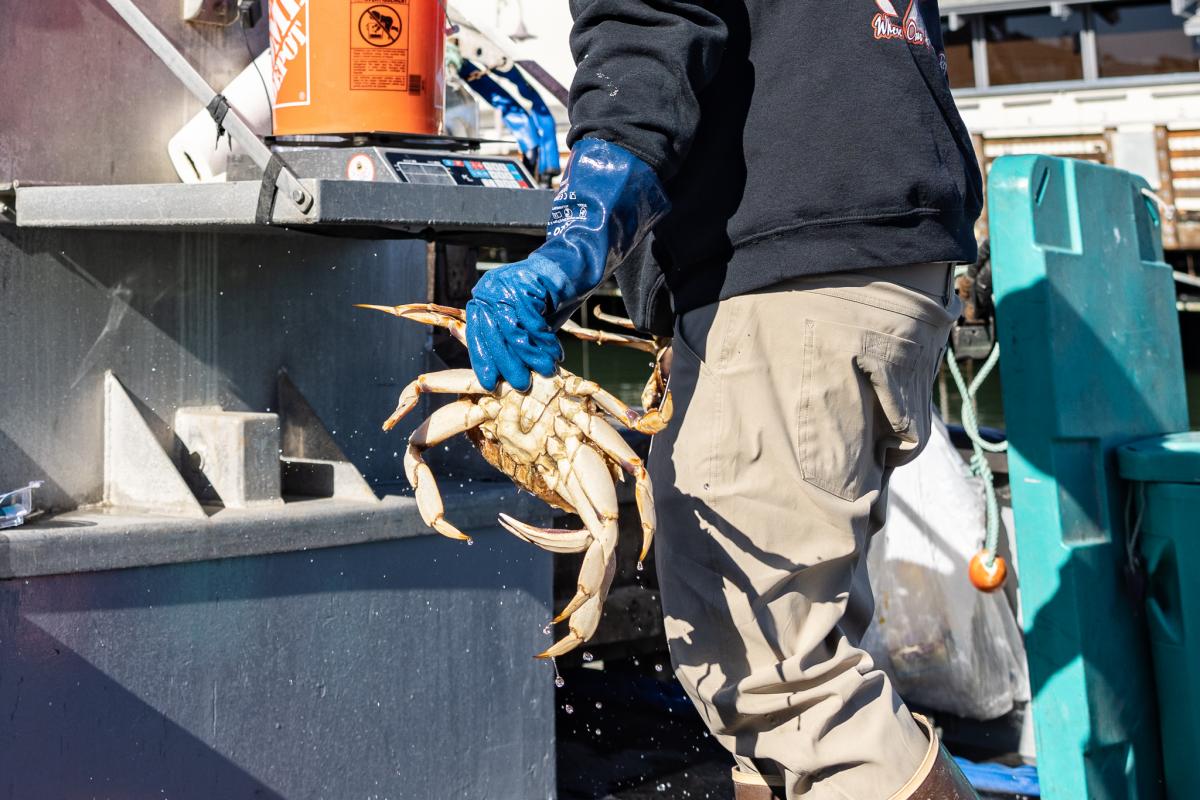
Off-the-boat Fish and Crab Sales
You can often purchase freshly caught fish right off the boat, iced down in bins as soon as they are pulled from the ocean. Salmon, known for being high in protein, low in fat, and delicious is available during the summer months. Dungeness crab, the prize of Fisherman’s Wharf, is in season during the winter and is freshest right here.
Fishing equipment is as varied as the fish caught here. It comes in many shapes and sizes. Look closely at the fishing fleet. You’ll see lures and lead cannonballs for catching salmon. Mesh trays for crab, and long lines for rockfish and black cod. Fishermen use nets for most everything else.
Boats for Deep Sea Catches
Fishermen use longliner boats to place baited lines as long as 2,000 feet. The baited lines catch halibut, black cod, and rockfish. Lines can be at the surface or at the bottom of the ocean. Lines can also be set with an anchor or left to drift with hundreds of baited hooks on a single line.
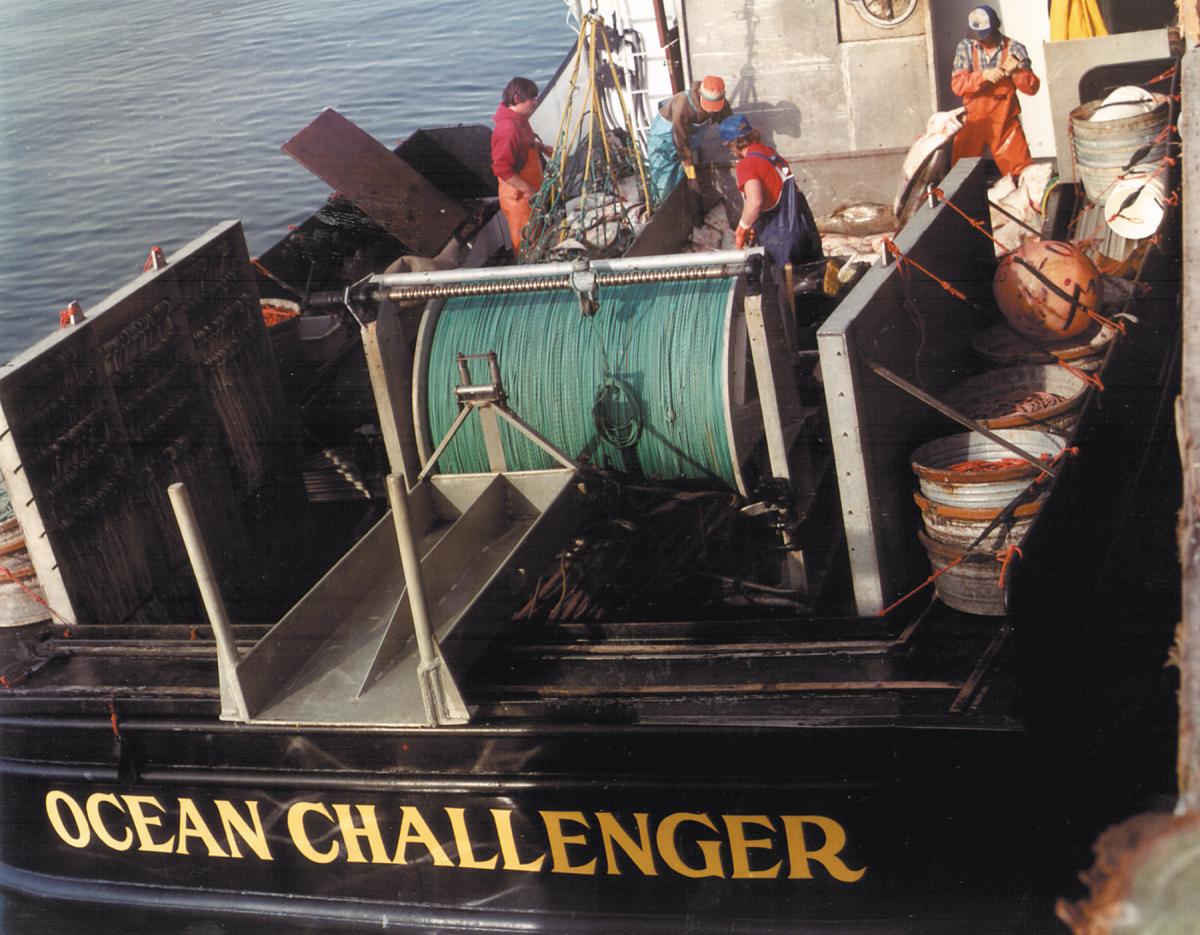
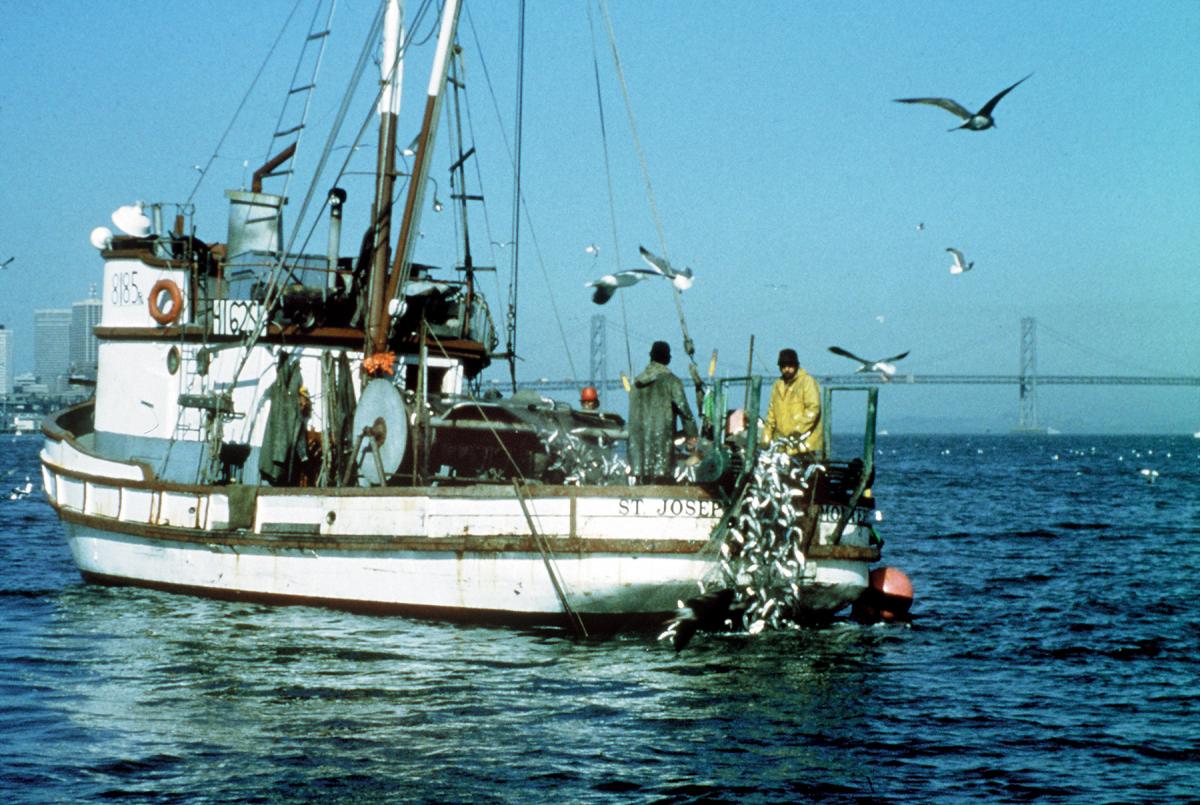
Casting a Wide Net
Many fishermen use nets instead of lines. Some place the nets in open water to catch herring, sardines, and other schooling fish. Others drag nets across the ocean floor, scooping up sole and shrimp.
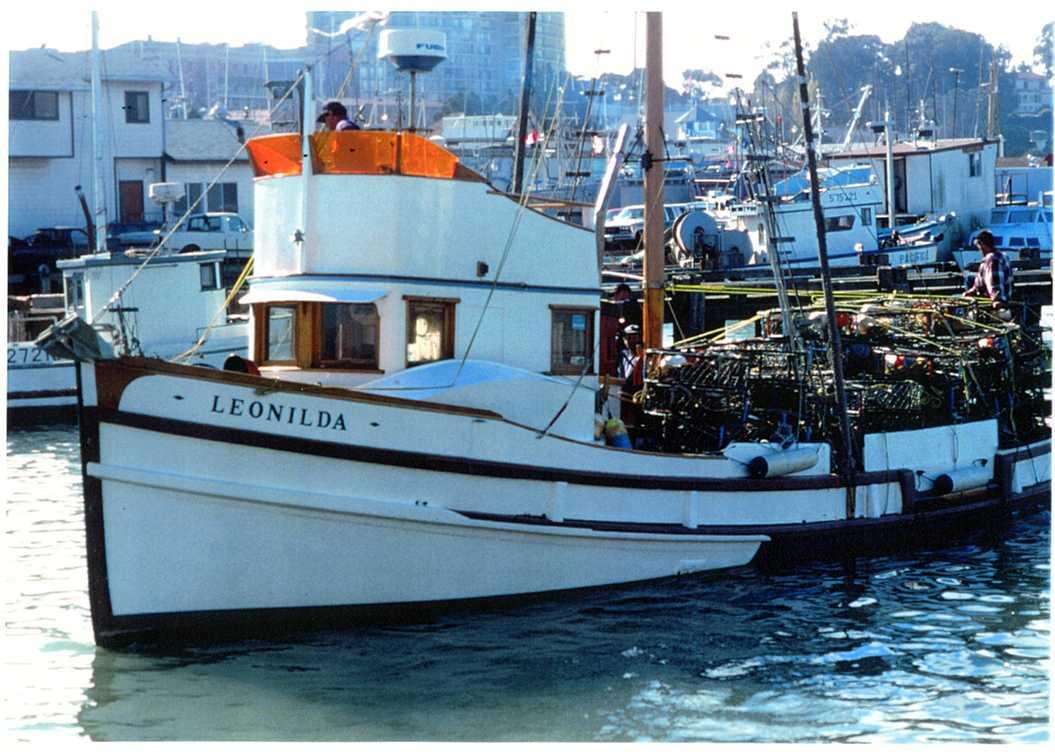
“Crabbers”
During Dungeness crab season, crab boats head out to sea with 100 to 300 crab traps, or “pots,” stacked on deck. Fishermen drop the heavy pots, baited with squid or fish, to the ocean floor. Then, a day or a week later, they haul the traps to the surface, remove the crabs, and reset them.
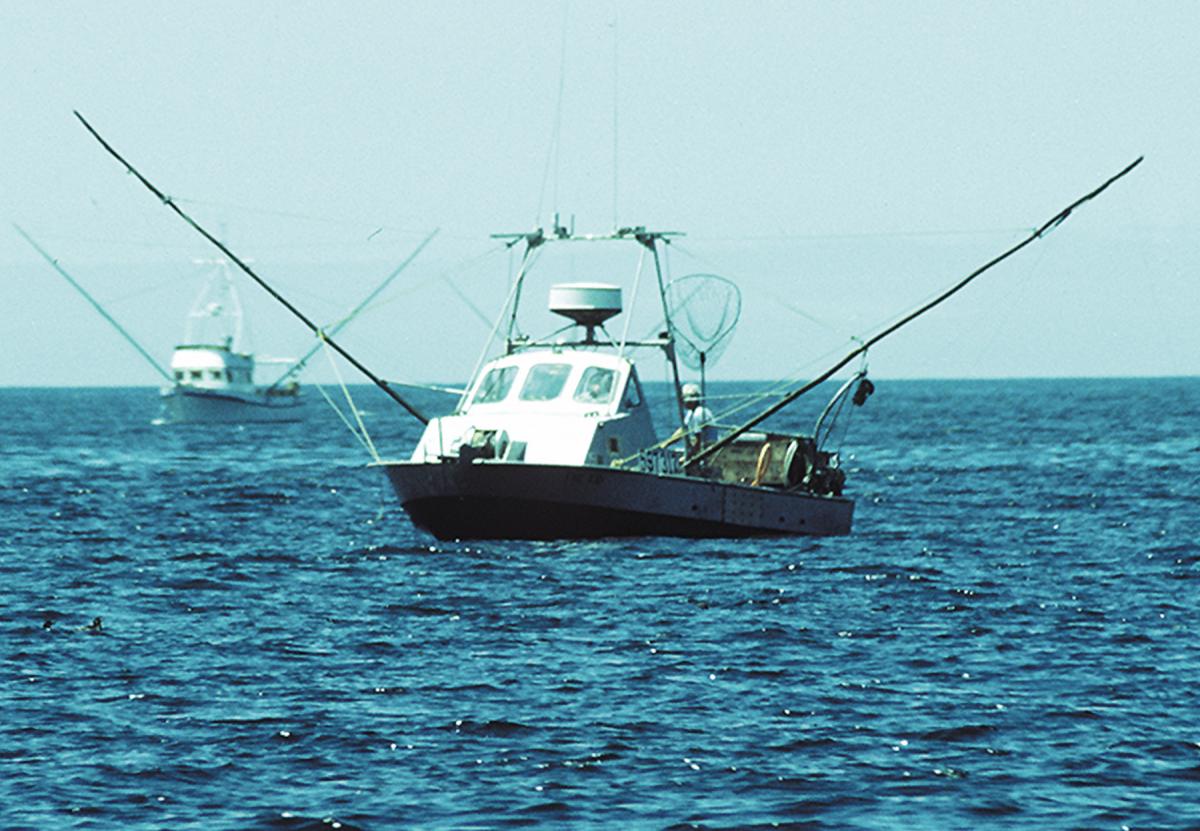
San Francisco’s Fishing Fleet
Long poles on the sides of a troller tow baited hooks behind the boat to trail, or “troll.” Fishermen troll a wide area of the ocean in search of salmon along the California coast. Salmon season runs from spring through summer. Many trollers refit their boats to fish for tuna, rockfish, or crab in other seasons.
San Francisco’s Fishing Fleet
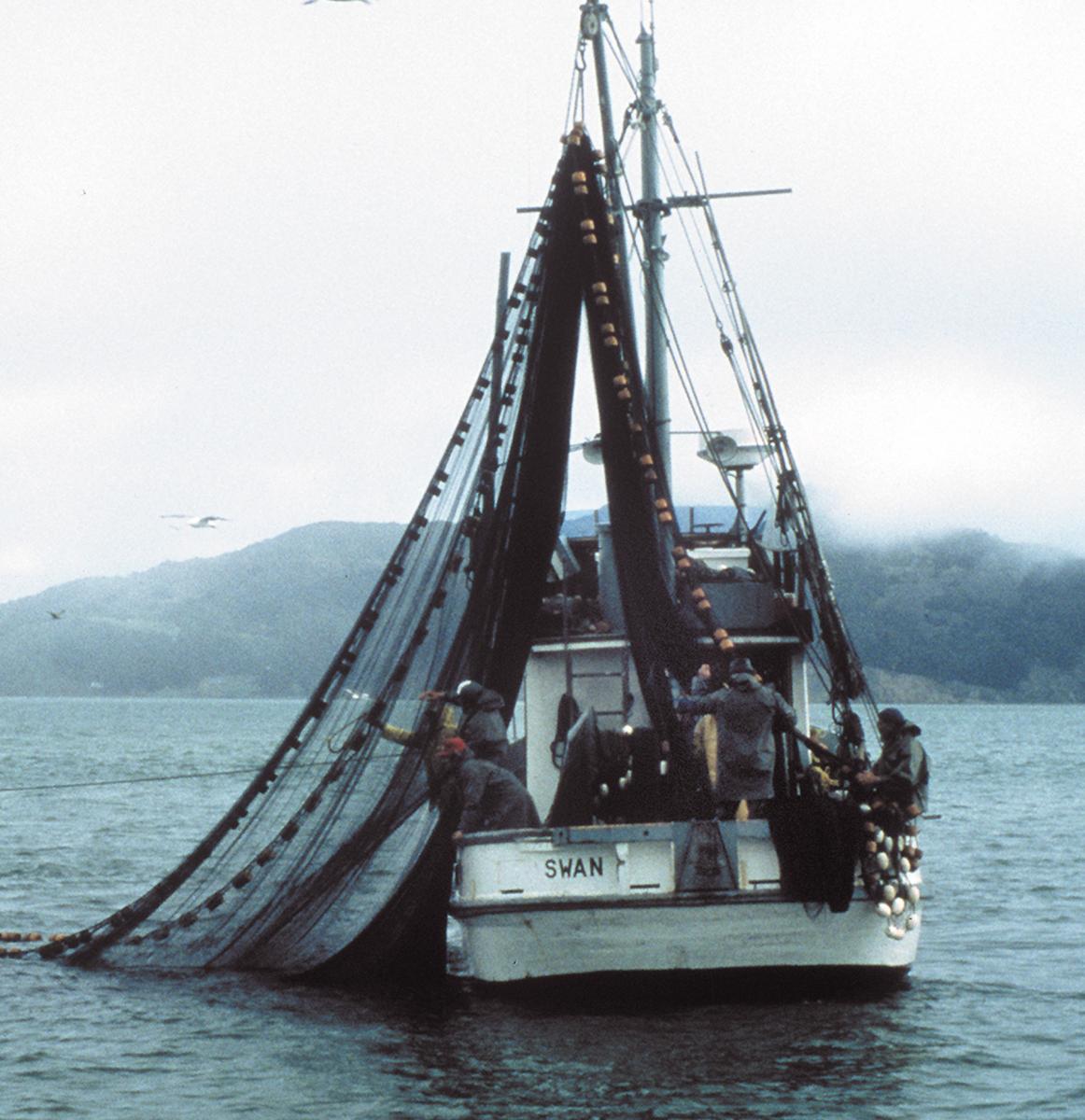
Gillnetters drop a vertical sheet of transparent netting into the water. The net hangs like a curtain. The size of the mesh allows gillnetters to be selective. Small fish can squirt through the net, and large fish bounce off.
Fishermen can target the size of fish they want to catch based on the openings in the net.
A Tour to Refresh
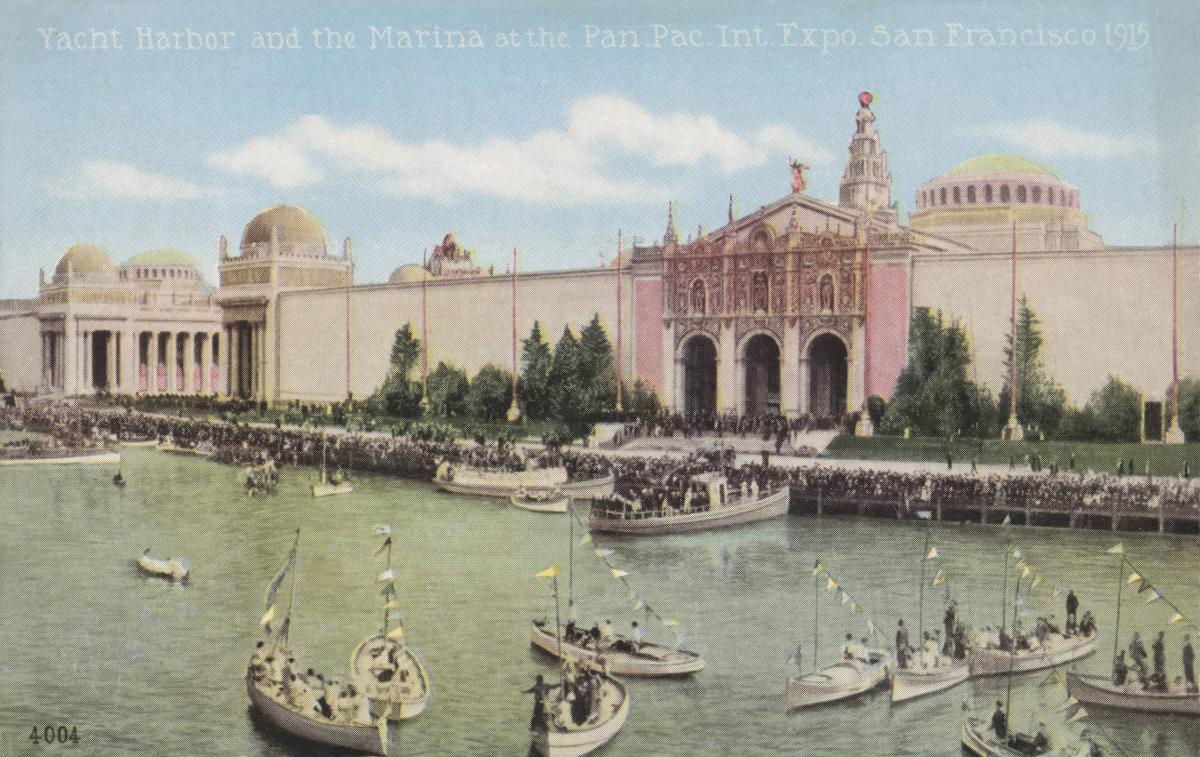
Locals and visitors have long enjoyed viewing San Francisco Bay’s surrounding hills from the water. The first sightseeing tours started in 1915 during the Panama-Pacific International Exposition. The Exposition celebrated San Francisco’s recovery after the 1906 earthquake and fires. Many find a boat trip on the bay both refreshing and calming.
Image: Red and White Fleet
Dramatic views from the water
San Francisco viewed from the water is an amazing sight. The City is known for its hills and unique buildings. Famous bridges and nature also enhance its urban charm. A trip on San Francisco Bay offers amazing views of the skyline, a chance to sail below the Golden Gate Bridge, or maybe see whales.
Image: Red and White Fleet
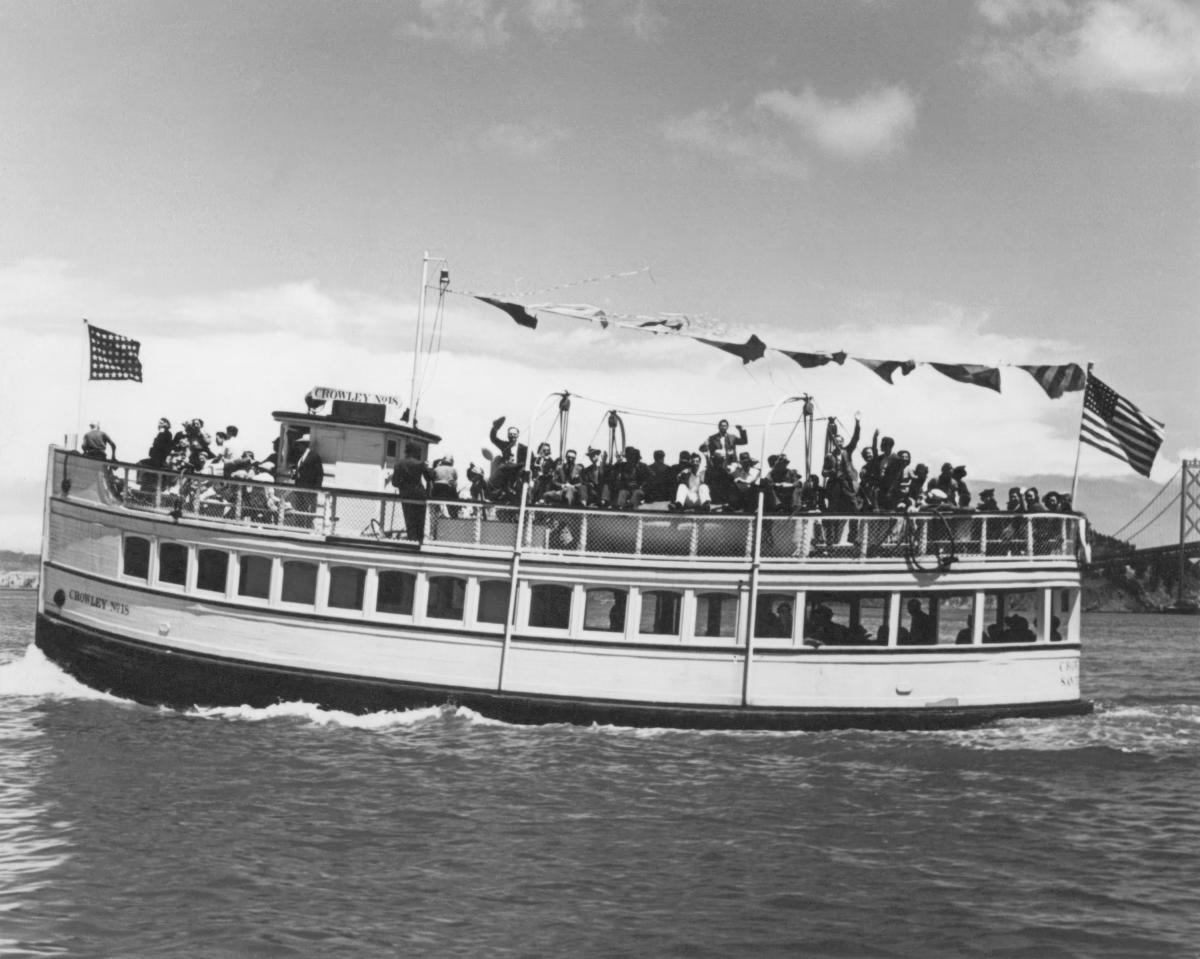
Thomas Crowley and the Red & White Fleet
Thomas B. Crowley started his maritime business in 1892 when he was 17. He would row out to ships at the Gate and greet them with local news and supplies. His early businesses later became Red and White Fleet and Crowley Maritime. Both continue to offer leisure and marine transport services on the bay.
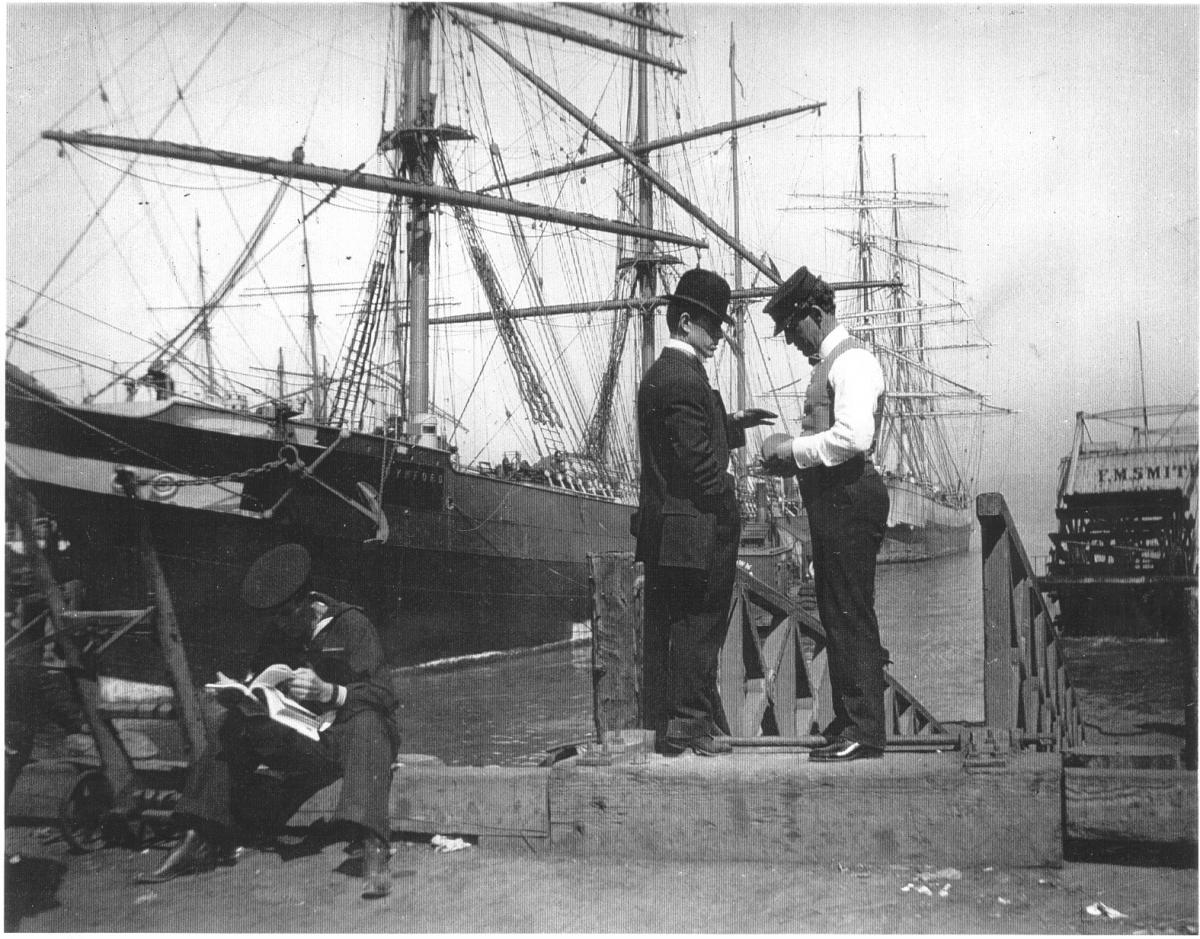
Becoming Electric
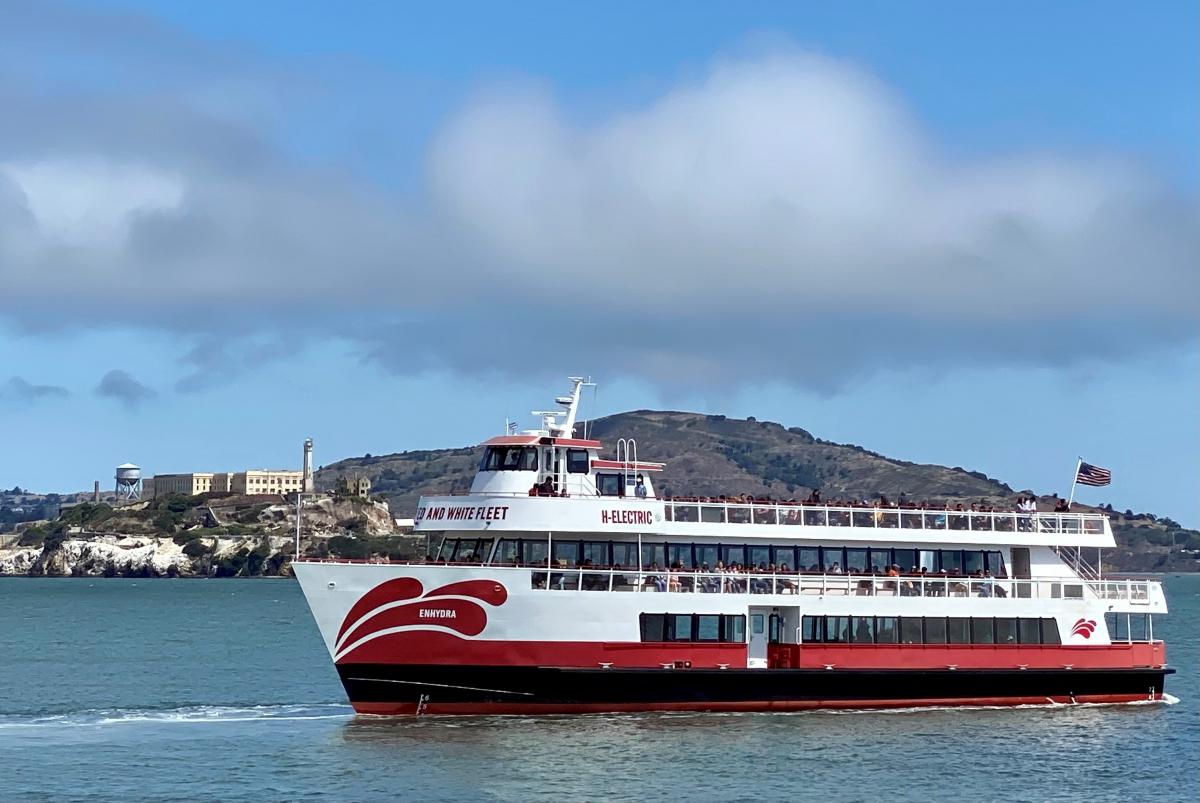
Red and White Fleet’s 600-passenger Enhydra, built in 2018, was the nation’s first plug-in hybrid boat. It led the maritime industry's switch to cleaner vessels. Today, all new excursion vessels in California must be hybrid - electric or cleaner. Operators are now transitioning their fleets to zero or near-zero emissions.
Image: Red and White Fleet